
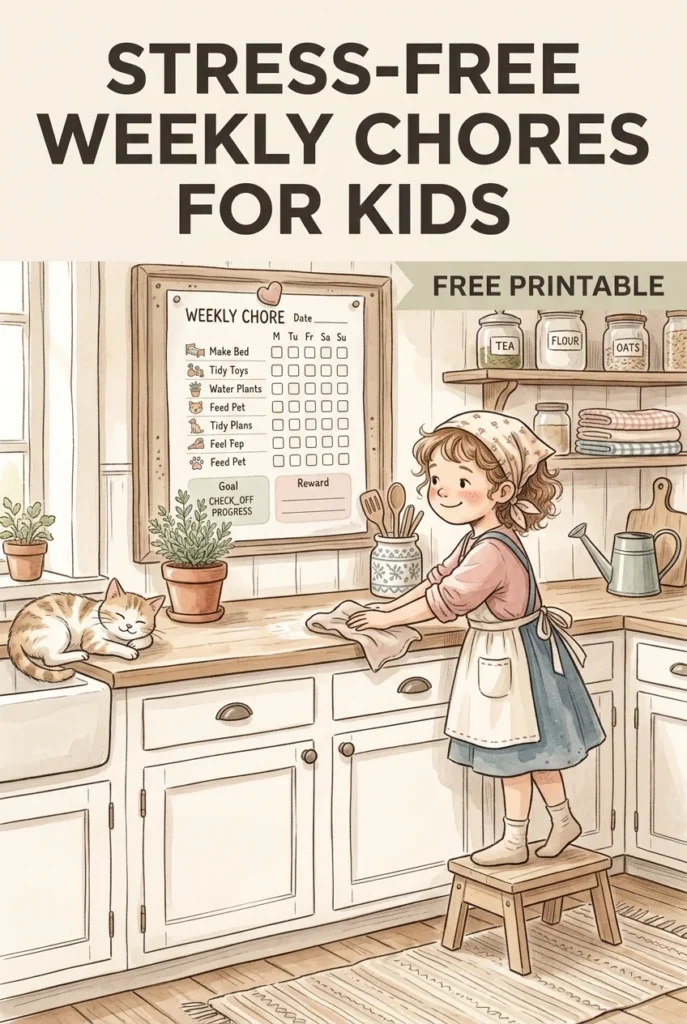
Build a calmer, more cooperative home routine—without turning chores into a daily battle.
A peaceful, well-run home rarely happens by accident. It’s usually the result of small, repeatable habits, clear expectations, and routines that feel supportive rather than strict. One of the simplest tools for creating that kind of rhythm is a weekly chore chart—especially for kids.
This printable kids weekly chore chart is designed to feel comforting and familiar, so children can participate in caring for their space in a way that feels achievable and rewarding. It’s not about perfection. It’s about consistency, confidence, and helping children see that their contributions matter.
PDF download available at the link at the bottom of this post.
Why a Weekly Chore Chart Works (and Why It Matters)
A weekly format does more than list tasks. It quietly teaches children how the week flows from one day to the next, how responsibilities repeat, and how effort adds up over time.
Instead of relying on constant reminders, a chart creates a shared reference point. Children can see what’s expected, parents or caregivers can keep things consistent, and everyone has a clearer sense of teamwork.
Consistency over perfection
The goal is not a flawlessly tidy room or a perfectly made bed every day. The goal is building the habit of showing up, doing what’s appropriate, and learning that small daily actions make a difference.
Confidence through achievable wins
When tasks are manageable, kids are more likely to complete them—and feel proud when they do. A simple check mark at the end of the day can be surprisingly meaningful. It offers a clear “I did it” moment without needing a big speech or a complicated system.
Less stress, more clarity for parents and caregivers
A weekly chore chart also supports the adults in the home. Instead of negotiating the same tasks again and again, you can point back to the routine. It keeps expectations clear while leaving room for flexibility based on age, energy levels, school schedules, or seasonal routines.
What’s Included in This Kids Weekly Chore Chart
This printable is structured to be simple and reusable. The weekly layout helps children view responsibilities at a glance, while still keeping the routine gentle and realistic.
A weekly layout that’s easy to understand
Seeing the whole week in one place helps children understand time, patterns, and follow-through. It also prevents the “I forgot” feeling that happens when chores are only mentioned in the moment.
A check-off system that reinforces progress
Checking off a box is a small action, but it reinforces a powerful idea: effort counts. It encourages follow-through and helps children connect actions with outcomes in a simple, positive way.
A goals and reward section (without pressure)
This chart includes space for goals and rewards to help children stay motivated without relying on comparison, guilt, or constant reminders. Rewards do not need to be material items. Often, what children want most is time, choice, and connection.
Choosing Age-Appropriate Chores (So Kids Can Succeed)
This chore chart works best when chores are clearly defined and suited to the child’s stage and ability. When children know exactly what “done” looks like, they’re more likely to complete the task with confidence.
Examples of kid-friendly weekly chores
You can adjust the list to fit your household, but these are common options that feel manageable for many children:
- Tidying toys or putting items back in their place
- Making the bed
- Watering plants
- Feeding pets (with supervision if needed)
- Helping with light household duties (such as wiping a surface or sorting laundry)
Mini-point: Keep tasks specific
“Clean your room” can feel overwhelming. “Put books on the shelf” or “put dirty clothes in the hamper” is clearer and easier to complete.
Mini-point: Start small, then build
If your child is new to routines, begin with a few simple tasks. Once those feel normal, you can add more. A smaller list that actually gets done builds more momentum than an ambitious list that creates daily frustration.
How to Introduce the Chart (So It Feels Kind, Not Strict)
A chore chart is most effective when it’s presented as a supportive tool, not a punishment. The tone matters as much as the tasks.
Step 1: Explain the “why” in one sentence
Keep it simple. For example: “We all help take care of our home so it feels nice to live in.” This frames chores as shared responsibility and respect for a common space.
Step 2: Choose a consistent check-in time
Many families find it easier to connect chores to an existing routine—after breakfast, before screen time, or as part of a short evening reset. Consistency reduces decision fatigue for everyone.
Step 3: Do a quick first-week reset
The first week is a “practice week.” You can adjust tasks, clarify expectations, and notice what feels too easy or too hard. This is where the chart becomes personalized for your child and your household.
Step 4: Keep the conversation gentle and practical
If something doesn’t get done, treat it as information rather than a character flaw. The goal is learning and habit-building. Calm repetition works better than pressure.
Tips for Making Chore Charts Actually Work (Without Power Struggles)
These simple strategies can make the chart feel natural in daily life—so it’s used consistently and doesn’t turn into another forgotten paper.
- Place it where your child can see it: A visible area of the home makes the chart part of the environment, not another instruction you have to repeat.
- Use a consistent writing tool: A pen or marker kept nearby reduces friction when it’s time to check off tasks.
- Attach chores to routine moments: Pair tasks with what’s already happening (morning routine, after school, evening tidy-up).
- Keep the list manageable: A few repeatable tasks done consistently builds confidence and independence.
- Revisit the chores weekly: Adjust based on school weeks, family plans, energy levels, and seasonal changes.
- Celebrate effort, not just outcomes: Noticing follow-through supports motivation and helps kids stay engaged.
Using Goals and Rewards in a Healthy, Low-Pressure Way
The reward section is meant to encourage motivation without creating stress. It’s most helpful when it stays simple and focuses on progress, not perfection.
Rewards don’t have to be “stuff”
Non-material rewards can be just as meaningful, and often more sustainable. Consider options like:
- Extra playtime
- Choosing a family activity
- A special outing
- Picking a movie night selection
- Choosing a game to play together
Weekly goals build reflection
A weekly goal encourages children to look back on their effort and notice improvement. It shifts attention away from what was missed or imperfect and toward what was learned and completed.
How to Print and Reuse the Weekly Chore Chart
This printable is designed to be flexible. Use it in the way that fits your home best.
Simple ways to use it week after week
- Print a fresh copy each week and start clean every Monday (or whatever day begins your family week).
- Store it in a binder to keep routines and home-management printables together.
- Display it in a visible spot so it becomes part of the daily rhythm.
A calm routine is easier to maintain when it feels supportive. This chart is meant to provide guidance and accountability without creating pressure—so kids can participate with confidence and pride.
Download the Free Kids Weekly Chore Chart PDF
A home that runs smoothly often begins with simple tools used consistently and kindly. This weekly chore chart is designed to support responsibility, independence, and harmony—one small checkbox at a time.
Click this link to download the PDF files and begin building a gentle weekly routine that supports your child (and your household) in a realistic, encouraging way.
More Helpful Free Printables and Home Routine Resources
If you’d like to build a full set of supportive routines, you may also like:
- Daily Homemaking Routine Checklist – Free Printable Download
- Monthly Home Reset Checklist – Free Printable Download
- Weekly Homemaking Schedule – Free Printable Download
- Household Tasks Master List – Free Printable Download
- Kids Daily Chore Chart – Free Printable Download
Related Reading (Habits and Life Organization)
- 10 Financial Glow Up Rich Girl Habits
- 21 Daily Habits That Will Save You Money
- How To Get Your Life Together In 30 Days
- How To Have A Soft Girl Winter
- 10 Cottagecore Movies To Watch