
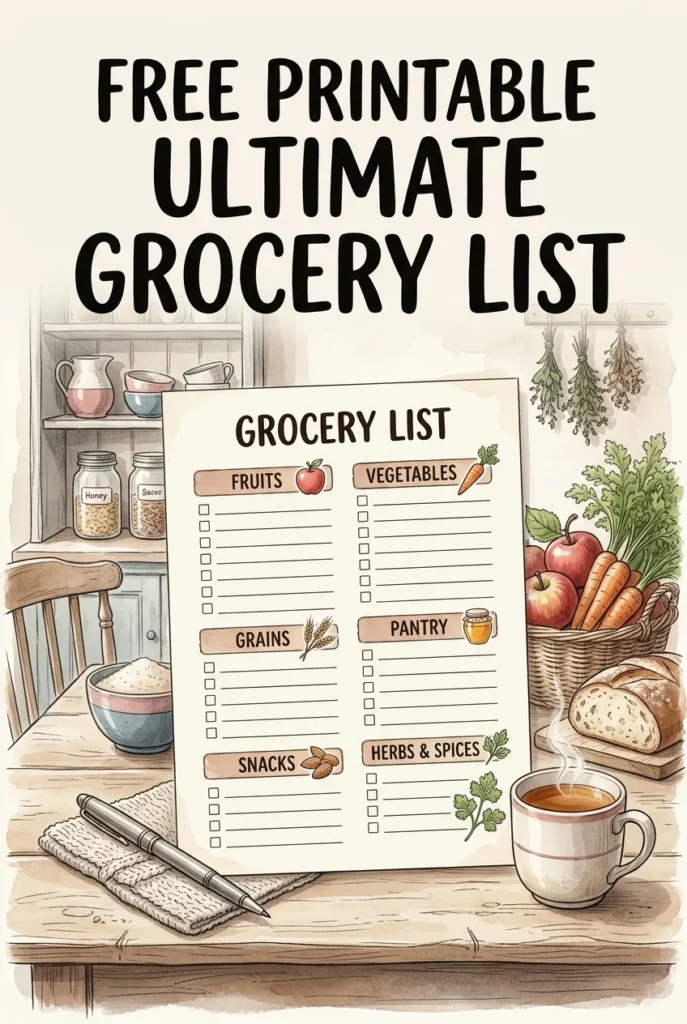
A calm, practical grocery list you can print or save, designed to help you shop with intention and keep your kitchen stocked without the stress.
Few small habits make everyday life feel more manageable than a well-planned grocery list. Give yourself a warm drink, a pen, and five quiet minutes, and you can turn “What do we need?” into a simple plan you’ll actually follow.
This post shares a free printable grocery list (PDF) that’s organized into clear categories—so you’re not stuck scanning one long, messy column while you shop. The download link is available at the bottom of this post, so you can print the list or save it and use it again and again.
Why an Organized Grocery List Matters
A thoughtfully structured list does more than help you remember milk. It helps you shop with purpose, reduce impulse buys, and avoid the common “buy it again because you couldn’t see it in the pantry” problem.
When your list is grouped by category, your brain does less work in the store. You can move aisle by aisle, check items off quickly, and feel confident that what you’re bringing home supports your routines and meals for the week.
What You’ll Get in the Free Printable Grocery List PDF
The printable is designed to make shopping feel slower and more enjoyable rather than rushed and chaotic. Instead of a single random list, you’ll see distinct sections and square spaces that give you room to plan properly.
This layout makes it easier to:
- Notice what you already have before you buy more
- See what you truly need for meals you’re planning
- Skip extras that don’t fit the week (or the budget)
- Turn grocery shopping into a small, repeatable ritual rather than a chore
How the Categories Help You Shop (and Cook) More Easily
Each section in the grocery list supports a different part of meal planning. When you fill it in with even a little intention, you end up with a more balanced cart—and a calmer kitchen when you get home.
Fruits: Plan Fresh Options You’ll Actually Use
The fruits section is ideal for mapping out colorful, flexible choices that work across the week: breakfasts, snacks, and simple desserts. Writing fruit down ahead of time encourages variety, helps you avoid overbuying, and reduces the chance of items being forgotten in the back of the fridge.
It also makes seasonal shopping easier. When you arrive at the market, you can choose what looks best while still staying within your plan.
Vegetables: Build Meals Around What You Want to Eat
The vegetables section gives you room to plan balanced meals without overthinking. Many people find that when vegetables are decided first, the rest of the week’s meals fall into place more naturally.
This space is helpful for organizing:
- Weekly staples you rely on often
- A few extras for soups, salads, and roasting trays
- Vegetables that match the way you realistically cook (quick sautés, sheet-pan meals, simple sides)
Grains & Bread: Keep Pantry Basics in Check
Grains and bread often form the foundation of meals, which is why they deserve their own section. Having a dedicated area helps you remember basics like rice, oats, or pasta—while also giving you room to plan for baking, weekend cooking, or lunchbox staples.
Writing these down also prevents unnecessary duplicates. If you already have pasta at home, you’ll see it during your quick pantry check and won’t accidentally add more to the cart.
Pantry Items: The “Long-Term Organization” Section
This is where a grocery list becomes a weekly reset. The pantry items section helps you track essentials such as oils, sweeteners, legumes, and other shelf-stable ingredients you rely on regularly.
Using this section consistently can help you:
- Rotate stock so older items get used first
- Reduce waste from forgotten duplicates
- Avoid last-minute meal stress when a basic ingredient is missing
Snacks & Nuts: Plan Before the Impulse Aisle
Snacks are often the most impulsive part of shopping, which is exactly why it helps to write them down. Planning snacks and nuts ahead of time lets you choose options you genuinely enjoy and will actually eat.
This keeps snack spending intentional rather than excessive—and makes it easier to keep your week on track, whether you’re stocking up for workdays, school days, or slower weekends at home.
Herbs & Spices: Small Ingredients, Big Impact
Herbs and spices are easy to overlook until you’re mid-recipe and realize something is missing. Keeping this category visible prompts you to restock the small but important items that add flavor and warmth to everyday cooking.
This section also encourages creativity with what you already own. When you can see your seasonings clearly, you’re less likely to keep buying new jars while the older ones sit unused.
A Simple Weekly Routine for Using the Printable
You don’t need a strict system for this list to help. A steady rhythm is enough. Here’s a gentle approach you can repeat each week without making it complicated.
Step 1: Do a quick kitchen scan
Before you write anything, take a fast look through the fridge, freezer, and pantry. You’re not deep-cleaning—just noticing what’s already there and what needs using soon.
Step 2: Decide on a loose meal plan
You don’t have to map every meal in detail. Even choosing a few simple anchors—like two or three dinners you know you’ll make—can guide the rest of your list and prevent overbuying.
Step 3: Fill the list by category (not by craving)
Work through the printable section by section. The categories act like gentle guardrails: they help you remember essentials while leaving room for a few enjoyable extras.
Step 4: Keep the list visible while you shop
Whether you print the PDF or save it on your device, keep it easy to access. Checking items off as you go helps the trip feel calmer and more efficient.
Step 5: Use the list as a “reset” for next week
After shopping, you’ll have a clearer sense of what you bought and what you’re set up to cook. Next week, the same list makes planning easier because you’ve created a repeatable process.
Tips to Get More Value from Your Grocery List
The printable works well on its own, but a few small habits can make it even more effective.
- Shop your kitchen first. Before writing the list, check what needs using soon and plan around it.
- Plan produce with intention. Choose fruit and vegetables you’ll realistically prep and eat that week.
- Group your meals by overlap. If two meals use similar vegetables or grains, you’ll waste less and simplify cooking.
- Write snacks down on purpose. Planning snacks ahead of time reduces impulse purchases and helps you buy what you truly want.
- Track pantry staples weekly. Using the pantry section consistently makes it easier to avoid duplicates and rotate stock.
- Leave a little space. If something seasonal or appealing is available when you shop, you can add it thoughtfully without losing the structure of the list.
This Isn’t About Perfection—It’s About Rhythm
Using a grocery list like this isn’t about strict rules or getting everything “right.” It’s about creating a steady rhythm that supports your home, your budget, and your peace of mind.
When your list is organized, shopping often feels lighter. Your kitchen feels calmer because it’s stocked with foods that match how you live. And mealtimes become easier to manage because you’ve already made the key decisions before you’re hungry and tired.
Download the Free Printable Grocery List (PDF)
If you’d like to use this printable grocery list for your own home routines, use the download link at the bottom of this post to get the PDF files. You can print them for weekly planning, keep them on a clipboard in the kitchen, or save them for quiet evenings of preparation and peaceful mornings before you head out to shop.
Download: Click here to download the PDF files