
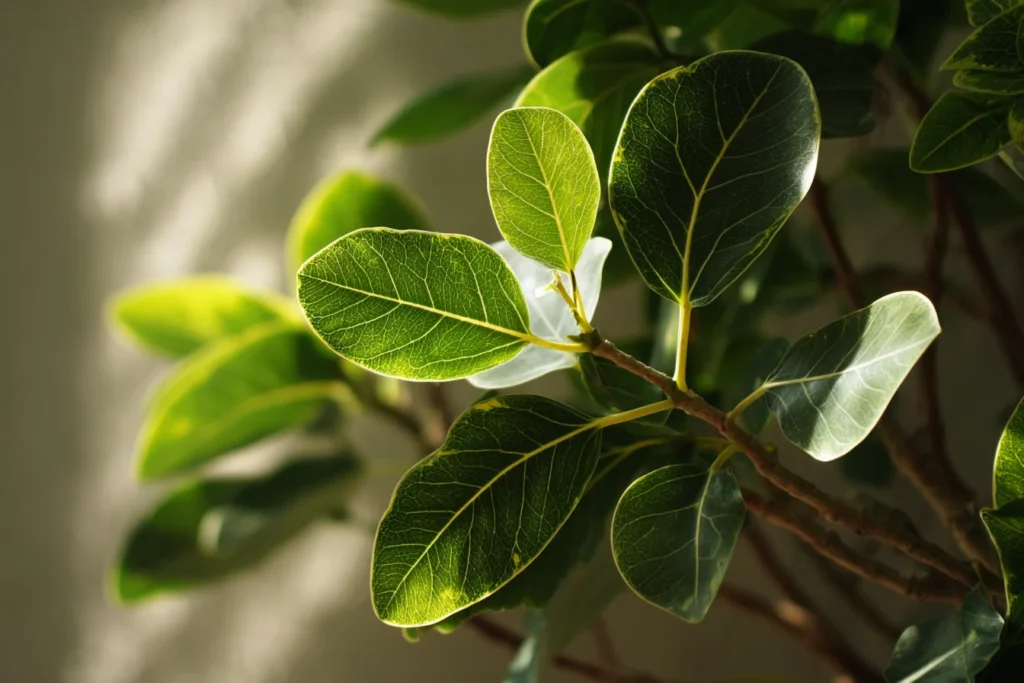
Ficus Audrey Light Requirements: A Complete Guide
Understanding Ficus Audrey’s Relationship with Light
Ficus Audrey (Ficus benghalensis), also known as the Banyan tree, requires specific light conditions to thrive indoors. As a tropical plant native to regions with abundant sunshine, it has evolved to utilize light efficiently for photosynthesis.
Light is essential for this plant’s health as it drives photosynthesis—the process where plants convert light, water, and carbon dioxide into oxygen and glucose (energy). Without adequate light, your Ficus Audrey cannot produce the energy it needs for healthy growth and development.
Natural Light Requirements for Ficus Audrey
In their native habitats, Ficus Audrey plants grow in full, direct sunlight. These magnificent trees form part of the upper canopy in tropical forests, receiving abundant light throughout the day.
When grown indoors, Ficus Audrey plants thrive best with bright, indirect sunlight. The ideal location is a few feet away from a south or west-facing window, where the plant receives ample light without the harsh direct rays that can damage its leaves.
For optimal growth, aim to provide your Ficus Audrey with 6-8 hours of bright, indirect light daily. This mimics its natural growing conditions while protecting it from potential leaf scorch.

Types of Light Exposure Explained
Understanding light terminology helps in positioning your Ficus Audrey correctly:
- Direct sunlight: Unfiltered light that shines directly on the plant’s leaves (20+ watts equivalent). Found directly in south or southwest-facing windows.
- Bright indirect light: Strong light that doesn’t directly touch the leaves. Ideal for Ficus Audrey, typically found a few feet away from south-facing windows.
- Filtered light: Sunlight that passes through a sheer curtain, blinds, or other filtering material.
- Partial light: Direct sunlight for only part of the day, common near east or west-facing windows.
- Low light: Minimal natural light (10-15 watts equivalent), found in north-facing windows or room corners.
Signs Your Ficus Audrey Is Getting Too Much Light
While Ficus Audrey can tolerate some direct sunlight, excessive exposure can harm the plant. Watch for these warning signs:
- Scorched or brown patches on leaves
- Crispy, dry leaf edges
- Excessive leaf drop, particularly on the side facing the light source
- Faded or bleached foliage
- Wilting despite adequate watering
If you notice these symptoms, move your plant further from the window or add a sheer curtain to filter the intense light.
Signs Your Ficus Audrey Isn’t Getting Enough Light
Insufficient light is a common problem for indoor Ficus Audrey plants, especially during winter months. Look for these indicators:
- Yellowing leaves that eventually drop
- Consistently small new leaves
- Leggy, stretched growth as the plant reaches toward light sources
- Slow or stunted growth
- Increased susceptibility to pest infestations
- Soil that stays wet for extended periods due to reduced water uptake
If your plant shows these signs, gradually move it to a brighter location to prevent shock.
Ideal Indoor Placement for Ficus Audrey
Finding the perfect spot for your Ficus Audrey involves balancing light exposure with other environmental factors:
- Position the plant 3-5 feet from a south or west-facing window for optimal light.
- East-facing windows can work well, providing gentle morning sun.
- Avoid north-facing windows, which typically don’t provide enough light.
- Rotate your plant quarter-turn weekly to ensure even growth on all sides.
- Keep away from heating vents, air conditioners, and drafty areas that can stress the plant.
During winter months when light is limited, you might need to move your Ficus Audrey closer to windows to compensate for reduced sunlight intensity and duration.
Using Artificial Light for Ficus Audrey
If your home lacks adequate natural light, artificial lighting can supplement or replace it entirely. Ficus Audrey can thrive under the right artificial lighting setup:
- LED grow lights provide energy-efficient, full-spectrum light that works well for Ficus Audrey.
- Fluorescent lights (especially T5 high-output fixtures) can support healthy growth when placed 6-12 inches above the plant.
- Position artificial lights to mimic the sun’s natural path when possible.
- Provide 12-14 hours of artificial light daily, using timers for consistency.
- Remember to turn off lights at night to maintain the plant’s natural cycle.
Seasonal Light Adjustments
Light conditions change throughout the year, requiring adjustments to keep your Ficus Audrey healthy:
During summer, when sunlight is more intense, you may need to move your plant further from windows or add sheer curtains to prevent leaf burn. The longer days also mean your plant receives more total light hours.
In winter, when daylight hours decrease and sunlight intensity diminishes, consider moving your Ficus Audrey closer to windows or supplementing with artificial lighting. Winter is also when growth naturally slows, so don’t be concerned if your plant seems less active.
Common Light-Related Questions
Can Ficus Audrey survive in low light?
While Ficus Audrey can survive briefly in low light conditions, it won’t thrive. Extended periods in low light lead to weakened growth, leaf drop, and increased vulnerability to pests and diseases. If low light is your only option, supplemental artificial lighting is strongly recommended.
Can Ficus Audrey handle full sun?
Ficus Audrey can tolerate limited direct sunlight, preferably morning or late afternoon sun when rays are less intense. However, prolonged exposure to harsh midday sun can scorch leaves. If transitioning to more direct light, do so gradually over several weeks to allow the plant to acclimate.
How do I know if my Ficus Audrey is getting enough light?
A Ficus Audrey receiving adequate light will produce vibrant, evenly colored leaves at a steady rate. New growth should be robust, and the plant should maintain its fullness without stretching or leaning excessively toward light sources. Healthy plants also show greater resistance to pests and diseases.
Troubleshooting Light Issues
If you’re struggling with light-related problems despite following general guidelines, consider these solutions:
- For leggy growth: Increase light exposure gradually and prune stretched stems to encourage fuller growth.
- For leaf scorch: Move the plant away from direct sun and remove damaged leaves to redirect energy to healthy growth.
- For uneven growth: Rotate the plant regularly and ensure light reaches all sides.
- For seasonal changes: Adjust watering along with light changes—less water during lower light periods, more during bright seasons.
Remember that changes in light exposure should be made gradually. Sudden shifts can shock your Ficus Audrey and cause stress symptoms like leaf drop.
Conclusion
Ficus Audrey plants thrive in bright, indirect light that mimics their natural canopy position in tropical forests. The ideal setup for most homes is placing your plant near south or west-facing windows with some protection from intense direct rays. By monitoring your plant for signs of too much or too little light and making appropriate adjustments, you can ensure your Ficus Audrey remains healthy and vibrant.
While light is crucial, remember that it works in concert with other care factors like watering, humidity, and temperature. Creating a balanced environment that addresses all these needs will reward you with a magnificent Ficus Audrey that can become a stunning focal point in your indoor space for many years to come.