
Feng Shui Plants Bedroom
In the practice of Feng Shui, the bedroom represents one of the most important spaces in your home, as it’s where you spend approximately one-third of your life. While plants generally bring positive energy to living spaces, their placement in bedrooms requires careful consideration according to Feng Shui principles. Understanding the relationship between plants and bedroom energy can help create a more balanced, restful environment that supports both sleep and relationships.
Understanding Bedroom Feng Shui Principles
The bedroom serves two primary purposes in Feng Shui: rest and romance. It’s considered a yin space, meaning it should promote calm, relaxing energy rather than active, stimulating chi. As the room where you’re most vulnerable during sleep, the bedroom’s energy directly impacts your well-being.
A well-balanced bedroom should have a commanding position for the bed (facing the door but not directly in line with it), paired nightstands, appropriate lighting, and a color scheme that promotes relaxation. These elements create harmony that supports both rest and intimate relationships.
Why Plants Are Generally Discouraged in Bedrooms
Traditional Feng Shui wisdom often advises against keeping living plants in bedrooms for several reasons:
- Plants represent the wood element, which carries strong, upward-moving energy that can be too stimulating for a restful space
- Plants require water, introducing the water element which can dampen the fire element associated with passion and romance
- Many plants release carbon dioxide at night (while you’re sleeping) instead of oxygen
- The growth energy of plants can create excessive yang energy in a space that should be predominantly yin
These concerns reflect the Feng Shui principle that bedroom energy should promote rest rather than active growth or movement.
Best Feng Shui Plants for Bedrooms (If You Must Have Them)
If you’re committed to having plants in your bedroom despite traditional advice, certain plants are considered more suitable than others:
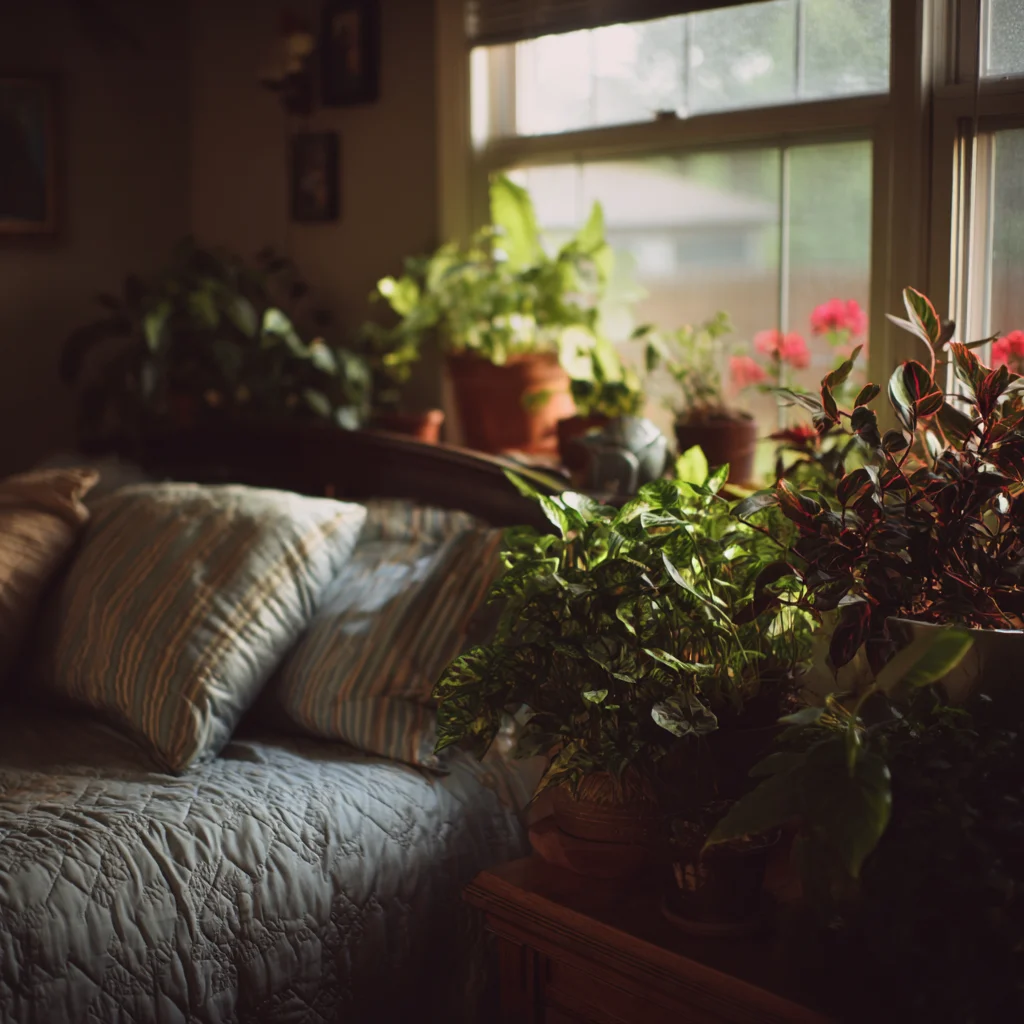
Recommended Bedroom Plants
- Snake Plant (Sansevieria) – One of the few plants that release oxygen at night
- Peace Lily – Known for air purification and calming energy
- Lavender – Promotes relaxation and better sleep
- Jasmine – Associated with love energy and pleasant dreams
- Orchids – Represent partnership and fertility with minimal wood energy
Plants to Avoid in Bedrooms
- Large, sprawling plants with extensive root systems
- Spiky, thorny plants like cacti that create sha chi (cutting energy)
- Plants with strong fragrances that might disturb sleep
- Dying or unhealthy plants that represent stagnant energy
Proper Placement of Plants in the Bedroom
If you choose to include plants in your bedroom, their placement becomes crucial for maintaining good Feng Shui:
- Position plants far from the bed, ideally at least 3-4 feet away
- Place smaller plants rather than large, dominating specimens
- Locate plants in the east, southeast, or south areas of the room according to the Bagua map
- Avoid placing plants directly above or beside the bed
- Keep plants out of corners where energy can stagnate
The goal is to benefit from the plants’ positive qualities while minimizing their potentially disruptive energy.
Alternatives to Living Plants in Bedrooms
For those who want to honor traditional Feng Shui principles while still bringing nature’s beauty into the bedroom, consider these alternatives:
- Fresh-cut flowers (particularly peonies for romance)
- High-quality silk or artificial plants
- Artwork featuring botanical themes
- Natural materials like wooden furniture or bamboo accessories
- Essential oils or dried herbs for natural scents
These options can introduce the aesthetic and symbolic benefits of plants without the potentially disruptive growing energy.
Balancing Elements in Your Bedroom
Rather than focusing solely on plants, consider how to balance all five Feng Shui elements in your bedroom:
- Wood (growth): Wooden furniture, cotton textiles
- Fire (passion): Candles, warm lighting, red accents
- Earth (stability): Ceramics, square shapes, earth tones
- Metal (clarity): Metal frames, round shapes, white or metallic colors
- Water (flow): Wavy patterns, mirrors, black accents
A harmonious bedroom incorporates all elements in balanced proportions, with emphasis on those that support your personal needs.
Creating a Sleep-Friendly Feng Shui Bedroom
Beyond plant considerations, these Feng Shui principles can enhance your bedroom’s sleep-promoting qualities:
- Keep the space under your bed clear to allow energy flow
- Use soft, natural lighting rather than harsh overhead fixtures
- Choose calming colors like soft blues, lavenders, or earth tones
- Minimize electronics and work-related items
- Reduce clutter to promote mental clarity and relaxation
- Use pairs of objects to support relationship harmony
These practices create a sanctuary that supports deep, restorative sleep and nurturing relationships.
Conclusion
While traditional Feng Shui generally discourages plants in bedrooms due to their active growing energy, there are thoughtful compromises available. By choosing appropriate plant varieties, placing them strategically, and balancing all five elements, you can create a bedroom that honors Feng Shui principles while incorporating natural elements that bring you joy.
If you’re experiencing persistent sleep issues or relationship challenges, consider consulting a professional Feng Shui practitioner who can provide personalized guidance for your specific space and needs. Sometimes small adjustments to your bedroom’s energy can make a significant difference in your overall well-being.