
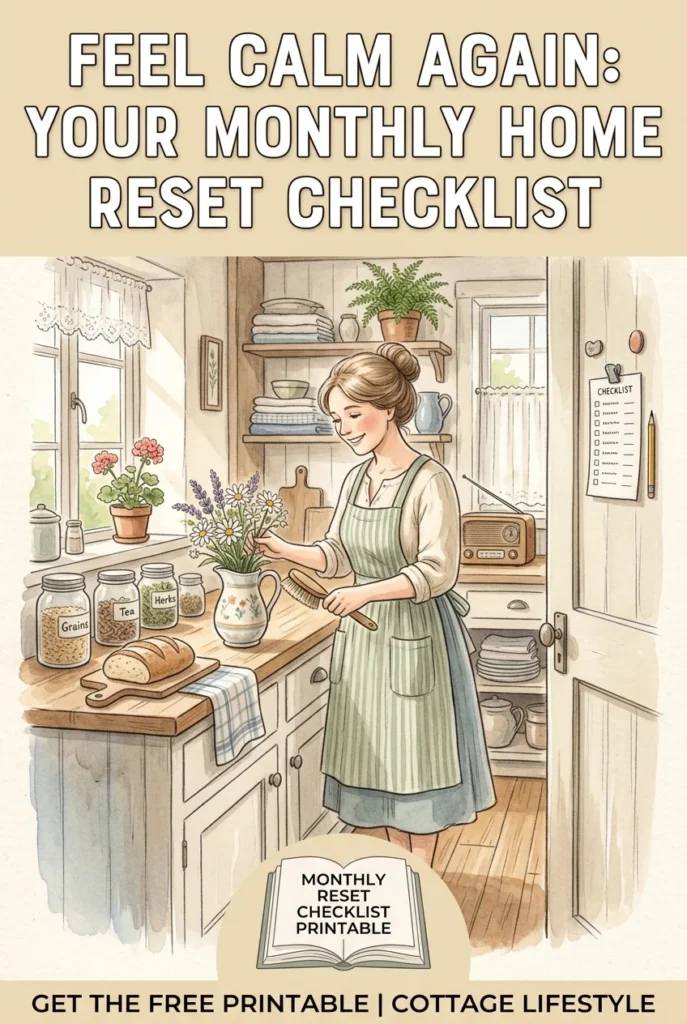
A calm, practical monthly reset you can follow in small pockets of time—plus a printable checklist you can download at the bottom of this post.
If your home ever feels “fine” but not quite settled, a monthly reset can change everything. Not because you’re chasing perfection, but because you’re giving your space a gentle return to baseline: clear surfaces, refreshed rooms, restocked essentials, and a sense that your home is supporting you again.
This Cottage-inspired Monthly Home Reset Checklist is designed to feel steady, simple, and doable. It’s not a pressure-filled deep clean. It’s a rhythm—one intentional day (or several small sessions) each month where you move through your home with purpose rather than overwhelm.
A PDF version is available via the download link at the bottom of this post, so you can print it, keep it in a home binder, or place it somewhere you’ll actually use it.
Why a Monthly Home Reset Matters
Weekly tidying helps, but certain messes build quietly: dusty corners, cluttered cupboards, half-used products, and those “I’ll deal with it later” piles. A monthly home reset works because it targets what normal day-to-day routines miss.
Done consistently, it can help you:
- Reduce background stress by removing small annoyances that add up.
- Protect your time by preventing clutter and chores from snowballing.
- Make your routines easier when supplies are stocked and spaces are functional.
- Create a calmer atmosphere with simple, visible wins (fresh linens, clear counters, brighter rooms).
How to Use This Checklist (Without Turning It Into a Marathon)
The goal is a reset that feels kind and flexible. You do not need to complete every task in one day, and you don’t need to follow a strict order. This checklist works whether you prefer to:
- Choose one room per day for a week,
- Batch similar tasks (all dusting, then all floors), or
- Do a “power hour” across the whole house and save deeper tasks for later.
Pick Your Reset Style
Option 1: One Gentle Day
Set aside a calm day (or half-day) once a month. Put on a timer, open a window, and take breaks. Aim for progress, not perfection.
Option 2: Three Short Sessions
Split the reset into three categories—Clean, Declutter, Restock—across three different days. This works well if your month is busy or your energy varies.
Option 3: One Room at a Time
Move room-by-room and finish each space before you move on. That “done” feeling can be motivating, especially if you’re prone to starting everywhere and finishing nowhere.
The Monthly Home Reset Checklist (Cottage-Inspired and Practical)
Below is the same flow reflected in the printable: Deep Clean, Declutter, Restock, and Refresh. Use what fits your season and your home. Skip what doesn’t.
1) Deep Clean: The Quiet Build-Up
A monthly reset often starts with deep cleaning—not the intense, top-to-bottom kind, but the targeted cleaning that makes your home feel noticeably lighter. These are the areas where dust and grime gather slowly, even when you’re keeping up with weekly routines.
Kitchen and Bathrooms
Scrubbing kitchens and bathrooms refreshes the spaces you use most. A focused clean here tends to give the biggest “reset” feeling for the least amount of time.
- Wipe down kitchen surfaces and cabinet fronts as needed.
- Clean sinks and taps until they look and feel fresh.
- Scrub showers, tubs, and toilets.
- Quick-check bins for odors, leaks, or sticky spots and clean if necessary.
Dust and Floors (Room by Room)
Dusting and vacuuming each room creates an immediate sense of calm. If you’re short on time, focus on what you see and touch most: entryways, living areas, and bedrooms.
- Dust obvious surfaces (tables, shelves, window sills).
- Vacuum rugs and high-traffic zones.
- Spot-mop floors where it matters most (kitchen, bathroom, entry).
Windows, Curtains, and Linens
Washing windows and curtains helps your home feel brighter and more open. Changing bed linens is a small task that delivers a big sense of renewal—especially at the start of a new month.
- Clean windows and mirrors for more light.
- Wash or refresh curtains as needed (depending on your home and season).
- Change bed linens for a clean, reset feeling.
Reminder: none of these tasks need to be rushed or squeezed into one day. Spreading them out is often what makes the reset sustainable—and more enjoyable.
2) Declutter: Let the Home “Breathe” Again
Decluttering is often where the biggest shift happens. When the extra items leave, your home functions better—and your mind tends to follow. The goal is not minimalism for its own sake; it’s alignment with how you live now.
Closets and Storage Areas
Tidying and organizing closets can create space physically and mentally. Even one shelf or one drawer can make your daily routine smoother.
- Return anything that migrated into the wrong room.
- Make a simple donate pile for items you no longer use.
- Group like with like so you can find things quickly (and stop rebuying what you already own).
Cupboards and Pantry Shelves
Clearing out cupboards and pantry shelves helps remove forgotten items, makes meals easier to plan, and keeps your kitchen working for you instead of against you.
- Check dates and discard anything that’s no longer usable.
- Consolidate duplicates and half-used items where appropriate.
- Place frequently used staples where you can see and reach them.
If you tend to keep items “just in case,” try a gentle question: Would I choose this again today? If not, it may be ready to move on—especially if it can help someone else through donation.
3) Restock: A Gentle Form of Preparation
Restocking is a simple act of future-you care. When basics are in place, the month runs more smoothly—fewer last-minute errands, fewer small frustrations, and more breathing room.
Pantry Staples
Replenishing pantry staples helps you prepare nourishing meals without stress. The goal is not to stock everything—just the essentials that support your everyday cooking.
- Review what you use most and top up as needed.
- Make a short list before shopping to avoid overbuying.
- Bring order back to open bags, jars, and containers so you can see what you have.
Household and Personal Essentials
Restocking household supplies and personal essentials can reduce those “we ran out” moments.
- Check cleaning supplies, laundry items, and everyday basics.
- Replace items that are nearly finished so you’re not caught off guard mid-task.
- Do a quick scan of personal care essentials and replace what’s needed.
Fresh Fruits and Vegetables
Bringing in fresh fruits and vegetables adds color and life to the kitchen, and it often encourages more mindful choices during the month.
- Refresh your produce drawer.
- Wash and store items in a way that makes them easy to grab.
- Place ready-to-eat options at eye level so they’re actually used.
4) Refresh: Comfort and Joy (Without Overcomplicating It)
This final section is where your home moves from “tidy” to “nurturing.” It’s also where the cottage-inspired feeling comes through most: simple care, natural touches, and a sense of ease.
Plants, Flowers, and Small Details
Watering houseplants and adding fresh flowers can lift the mood of a room quickly. Even if you don’t buy flowers, resetting what you already have—clearing a table, wiping a vase, opening a window—can make a space feel newly cared for.
- Water plants and remove any dead leaves.
- Freshen up a surface that’s become a drop zone.
- Let in fresh air where you can.
Loose Meal Planning
Taking time to loosely plan meals creates structure without rigidity. It’s meant to support you, not control you.
- Choose a few go-to meals for busy days.
- Note what ingredients you already have before you shop.
- Keep it flexible so your plan can adapt to your week.
Rest, Reflection, and Self-Care
Caring for your home also means caring for yourself. A reset is a natural moment to check in: What’s been working? What’s been draining? What needs to change next month?
Carve out time—however small—for rest and reflection. The goal is not to add another task, but to end the reset feeling steadier than when you began.
Tips to Make Your Monthly Reset Easier (and More Likely to Happen)
- Start with one visible win. Make a bed, clear a counter, or empty a bin—something that instantly changes the feel of the room.
- Use a timer. Ten or twenty minutes is often enough to regain momentum without burning out.
- Carry a “put-away basket.” Walk through the house once, collect out-of-place items, then put everything away in one round.
- Don’t deep clean what you’re about to declutter. Clear the clutter first; cleaning is easier when surfaces are open.
- Keep donation simple. One bag or box at a time is still progress. Set it near the door so it actually leaves.
- Match tasks to your energy. Low-energy day? Declutter a drawer. High-energy day? Tackle floors or bathrooms.
Printable PDF Download
This Monthly Home Reset Checklist is available as a printable PDF via the download link at the bottom of this post. Print it, tuck it into a binder, hang it inside a cupboard door, or keep it nearby as a gentle reminder of what matters most.
Because the checklist is meant to be kind and flexible, feel free to adapt it to your home, your season, and your rhythm. A monthly reset isn’t about doing more—it’s about doing what supports you best.
Related Printables and Routines You May Like
If you’re building a simple home management system, these resources pair well with a monthly reset:
- Daily Homemaking Routine Checklist – Free Printable Download
- Weekly Homemaking Schedule – Free Printable Download
- Household Tasks Master List – Free Printable Download