
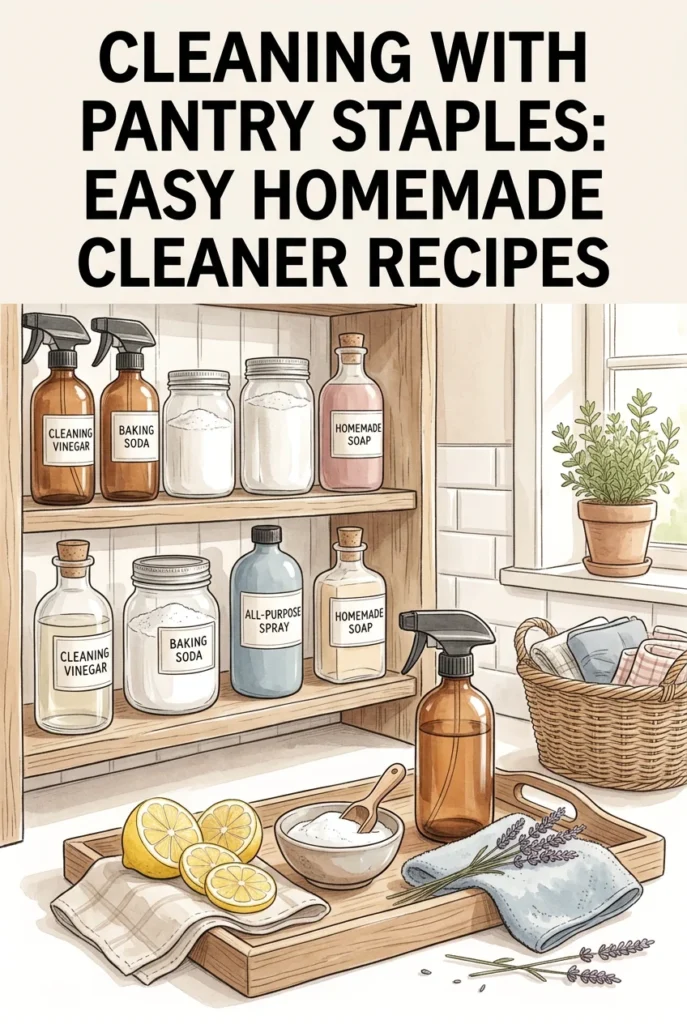
Make everyday cleaning solutions at home with common pantry staples—so you can cut costs and reduce exposure to lingering commercial chemicals.
Cleaners are a routine cost of running a home, and that cost adds up quickly. Many commercial products can also leave behind fragrances, allergens, or harsher chemicals that may trigger skin or respiratory irritation in sensitive adults, children, and pets. Even when a product works well, it can be frustrating to juggle multiple specialty bottles for different rooms—glass cleaner, bathroom cleaner, degreaser, floor cleaner—when the day-to-day mess is often the same: fingerprints, splashes, soap film, cooking grease, tracked-in dust, and general buildup.
Homemade cleaners are a practical alternative: they’re typically cheaper to make, easy to customize, and rely on familiar ingredients such as baking soda and vinegar—naturally occurring chemicals you may already keep on hand. The goal isn’t to make cleaning complicated; it’s to make it more manageable. When you can mix a small batch in minutes and refill as needed, it becomes easier to clean as you go, which usually means less scrubbing later. Below are 10 homemade cleaner recipes you can try, along with clear use-cases and simple steps.
Why Homemade Cleaners Matter
For many households, the goal is straightforward: keep surfaces visibly clean while avoiding unnecessary irritants. Natural-leaning recipes can be helpful when you want more control over what’s used on countertops, floors, fixtures, and fabrics. They can also be a smart option in homes where scent sensitivity is an issue, since you can keep blends unscented or lightly scented instead of using strong perfumes that linger.
Just as importantly, these recipes support consistent cleaning habits. When your supplies are easy to mix and easy to replace, it’s simpler to keep up with small tasks before grime becomes a bigger job. A quick wipe of the sink after brushing teeth, a fast pass on the kitchen counter after cooking, or a weekly mop of high-traffic floors can prevent buildup that otherwise requires stronger products and more elbow grease. Homemade options also reduce the number of disposable plastic bottles you cycle through, since most recipes can be made in a reusable spray bottle, jar, or bucket.
Before You Start: A Few Smart Ground Rules
Keep it practical and safe
- Label everything (especially if you reuse spray bottles). Include the ingredients and the date you mixed it so you know what’s inside and how fresh it is.
- Test first on a small, hidden spot—particularly on stone, specialty finishes, and delicate fabrics. This matters for painted cabinets, sealed and unsealed grout, hardwood finishes, and natural stones like marble or granite.
- Ventilate when using sprays, even when the ingredients are common pantry items. Open a window or run a fan so mist doesn’t linger in the air.
- Store out of reach of children and pets. “Naturally inspired” does not mean safe to swallow, and concentrated ingredients can still irritate eyes or skin.
- Do not mix with bleach or other commercial chemicals. Combining cleaners can create dangerous fumes or reduce effectiveness, so keep homemade blends separate from store-bought disinfectants.
It’s also worth keeping expectations realistic. These recipes are excellent for routine cleaning, deodorizing, and tackling everyday messes. If you’re dealing with a situation that requires true disinfection (for example, illness in the home), you may still want to follow public health guidance and use an appropriate disinfectant according to label directions. For daily upkeep, though, gentle homemade blends can be a reliable part of your routine.
Quick Reference: What Each Recipe Is Best For
| Recipe | Best Uses | Format |
|---|---|---|
| Baking Soda + Vinegar | Countertops, sinks, faucets | Sprinkle + spritz or spray bottle |
| Borax + Castile Soap | Laundry boosting, bathroom cleaning | Paste |
| Murphy’s Solvent | Tile floors | Bucket solution |
| Baking Soda + Lemon | Faucets, stainless steel fixtures | Scrub with lemon half |
| Toothpaste + Baking Soda (Grout) | Tile grout | Paste + brush |
| Dish Soap + White Vinegar | Kitchen surfaces, cabinets, grease | Spray bottle |
| Vinegar + Water | Allergen-free floors, counters, fans | Wipe-down solution |
| Carpet Stain Remover Paste | Carpet stains | Jarred paste |
| Dusting Spray (Tea + Lemon + Water) | Furniture, appliances | Spray |
| All-Purpose Cleaner | Whole-home general cleaning | Spray bottle |
The 10 Best Homemade Cleaner Recipes
1) Baking Soda and Vinegar
If you want a fast, no-fuss option for countertops, sinks, and faucets, baking soda and vinegar is one of the simplest combinations to reach for. Baking soda provides gentle abrasion for stuck-on residue, while vinegar helps cut through some buildup and leaves surfaces looking refreshed after a thorough wipe-down.
This combo is especially handy for the “everyday” areas that see constant use: the kitchen sink after meal prep, bathroom sinks after morning routines, and frequently touched fixtures. For tougher messes, letting the mixture sit briefly can help loosen grime so you can wipe it away with less scrubbing.
How to use it (two easy options)
- Sprinkle + spritz method: Wet the surface lightly, apply baking soda directly, then spritz vinegar over it.
- Let it sit: Allow it to soak for a few minutes so it can loosen residue.
- Wipe clean: Use a cloth or sponge to wipe the area clean.
Prefer a ready-to-go bottle? You can also mix 2 cups of vinegar with 1 cup of baking soda in a spray bottle to use whenever you like. If you do this, add the baking soda slowly and carefully—this mixture will fizz. Use a bottle with a little extra headspace, and store it where it won’t be shaken or tipped easily. As always, patch test first, especially on specialty finishes and natural stone surfaces where acids may dull the shine.
2) Borax and Castile Soap
Borax is widely used as a laundry booster and can strengthen a cleaning blend. When combined with Castile soap—known for cutting grease—it becomes a versatile paste you can use in multiple areas. Many people like this type of paste for tubs, shower walls, and areas where you want a product that clings instead of running down the surface.
Because it’s thicker than a spray, it works well as a “targeted” cleaner: you can apply it directly to problem spots like soap scum lines, dingy corners, or high-touch handles and then wipe away. In the laundry room, it can be used to boost cleaning power on heavily soiled loads or to spot-clean fabric when needed.
Ingredients
- 4 cups of Castile soap
- 2 cups of borax
- Optional: a few drops of essential oil for scent
Steps
- Combine the Castile soap and borax until a paste forms.
- Before you wipe or wash, make sure the borax is fully dissolved.
- If you want to personalize the scent, add a few drops of essential oil and mix again.
This paste can be used with laundry or for bathroom cleaning. Because Castile soap is meant to cut grease, the result won’t be greasy. For practical use, scoop a small amount onto a damp sponge or cloth, rub the area using light pressure, then rinse or wipe with clean water to avoid any residue. If you choose to add essential oils, keep the scent mild and consider pet sensitivity, since some animals react to certain concentrated fragrances.
3) Murphy’s Solvent (Murphy Oil Soap + Baking Soda)
For tile cleaning, a bucket solution made with Murphy oil soap and baking soda can work well when you need a straightforward floor routine. Tile floors collect dust, crumbs, and sticky spots, especially in kitchens and entryways. A simple bucket method lets you cover a larger surface area efficiently, and it’s easy to refresh the water if it starts to look dirty.
This blend is best used as a routine floor cleaner rather than a heavy-duty strip. A consistent schedule—such as weekly mopping and quick spot-wiping in between—helps prevent grime from settling into grout lines and textured tile surfaces.
Ingredients
- 1 liter of water (in a bucket)
- 1 tablespoon Murphy oil soap
- 1 tablespoon baking soda
Steps
- Mix the Murphy oil soap and baking soda into the bucket of water.
- Wipe the tile floor as many times as needed.
- When finished, wipe the tiles again with fresh water. Baking soda can leave tiles looking cloudy if not rinsed.
This solution may also help dispel insects that show up more often in warmer climates. For best results, wring out your mop so the floor doesn’t stay overly wet, especially on grout that may be unsealed. If your tiles have a high-gloss finish, rinsing thoroughly is key to avoiding a dull film.
4) Baking Soda and Lemon
Baking soda paired with lemon is a practical approach for faucets and stainless steel fixtures—especially when you want a clean finish and a fresh, natural scent. This is a helpful option for mineral spots or dullness that can build up around sink fixtures, handles, and splash zones.
Because you’re scrubbing with a lemon half, it’s easy to control exactly where the cleaner goes. That makes it useful for tight spaces around faucet bases and seams where grime can collect. It’s also a good “quick reset” cleaner before guests arrive.
Ingredients
- 1 lemon (cut in half)
- Baking soda
- Microfiber cloth
Steps
- Cut the lemon in half.
- Sprinkle baking soda onto the cut side.
- Use the lemon to scrub the surface you want to clean.
- Once the area is covered, wipe clean with a microfiber cloth.
This can help stainless steel look clean and shiny. If you like the results, keep baking soda and lemons handy and repeat a few times per week. To avoid streaks on stainless steel, wipe in the direction of the grain and finish with a dry section of the microfiber cloth. As with other acidic ingredients, patch test first on sensitive finishes, and avoid using lemon on natural stone that can be etched by acids.
5) Toothpaste and Baking Soda for Grout
Grout cleaning can be one of the most time-consuming tasks in a bathroom or kitchen. If you’re looking for a non-toxic option that still does heavy lifting, a simple paste can help loosen dirt and mold. The small particle texture of toothpaste and baking soda provides gentle scrubbing power, which can be especially helpful in textured grout lines where grime settles over time.
This approach works best when you can let the paste sit undisturbed. If your grout is heavily stained, you may need to repeat the process, but the “apply and wait” step reduces the amount of force you have to use with a brush.
Ingredients
- White toothpaste
- 1 tablespoon baking soda
- Toothbrush (or any small brush that fits between tiles)
Steps
- Mix a small amount of white toothpaste with 1 tablespoon of baking soda to form a paste.
- Apply the paste directly to the grout lines.
- Let it sit for about one hour.
- Scrub with a toothbrush (or a small brush) until the dirt and mold begin to lift.
- Rinse away with fresh water.
If you’re cleaning a larger area, work in small sections so the paste doesn’t dry out before you scrub. Once you’re done, a final wipe with clean water helps remove any remaining residue from the tile surface, leaving the grout looking fresher. For bathrooms, running the exhaust fan or opening a window afterward can help keep moisture down so grime is less likely to return quickly.
6) Dish Soap and White Vinegar
This kitchen-focused blend is useful when you want something that can cut grease and lift everyday dirt across common surfaces. It’s a good fit for the areas that tend to collect oily residue, such as around the stove, on cabinet fronts near handles, and on backsplashes where cooking splatter lands. It can also be used as a quick wipe-down for sinks and faucets when you want a cleaner look without pulling out multiple products.
Because it’s in a spray format, it’s easy to keep under the sink and use in small bursts throughout the day—especially after cooking. That kind of frequent, light maintenance often prevents stubborn, sticky layers from forming.
Ingredients
- 1 tablespoon Dawn dish soap
- 1 liter vinegar
Where it works well
- Countertops
- Sinks
- Faucets
- Kitchen cabinets
Steps
- Add 1 tablespoon of Dawn dish soap to 1 liter of vinegar.
- Pour into a spray bottle for easy use.
- Spray, wipe, and repeat as needed on greasy or frequently touched areas.
Dawn is gentle on many materials and pairs with vinegar to cut through grease and dirt. This mix can also be used in other areas of the house. It may even help remove ink from fluffy pets if they get into it with the kids. For cabinets and painted surfaces, use a lightly damp cloth rather than soaking the area, then dry with a clean towel so moisture doesn’t sit on seams or edges.
7) Vinegar (Allergen-Free Wipe-Down)
If allergic reactions are a concern in your household—especially for children or pets—vinegar is an allergen-free option that can be used across multiple surfaces. It’s a simple, low-cost staple that can handle routine wipe-downs without adding fragrance or leaving behind heavy residues. Because it’s so straightforward, it can be an easy “default” cleaner when you’re not sure what to use and you want to keep things minimal.
This recipe is also useful for quick cleaning of high-touch spots: light switches, door handles, and frequently used counters. Keeping a mixed bottle handy encourages fast cleanup before dust or smudges become more noticeable.
Ingredients
- 3 cups vinegar
- 1 liter water
Steps
- Combine 3 cups of vinegar with 1 liter of water.
- Use it to wipe floors and countertops.
This is also a helpful cleaner for oscillating fans, including vents and blades. Other cleaners can travel through the air and trigger allergies, so it’s often best to keep air-vent cleaning as allergen-free as possible. If the smell of vinegar is a concern, it typically fades as the surface dries, and good ventilation speeds that up. For delicate surfaces, apply to a cloth first rather than spraying directly, and avoid using vinegar on natural stone.
8) Carpet Stain Remover (Salt + Borax + Vinegar)
Carpet stains happen, and you don’t necessarily need to give up on a rug or carpet because of a tough spot. A simple stored paste can help you tackle stains with less guesswork. This recipe is useful for common spills and tracked-in messes, especially when you catch them early and don’t let them set into the fibers.
As with any carpet treatment, the key is to avoid over-wetting the area. Too much moisture can push stains deeper or take longer to dry. When possible, blot first to remove excess liquid before using the paste.
Ingredients
- 1/4 cup table salt
- 1/4 cup borax
- 1/4 cup white vinegar
Steps
- Mix the salt and borax together in a small bowl.
- Add the vinegar and stir until a thick paste forms.
- Test the paste on a small,