
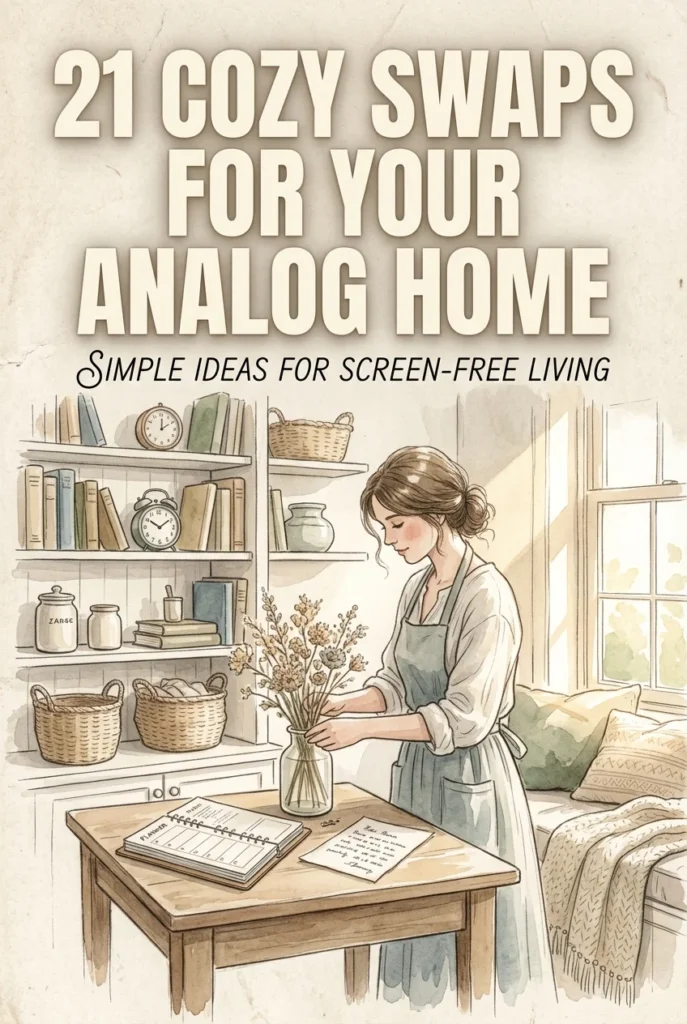
A calm, tactile, screen-light home is not a fantasy—it is a set of small decisions you can start making today.
Everything in modern life is designed to blink, buzz, scroll, refresh, and demand attention. Without noticing, many homes have shifted from being places of rest and rhythm into places where we manage devices: charging, syncing, updating, and reacting. Cords stretch across nightstands. Notifications cut into meals. Even “downtime” becomes screen time.
Creating an analog home is not about rejecting modern life or pretending technology does not exist. It is about reclaiming presence inside the space where you live. It is choosing texture over touchscreen, ink over algorithm, sunlight over screen glow. In practice, an analog home is a home that feels grounded, creative, warm, and deeply human—because it is designed to support attention, not fragment it.
Why this matters: your home environment influences your nervous system every day. When your space constantly reminds you of work, news, and social feeds, your mind stays on alert. When your home offers clear cues for rest, focus, conversation, and quiet, your body can exhale. The ideas below are simple, realistic, and flexible. Start with one or two and build from there.
What an “Analog Home” Really Means (and What It Doesn’t)
An analog home does not require throwing away your phone, living without the internet, or refusing modern convenience. It means technology stops setting the emotional temperature of your rooms. You decide when screens belong—and when they do not.
Think of it as designing for intention. More objects you can touch, hold, open, turn, and write on. Fewer default habits that pull you into passive consumption. More moments that feel like they belong to you.
21 Ways to Build an Analog Home, One Choice at a Time
1. Create a Dedicated “No-Screen” Room (or Corner)
Choose one space in your home where screens are not allowed. It can be a full room or a small corner, but it should feel clear and consistent: no television, no laptop, no tablet.
Furnish it with books, journals, a comfortable chair, blankets with texture, and warm lighting. If you want sound, use gentle instrumental music rather than a video feed. The goal is to make the boundary obvious so your mind learns: when I sit here, I slow down.
2. Swap Digital Clocks for Analog Timepieces
Replace glowing digital clocks with analog ones: a wall clock with moving hands, a small brass alarm clock on the bedside table, or a kitchen clock with a simple face and clear numbers.
Time feels different when you can see it travel in a circle instead of flashing in digits. Many people find that analog clocks encourage a steadier pace, especially in the morning and evening when you are most vulnerable to scrolling.
3. Build a Real Home Library
Create shelves for physical books. Mix practical guides with novels, poetry, essays, and coffee table books. If you enjoy hardcovers, include them; if paperbacks suit your life, include those too.
Make the library personal. Add handwritten notes inside favorites. Keep paper bookmarks nearby. Arrange by subject, author, or color—whatever makes it easy to return to reading. A home library is a quiet alternative to endless feeds because it invites depth rather than speed.
4. Use a Paper Planner Instead of an App
Move your to-do lists and appointments onto paper. Write in ink. Cross things off by hand. Use sticky notes, highlighters, and margin space for quick sketches or reminders.
Paper planning creates a single, calm surface for your responsibilities. It also reduces the chance that “checking your schedule” becomes an accidental 20-minute visit to notifications.
5. Create a Morning Ritual Without Devices
Try not to begin the day with notifications. Give yourself a short buffer between waking and consuming information.
Open a window, stretch, make herbal tea, read a few pages, or journal. Even a few minutes of device-free morning time helps your first thoughts belong to you instead of the internet.
6. Display Handwritten Notes Around Your Home
Use handwriting as decor and as a cue for intention. Place handwritten quotes, reminders, prayers, or simple “remember” notes where you will see them: above a desk, inside a cookbook, on a hallway pinboard, or tucked into a drawer.
Frame a note you love, or tape it up casually. Ink has personality, and your handwriting carries your energy in a way typed text cannot.
7. Cook from Physical Recipes
Use printed recipe cards or cookbooks instead of propping a phone against a jar. Keep recipes in a binder, a wooden box, or a stack on a kitchen shelf.
Annotate as you go. Adjust ingredients in pen. Write notes about what worked. Over time, your kitchen becomes a living archive of meals you actually make, not just recipes you saved and forgot.
8. Bring in Textured, Tactile Materials
An analog home feels good to touch. Add linen curtains, cotton throws, woven baskets, wooden furniture, ceramic mugs, stoneware bowls, and textured rugs.
The point is not perfection or a particular aesthetic. It is sensory warmth. Natural materials help your home feel grounded because they invite your attention back into the physical world.
9. Keep a Basket for Devices
Instead of trying to “quit” devices, set boundaries that fit real life. Place a woven basket or tray near the entryway or living room and use it as a home for phones during certain hours.
Out of sight reduces habit. When your phone has a deliberate resting place, you are less likely to carry it from room to room as background company.
10. Create a Writing Corner
Set up a small desk or table with quality paper, envelopes, pens, and a lamp. Make it easy to sit down and write without searching for supplies.
Use it for letters, reflections, lists, and project ideas. Writing by hand slows your thinking and often clarifies what you actually mean—without tabs, pop-ups, and distractions.
11. Add Soft, Layered Lighting
Replace harsh overhead lighting with layered lamps. Use warm-toned bulbs, and place table lamps in corners where light can pool gently rather than flood the room.
If you enjoy candles, light plant-based candles in the evening. Warm lighting signals rest and helps a space feel intimate, calm, and human.
12. Keep Fresh or Dried Florals
Bring nature indoors in small, simple ways: a jar of dried lavender, eucalyptus branches, seasonal blooms, or pressed flowers in a frame.
Natural elements make a home feel alive without adding noise. They also create gentle visual focus points that are not screens.
13. Designate “Analog Evenings”
Choose certain evenings as analog nights: no television and no scrolling. Replace default entertainment with activities that create presence.
Options can be simple: board games, puzzles, reading, conversation, sketching, knitting, crocheting, or listening to music while tidying. Over time, your evenings begin to feel intentional rather than accidental.
14. Use Physical Photo Albums
Print photos and place them in albums. Label them with dates, and add brief captions if you like.
Keep an album where guests can flip through it without asking for your phone. Memories feel different when they exist beyond a cloud server—accessible without a login and experienced at a natural pace.
15. Create a Listening Ritual
Instead of letting endless playlists become background noise, choose a specific album and listen from beginning to end. Let listening be the activity, not just filler.
Sit while it plays, fold laundry, journal, or watch the sunset. Intentional listening restores attention because it asks you to stay with one thing for a while.
16. Keep a Home Maintenance Notebook
Track cleaning routines, seasonal tasks, plant care schedules, and home projects in a physical notebook. Divide it into sections and add checklists you can revisit.
Include reflections: what worked, what did not, and what you want to change next month. This turns home management into a living system you manage with awareness rather than a stream of reminders that disappear.
17. Reduce Visual Digital Clutter
Notice the “tech traces” that keep your mind tethered to connectivity: visible routers, charging cords on counters, screens left out by default.
Hide cords where possible, store extra cables in a drawer, and keep surfaces clearer. The less your rooms look like charging stations, the calmer they tend to feel.
18. Introduce Slow, Hands-On Hobbies
Choose hobbies that require your hands and attention: crochet, sketching, gardening, embroidery, painting, bread baking using plant-based ingredients, pressing flowers, or hand-sewing small projects.
Slow hobbies create a natural alternative to scrolling because they offer progress you can feel. When your hands are busy, the mind often softens.
19. Create a Paper Mail Station
Give mail a home so it does not become visual noise. Use a tray, basket, or wooden organizer. Sort it weekly, and file important documents in labeled folders.
Keep stationery nearby for outgoing letters. Order brings calm, and a simple system prevents paper piles from becoming a background stressor.
20. Set a Household Rhythm
Create weekly rhythms that do not revolve around digital entertainment. Examples include a Sunday reset routine, a midweek baking day, a monthly deep-clean ritual, or a Friday evening reading hour.
Rhythms anchor your home in time. They reduce decision fatigue because you do not have to reinvent your week every Monday.
21. Protect Silence
One of the most powerful analog practices is protecting silence. Turn off background noise. Sit by a window. Watch dust move in sunlight. Listen to the wind outside.
Silence is not emptiness. It is restoration. It gives your nervous system a chance to settle, and it makes space for your own thoughts to return.
Tips to Make an Analog Home Stick (Without Being Extreme)
- Start with one boundary. For example: phones in the basket during dinner, or no screens in the bedroom.
- Make the analog choice easier than the digital one. Leave a book on the coffee table, keep a notepad in the kitchen, set pens where you can reach them.
- Use “replacement habits,” not willpower. If you remove TV one evening, plan what will replace it (puzzle, conversation, music, or reading).
- Design for friction. Store chargers out of sight so using a device is a decision, not a reflex.
- Choose cues that calm you. Warm lighting, texture, and natural materials quietly signal rest.
- Keep it flexible. An analog home is not a rulebook; it is a direction. Adjust by season, schedule, and family needs.
A Simple Way to Begin This Week
If you want an easy starting point, try a three-step reset that does not require buying anything:
- Pick one screen-free zone (a chair, a corner, or a room).
- Create one analog anchor there (a book stack, a journal and pen, a lamp).
- Choose one recurring time to use it (ten minutes in the morning, or one evening a week).
Small, repeated choices are what change the emotional feel of a home.
Conclusion: Presence Is the Point
An analog home does not mean you remove every device. It means your devices no longer define your attention, your mood, or the pace of your day. It means choosing ink, wood, linen, ceramic, paper, and