
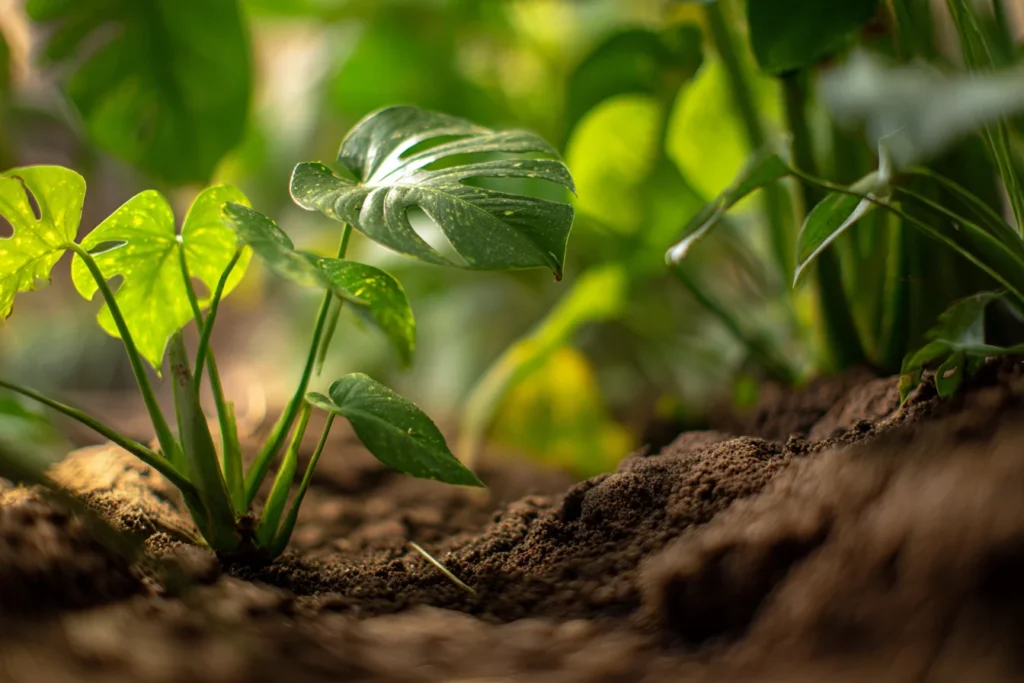
Best Soil For Monstera Plants: Creating the Perfect Growing Medium
Why Soil Quality Matters for Monstera Plants
As someone who’s been growing Monstera plants for years, I can tell you that soil quality is absolutely fundamental to their health. The right soil mix provides essential support for your Monstera’s root system while delivering the perfect balance of moisture, nutrients, and aeration.
Monstera plants are native to tropical rainforests where they grow in soil that’s rich in organic matter yet drains well. Replicating these conditions in your home is key to growing thriving, beautiful specimens with those iconic fenestrated leaves.
The Ideal pH Level for Monstera Plants
Monstera plants prefer slightly acidic soil with a pH between 5.5 and 6.5. This pH range allows them to efficiently absorb nutrients from the soil, promoting healthy growth and vibrant foliage.
If you’re unsure about your soil’s pH, inexpensive testing kits are available at most garden centers. While Monsteras can tolerate slightly higher or lower pH levels, staying within this optimal range will give your plant the best chance to thrive.
Essential Components of a Good Monstera Soil Mix
Organic Materials for Moisture Retention
A quality Monstera soil mix needs components that hold moisture without becoming waterlogged. The two most common options are:
- Sphagnum peat moss: Excellent water retention with fine particles and coarse texture
- Coco coir: Sustainable alternative to peat moss, though it may compact more over time
Drainage and Aeration Materials
To prevent root rot, your soil mix needs materials that create air pockets and allow excess water to drain freely:
- Pine bark fines: Small pieces of coniferous bark that resist compaction and create air spaces
- Perlite: Lightweight volcanic glass that improves drainage and prevents soil compaction
- Orchid bark: Larger chunks that create excellent air pockets in the soil
The Perfect DIY Monstera Soil Recipe
After experimenting with various combinations, I’ve found this recipe works exceptionally well for all Monstera varieties:
- 4 parts pine bark fines
- 1 part perlite
- 1 part sphagnum peat moss or coco coir
To prepare this mix, combine all ingredients in a large container and moisten slightly. Mix thoroughly until well combined, then use it to pot your Monstera. This recipe provides excellent drainage while retaining just enough moisture for healthy growth.
Store-Bought Soil Options for Monstera Plants
If you prefer not to mix your own soil, several commercial options can work well with some modifications. Start with a quality indoor plant potting mix as your base, then improve its drainage properties.
A good approach is to mix 5 parts standard houseplant potting soil with 1 part orchid bark and 1 part perlite. This creates a well-draining mix that still retains adequate moisture for your Monstera.
Avoid using cactus or succulent soil on its own, as it typically drains too quickly for Monstera plants. However, it can be mixed with standard potting soil if your plant seems to be retaining too much moisture.
Signs Your Monstera Is in the Wrong Soil
Your Monstera will communicate when it’s unhappy with its soil. Watch for these warning signs:
- Yellowing leaves: Often indicates overwatering or poor drainage
- Drooping leaves despite moist soil: May signal root problems from waterlogged conditions
- Brown spots on leaves: Potential symptom of root rot from consistently wet soil
- Slow or stunted growth: Could indicate compacted soil or nutrient deficiencies
- Soil that never seems to dry out: Suggests poor drainage and aeration
If you notice these symptoms, consider repotting your Monstera with fresh, well-draining soil mix as soon as possible.
How Pot Size and Type Affect Soil Choice
While the basic soil composition remains the same regardless of pot size, there are some considerations to keep in mind:
Larger pots hold more soil and therefore retain moisture longer. If you’re using a particularly large pot, you might want to increase the drainage components slightly to prevent waterlogging.
The pot material also matters. Terracotta pots are porous and allow soil to dry more quickly, while plastic and glazed ceramic pots retain moisture longer. For plastic or glazed pots, a mix with slightly more drainage materials can be beneficial.
Repotting Monstera Plants: Soil Considerations
When repotting your Monstera, always use fresh soil rather than reusing old mix. Old soil can be compacted, depleted of nutrients, and potentially harbor pests or disease.
I recommend repotting Monstera plants every 1-2 years, or when you notice roots circling the pot or growing out of drainage holes. Spring and summer are ideal times for repotting, as the plant is in its active growing phase.
When repotting, gently loosen the root ball to encourage new growth, and trim away any damaged or rotting roots before placing in fresh soil.
Fertilizing Your Monstera in the Right Soil
Even the best soil mix will eventually need nutrient replenishment. I recommend fertilizing your Monstera during the growing season (spring and summer) with a balanced houseplant fertilizer diluted to half the recommended strength.
Apply fertilizer once a month during active growth periods, and reduce or eliminate fertilization during fall and winter when growth naturally slows. Over-fertilization can damage your plant, so it’s always better to under-fertilize than to apply too much.
Troubleshooting Common Monstera Soil Problems
Soil Staying Too Wet
If your soil isn’t drying out between waterings, add more drainage materials like perlite or orchid bark. You might also consider moving your plant to a terracotta pot, which allows for more evaporation through its porous surface.
Soil Drying Too Quickly
If your soil dries out too fast, increase the proportion of water-retentive materials like peat moss or coco coir. You might also consider whether the plant is receiving too much direct sunlight or is placed near a heat source that’s accelerating evaporation.
Soil Becoming Compacted
Over time, soil can become compacted, reducing aeration to the roots. If you notice this happening, gently aerate the soil with a chopstick or similar tool, making small holes around the plant without disturbing the roots. Consider repotting with fresh soil that contains more bark or perlite to resist compaction.
Conclusion
Creating the perfect soil mix for your Monstera is one of the most important steps you can take to ensure its long-term health and growth. The ideal mix strikes a balance between moisture retention and drainage, providing your plant with the conditions it needs to develop those stunning fenestrated leaves that make Monstera so popular.
Remember that even with the perfect soil, proper watering practices are essential. Allow the top 1-2 inches of soil to dry out between waterings, and adjust your care routine seasonally as your plant’s needs change. With the right soil foundation and appropriate care, your Monstera will reward you with years of lush, tropical beauty in your home.