
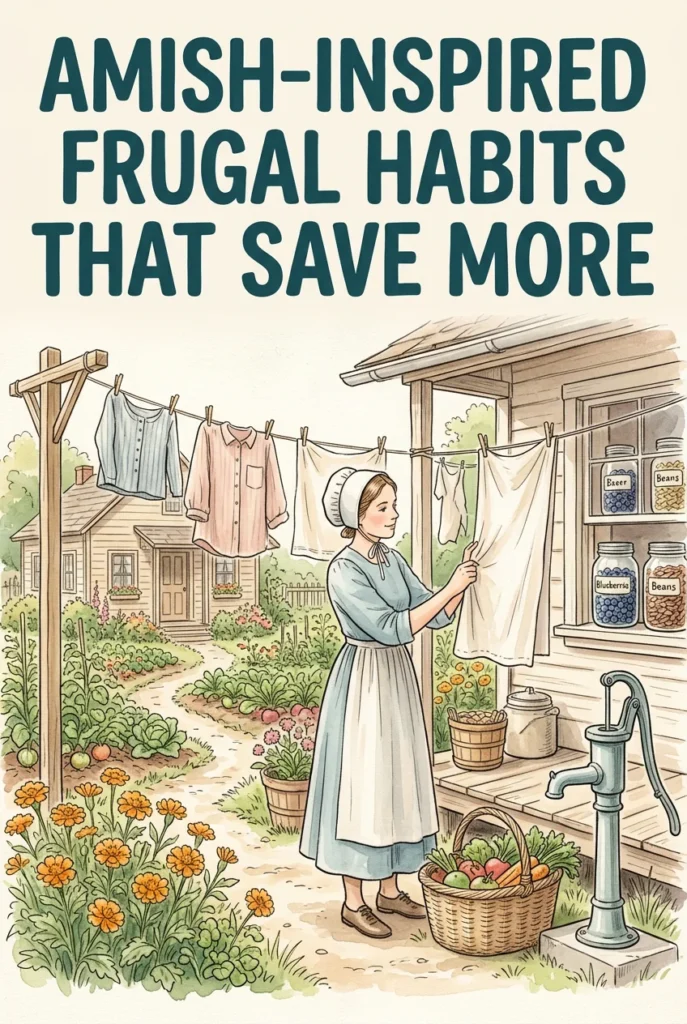
A clear, modern guide to saving money through simplicity, self-reliance, and smarter daily habits—without needing to live off-grid.
Many people spend years trying to “get ahead,” only to feel more stretched, more distracted, and less secure.
The Amish way of life offers a different blueprint: fewer conveniences, fewer unnecessary purchases, and more confidence in everyday skills.
Even if you never plan to live like the Amish, their approach highlights something that matters right now: when you reduce dependency and waste, you usually gain more money, time, and peace of mind.
Why Amish-Style Frugality Still Matters
The Amish lifestyle is often associated with simplicity, community, and a deliberate distance from many parts of modern consumer culture. In practice, that mindset tends to produce several outcomes that are relevant to any household:
- Lower spending because fewer purchases are treated as “normal” or “necessary.”
- Less debt pressure by avoiding common traps like credit card dependence and lifestyle upgrades.
- More resilience because basic skills reduce how often you need to pay for outside help.
- A healthier home environment when meals are homemade, waste is reduced, and consumption is more intentional.
The goal here is not to copy Amish life perfectly. It’s to borrow the principles that translate well: practical skills, careful spending, and a focus on long-lasting choices.
10 Frugal Habits to Adopt (Without Changing the Core of Your Life)
If you’re working toward a more self-reliant, off-grid-leaning lifestyle—or you simply want to stop overspending—start with the areas that create the biggest day-to-day impact.
1. Diversify Your Skills (So You Pay for Fewer Services)
If you want to rely mostly on yourself, skills are the foundation. The Amish are known for practical know-how that naturally reduces costs—things like sewing, food preservation, basic building, and making or repairing household items.
You don’t need to learn how to build a house to benefit from this idea. But learning to handle common problems can prevent frequent service calls and expensive replacements.
Mini-points to apply this at home
- Start small: learn basic repairs (like fixing a leaky sink, patching drywall, replacing a door hinge, or mending clothes).
- Build a “fix-it” habit: before replacing an item, check whether a simple repair is possible.
- Practice one skill at a time: cooking, sewing, basic woodworking, or gardening all add up over time.
2. Pay in Cash (And Avoid Debt Where Possible)
The Amish typically avoid credit cards and aim to stay debt-free. They work for what they need and pay for it with money they already have. The advantage is straightforward: if you don’t borrow, you don’t owe interest, and you don’t carry the stress of revolving balances.
For many people, the hardest part is giving up the instant gratification that credit makes possible. But waiting until you have cash in hand forces a pause—and that pause often prevents unnecessary spending.
Mini-points to try
- Use cash for problem categories: groceries, dining out, or personal spending often become more controlled with physical cash.
- Build a waiting rule: if you don’t have the money now, you wait and save for it instead of charging it.
3. Avoid Lifestyle Inflation (Resist the “Upgrade Cycle”)
One notable Amish money habit is that they don’t automatically upgrade just because something newer exists. While many households feel pressured to keep up with the latest technology and gadgets, Amish communities often opt out of that kind of consumer momentum.
This isn’t about refusing modern life; it’s about refusing unnecessary replacement. Buying fewer things—and buying things meant to last—reduces recurring costs.
Mini-points to keep spending stable
- Separate “want” from “need”: many upgrades are optional, even when marketing suggests otherwise.
- Delay big purchases: waiting helps you decide whether you truly need the item.
- Choose longevity: prioritize durable goods over items likely to be replaced in a few years.
4. Buy in Bulk (When It Truly Makes Sense)
When you do need to shop, buying in bulk can reduce both the cost per item and the frequency of store trips. Fewer trips can also mean savings on gas and time, which adds real value beyond the receipt total.
Bulk buying often requires more money upfront, but it can pay off in the long run if you purchase items you regularly use and can store safely.
Mini-points for smarter bulk buying
- Stick to staples: items you consistently use are safer to buy in larger quantities.
- Plan storage first: buy only what you can store without waste or spoilage.
- Reduce “emergency trips”: stocked basics help prevent convenience purchases.
5. Go Green to Reduce Waste and Ongoing Costs
“Going green” can help the environment, but it can also help your finances and your household routines. The Amish tend to live in a lower-waste way by default—using less, reusing more, and relying less on energy-heavy conveniences.
If living without electricity isn’t realistic for you, you can still adopt cost-saving habits like reducing waste, recycling, commuting less, and lowering energy use when possible.
Mini-points that are simple but meaningful
- Use less energy: small choices (like washing dishes by hand instead of running a dishwasher) can reduce consumption.
- Reduce trash: reuse containers, repair items, and avoid unnecessary disposables.
- Be intentional: “green” is often just another word for “less wasteful.”
6. Simplify Your Life (And Spend Less Without Feeling Deprived)
Simplicity is a practical antidote to constant marketing. You don’t need an extravagant wardrobe, the fanciest car, or the biggest home to live well. Many of those “must-haves” are luxuries that can quietly drain your budget month after month.
Downsizing—your home, your vehicle, or even just your routines—can free up money for savings, meaningful needs, and long-term stability.
Mini-points to simplify without overhauling everything
- Cut excess spending first: remove what you don’t value before cutting what you do.
- Choose function over image: a practical purchase usually costs less over time.
- Make “enough” a goal: contentment often improves when you stop chasing constant upgrades.
7. Cook From Scratch (Healthier, Cheaper, and More Flexible)
The Amish are widely known for cooking and baking. Making food at home from basic ingredients—and, when possible, from what you grow and harvest—can reduce grocery spending and improve the quality of what you eat.
Cooking from scratch also builds a useful skill: when you can turn simple ingredients into real meals, you rely less on costly convenience foods.
And if you enjoy it, homemade goods can even become a small income stream—something Amish communities often do through regular sales of baked items and homemade products.
Mini-points to make scratch cooking realistic
- Start with repeatable meals: focus on a few staples you can cook well and often.
- Use what you have: plan meals around ingredients already in your kitchen to reduce waste.
- Batch cook: cook once, eat multiple times, and reduce the temptation to buy takeout.
8. Consider Solar Panels (Or Other Renewable Options)
If your goal is to go off-grid long-term, renewable energy can be a practical path. Solar panels, for example, can help power a home using the sun. While this isn’t typically an Amish practice, it can be a useful modern alternative if living without electricity is not an option for you.
Solar can be expensive upfront, but it may provide a worthwhile return over time depending on your needs. Another option some homeowners explore is residential wind turbines to reduce monthly electricity costs.
Mini-points before you invest
- Clarify your goal: lower bills, energy backup, or a step toward off-grid living.
- Think long-term: the value of renewables is often realized over time, not immediately.
- Reduce usage first: conserving energy can make any power solution more effective.
9. Preserve Your Food (So Your Pantry Works Like a Backup Plan)
Food preservation is another Amish strength. Preserving food you grow, harvest, or buy in bulk can reduce grocery trips and help you rely less on last-minute store runs.
When preserved properly, foods stay usable longer while maintaining freshness. Two common methods mentioned often are freezing and dehydrating.
Mini-points to begin preserving
- Start with one method: freezing is usually the easiest entry point; dehydrating is another flexible option.
- Preserve what you already use: focus on foods you know you’ll eat.
- Rotate inventory: use older preserved items first so nothing gets forgotten.
10. Use a Clothesline (A Simple Way to Cut Utility Costs)
If you use a dryer multiple times a week, a clothesline can be a surprisingly effective change. Dryers are convenient, but they can increase your utility bill—exactly the kind of recurring cost frugal households try to reduce.
Since the Amish do not use electric dryers, they rely on clotheslines. Doing the same gives you a free way to dry clothing and often leaves fabrics with a fresh outdoor scent.
Mini-points to make line-drying easier
- Start part-time: line-dry towels or everyday items first, and use the dryer only when necessary.
- Plan for weather: an indoor rack can help when outdoor drying isn’t possible.
- Protect clothing: good spacing and secure clips help clothing dry evenly.
Tips: A Simple “Amish-Inspired” Frugal Living Starter Plan
If you want results without getting overwhelmed, focus on a few habits you can repeat every week.
- Pick two skills to learn this season: one kitchen skill (scratch cooking, baking, preserving) and one home skill (repair, sewing, basic maintenance).
- Choose cash-only spending for one category: groceries, personal spending, or entertainment.
- Buy one staple in bulk: something you already purchase regularly and can store.
- Reduce one ongoing utility cost: air-dry clothing, wash dishes by hand sometimes, or cut wasted energy use.
- Do a “longevity check” before purchases: ask whether the