
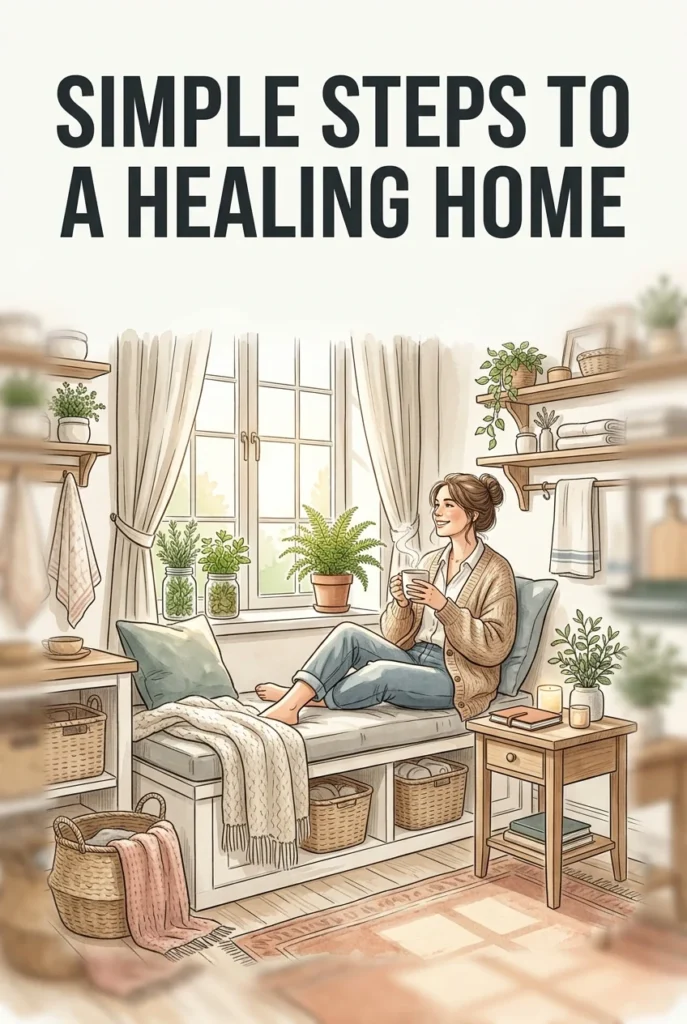
A practical, calm-first approach to shaping a space that restores you—one small change at a time.
There’s a quiet moment many people recognise: you walk through your front door and realise your home is either replenishing you or slowly wearing you down.
It doesn’t always look dramatic. Sometimes it shows up as persistent tiredness, irritability for no clear reason, or a restless feeling even when you’re technically “resting.”
A home can be tidy enough and functional enough—and still not feel supportive.
A healing home isn’t about luxury. It isn’t about trends. And it’s not a performance for visitors.
It’s about creating an environment that supports your nervous system, softens your thoughts, and gives your body permission to fully exhale.
If you’re at the start of this journey, this guide will walk you through the foundations—gently, practically, and without extremes.
Start Here: Define What “Healing” Means to You
Before you rearrange furniture or buy anything new, pause and clarify what you’re actually trying to create.
Healing is personal. For one person it feels light-filled, quiet, and minimal. For someone else it feels cosy, layered, and warmly lit in the evenings. Some people feel best in a structured, organised space. Others need softness and visual ease.
Choose three words that describe the feeling you want
Write down three words that capture how you want your home to feel. Examples:
- calm
- warm
- grounded
- light
- safe
- organised
- natural
- peaceful
- gentle
- intentional
Keep those words somewhere visible. They become your “design compass”—a simple way to decide what stays, what goes, and what you bring in next.
Light: The Fastest Mood Shift You Can Make
Light is one of the strongest influences on how a room feels. A space can be beautifully decorated and still feel draining if the lighting is harsh, dim in the wrong places, or mismatched to your daily rhythm.
During the day: invite in as much natural light as possible
- Open curtains fully rather than halfway.
- Clean windows so sunlight can actually enter.
- Notice which rooms feel energising and which feel gloomy, then adjust where you spend your time.
- Rearrange seating so you can sit near natural light—even if it’s just moving a chair closer to a window.
In the evening: reduce glare and create warmth
Harsh overhead lighting can keep your body in “on” mode. In the evening, transition to softer, warmer light.
- Use warm-toned bulbs in lamps.
- Swap a single bright ceiling light for two smaller light sources if you can.
- Consider string lights or candles for a gentle glow instead of glare.
A healing home often follows the day: bright and clear when you need energy, warm and comforting when you need to unwind.
Texture: A Quiet Signal of Emotional Safety
Texture matters more than many people realise. Soft, comfortable textures can calm the body. When your skin feels supported, your nervous system often follows.
Simple ways to add softness without overhauling a room
- Add a throw to the chair you actually sit in.
- Choose linen or cotton bedding that feels breathable and gentle.
- Place a rug in areas that feel cold underfoot.
- Use cushion covers made of soft, natural-feeling fabrics.
This doesn’t need to become a shopping project. Even one added layer—a blanket, a pillow, a warmer rug—can change the emotional tone of a space.
Declutter, Without Turning Your Home Into an Empty Box
Clutter creates mental noise. It asks your attention to split in too many directions, even when you’re not consciously thinking about it.
At the same time, healing doesn’t require emptiness. The goal is breathing room, not a sterile space.
What to remove first
Start with what feels heavy rather than what looks “messy.”
- Items that are broken and never repaired
- Objects tied to stressful memories
- Duplicates you don’t use
- Things you keep out of guilt rather than usefulness or meaning
Clear surfaces gradually
Choose one surface at a time: a bedside table, a kitchen counter, a coffee table. Clear it back to what supports daily life. Keep what feels meaningful or useful. Let go of what feels draining.
A healing home has room to move. It doesn’t feel cramped or chaotic.
Bring Nature Indoors (Even in Small Ways)
Nature restores the body in subtle, steady ways. You don’t need a big budget or a perfect “plant person” identity to benefit from it.
Easy ways to add a natural feel
- Add one plant, even a small one.
- Place herbs on a kitchen windowsill.
- Use natural materials like wood, stone, woven baskets, and clay pots where you can.
- Buy fresh flowers occasionally—even inexpensive ones—to soften a room instantly.
If you have outdoor space, treat it like part of your sanctuary
A patio or balcony can become an extension of your home’s calm. A single chair and a few plants can create a peaceful retreat. Nature is a reminder that growth happens slowly and gently—and your home can follow that pace.
Create One Restorative Corner (Your “Reset Button”)
You don’t need a whole room to begin healing. You need one dedicated spot that consistently signals rest.
Choose the simplest version that works in your home
- A chair in a quiet corner
- A floor cushion by the window
- A window seat
Make it easy to use
Add a small side table if possible. Keep a journal there. Place a soft lamp nearby. This becomes your place to read, reflect, sip a warm plant-based herbal drink, or simply sit in silence.
When life feels overwhelming, this corner gives you a predictable place to land.
Build Gentle Daily Rhythms (Because Healing Is Also Rhythmic)
Healing isn’t only visual. It’s rhythmic. A home feels safe when it has predictable, gentle patterns—especially during busy seasons.
Small rituals that create stability
- Open a window each morning to refresh the air.
- Make your bed slowly rather than rushing through it.
- Light a candle in the evening to signal “day is done.”
- Change your sheets weekly.
- Play calming music around sunset if that suits you.
These aren’t rules. They’re anchors. Over time, small rituals create emotional safety because your home begins to feel steady and predictable.
Make the Kitchen Feel Nourishing, Not Stressful
The kitchen often carries the emotional tone of a home. When it feels chaotic, daily life can feel more difficult than it needs to be. When it feels calm, even simple meals can feel like care rather than obligation.
Start with one clear counter
Choose one section of counter to keep mostly clear. This becomes a “landing zone” for preparing food and making drinks without irritation.
Make nourishing choices easy to reach
- Store frequently used items neatly so you’re not digging through clutter.
- Keep fresh fruit visible.
- Display herbal teas in jars or in a simple tray.
Let simple plant-based meals be enough
You don’t need complicated recipes for the kitchen to feel supportive. Preparing simple plant-based meals can gently shift cooking into something that feels like self-respect rather than pressure.
Choose Colours That Settle Your Mind
Colour influences mood more than we often realise. If a room feels “off,” the palette may be overstimulating, too harsh, or simply not aligned with how you want to feel at home.
Colours that often feel soothing
Soft neutrals, warm creams, muted greens, dusty blues, and blush tones tend to create a calmer atmosphere.
If you love bold colour, keep it intentional
Bold colour doesn’t have to disappear; it can live as an accent rather than dominating a space. The key is to ask a simple question:
Does this colour energise me too much, or does it ground me?
Healing homes typically lean toward colours that embrace rather than stimulate.
Reduce Noise and Digital Overload
Constant background noise keeps the mind alert. Even low-level sound can increase stress over time.
Practical ways to lower the volume of daily life
- Turn off the television when you’re not actively watching.
- Limit scrolling in shared spaces so your home doesn’t feel like an extension of the internet.
- If possible, charge devices outside the bedroom.
- Allow quiet to exist without filling it immediately.
Silence can be deeply restorative. A healing home includes quiet moments on purpose.
Protect the Energy of Your Space (Not Just the Aesthetics)
What enters your home emotionally matters as much as what enters physically. A room can be clean and still feel heavy if it’s filled with negativity, tense conversations, or constant stressful media.
Gentle ways to “reset” the atmosphere
- If you’ve had a stressful day, take a few breaths outside before you enter.
- Keep conversations kind and intentional whenever possible.
- Open windows regularly to refresh the air.
- Let sunlight move through rooms by keeping pathways clear of clutter.
A healing home requires energetic maintenance as much as tidying.