
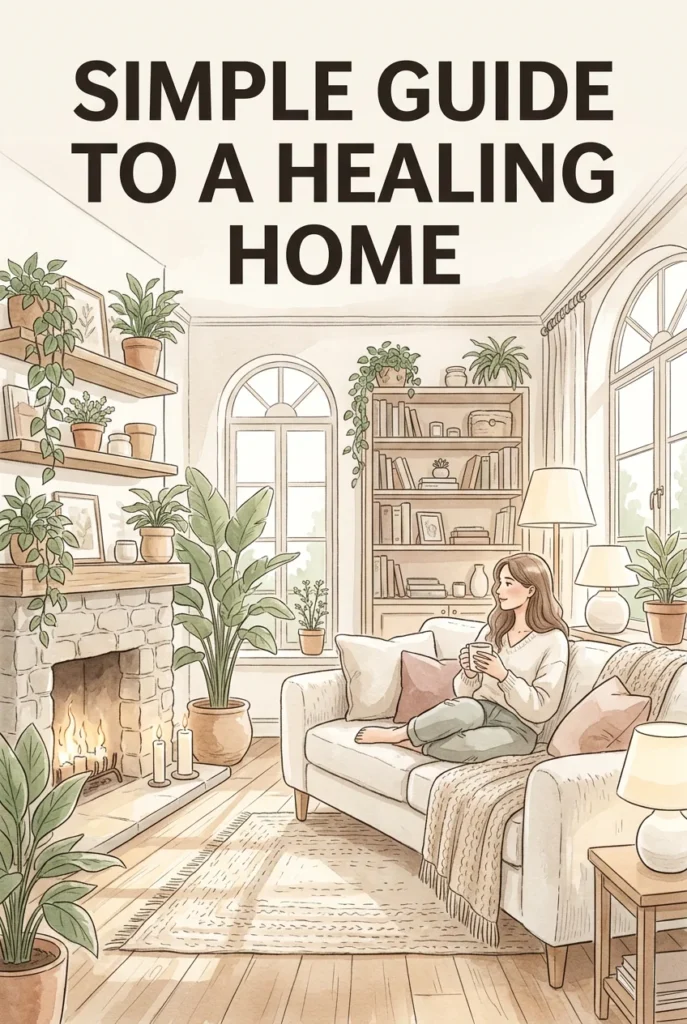
A healing home isn’t just “nice” to look at—it’s a place your body can relax in.
When the world feels loud, your environment can either add to the strain or help you recover.
This guide is for anyone who wants a home that steadies them: a space that feels safe, supportive, and genuinely restorative. A healing home does not happen by accident, and it is not built by chasing trends or aiming for perfection. It is created through intention, atmosphere, and small daily rituals that protect your emotional, mental, and physical well-being.
Why this matters: your nervous system is always responding to your surroundings—light, noise, clutter, colors, and even scent. When your home reduces friction and supports calm, everything else becomes more sustainable: rest improves, routines get easier to maintain, and you have more bandwidth for work, relationships, and healing itself.
Use this as a practical blueprint. You can move through it slowly, one corner at a time, and let the changes compound.
Start With Emotional Intention (Before You “Fix” Anything)
Before you rearrange a room or buy décor, pause and define what “healing” means for you in this season of life. A healing home begins internally, not externally.
Choose three guiding words
Ask yourself: what do you need more of when you walk through the door? Quiet? Warmth? Organization? Creative expression? Clarity? Comfort?
Write down three words you want your home to embody—examples include peaceful, grounded, soft, energizing, calm, or joyful. These become your compass.
Let those words lead your decisions
Use your three words as a filter for everything: furniture placement, storage choices, lighting, textiles, and what you bring in (or let go). If an item doesn’t support the feelings you’re trying to create, it may be working against your goal—even if it looks good.
Create Nervous System-Friendly Lighting
Light strongly influences mood and stress. Harsh overhead lighting can add tension; layered, warm light can help your body settle.
Shift from harsh to layered
Replace cool-toned bulbs with warm white options. Add multiple sources of light—table lamps, floor lamps, and wall sconces—to create softer “pools” of light throughout the home.
Use evening light to signal safety
At night, consider switching off bright ceiling lights and relying on ambient lighting instead. Dimmable fixtures and candles can help signal to your body that it’s safe to unwind.
Support natural light during the day
Maximize daylight wherever you can. Open curtains fully, and use mirrors to bounce sunlight into darker areas. Sheer window coverings can keep the space feeling private while letting light filter in gently.
A healing home often feels bright and alive during the day, and softly cocooned at night.
Choose a Grounding Color Palette
Color shapes emotional experience. Healing spaces often lean toward earthy, muted, and warm tones that calm the mind without overwhelming the senses.
Start with warm, soft colors
Consider shades such as warm cream, sand, sage green, dusty rose, terracotta, and soft taupe. These tones tend to read as gentle and grounding.
Avoid the “sterile” trap
If you prefer a lighter look, layering subtle variations of off-white with natural textures can keep a space from feeling clinical or flat.
Build cohesion room to room
Paint has impact, but color can also come through pillows, artwork, throws, and rugs. The goal is flow. When colors work together across rooms, your mind experiences less visual fragmentation—and more ease.
Declutter to Reduce Mental Noise
Clutter creates background stress. Even when you aren’t consciously thinking about it, your brain is processing what it sees.
Start gently, not dramatically
Choose one small area: a drawer, a shelf, a countertop corner. The objective is progress without overwhelm.
Use a simple decision question
As you handle each item, ask: Does this support the life I’m building? Keep what is useful or meaningful. Release what feels heavy, stale, or stagnant.
Protect your “resting spaces”
Clear surfaces give your eyes a place to land. Organized storage reduces daily friction. When the environment is simplified, the internal world often becomes quieter too.
Healing requires mental bandwidth. Decluttering helps create it.
Design a Restorative Living Area
Your living room (or main gathering space) sets the tone for how you decompress. A restorative living area should feel like an invitation to exhale.
Put comfort first
Choose seating that feels supportive, not just stylish. Layer cushions and textured throws. Add a rug that warms the floor beneath your feet and reduces echo and harshness.
Make room for the life you want to live
Include a small surface for what supports your downtime—tea, water, books, journaling, or a simple candle. If possible, arrange furniture to encourage conversation or relaxation rather than orienting everything toward a screen.
Use meaningful, calming anchors
Bookshelves with inspiring reads and a few personal objects can make a room feel steady and lived-in. The aim is not to fill the space; it’s to make it emotionally supportive.
Create a Sacred Sleep Environment
Rest is foundational. A healing home supports sleep because healing is difficult without consistent, high-quality rest.
Make the bed feel like a safe landing place
Choose breathable, soft bedding in calming tones. Keep bedside surfaces minimal, and use gentle lighting rather than harsh brightness at night.
Reduce sleep disruptors
If outside light interrupts rest, consider blackout curtains. Keep clutter to a minimum, and limit technology in the bedroom when possible.
Add simple, soothing cues
A small basket for a journal or calming book can support wind-down. In the evening, a subtle scent—such as lavender or sandalwood—can reinforce the message that the day is ending and the body can soften.
When your bedroom feels tranquil, your system can relax and repair.
Incorporate Nature Intentionally
Nature helps regulate and ground the body. Even small natural elements can change a home’s atmosphere.
Bring life into the rooms you use most
Place houseplants in living areas and bedrooms. Choose planters made from clay, ceramic, or woven fibers for a softer, more natural feel.
Use natural materials as “quiet” design
Wooden furniture, stone accents, and natural fiber textiles can add warmth without adding visual noise. Fresh flowers or dried botanicals can also bring a gentle seasonal rhythm indoors.
Let air and light circulate
If you have outdoor space, create a small corner with seating where you can step outside and breathe. If you don’t, open windows regularly to circulate fresh air. A healing home often feels connected to the natural world, even in small ways.
Build Daily Ritual Corners (So Healing Happens on Ordinary Days)
Healing doesn’t only happen in big moments. It’s built in small, repeatable practices. When a ritual has a physical “home,” it’s easier to keep.
Create a simple morning station
A tea or coffee area with your favorite mug, a tray of essentials, and a clear counter can turn rushed mornings into steadier ones.
Set up a wind-down nook
A comfortable chair with soft lighting can become a journaling space. A meditation cushion in a quiet corner can make short, consistent pauses feel accessible.
Make comfort effortless
Keep a basket of cozy blankets near the sofa for evenings. When the tools for calm are within reach, you are more likely to use them.
Use Scent to Anchor Calm
Scent connects directly to memory and emotion. Over time, a consistent fragrance can become a cue for safety and rest.
Choose scents that soothe you
Diffuse essential oils such as lavender, bergamot, or cedarwood. Light naturally scented candles in the evening if that feels supportive.
Refresh key textiles
Linen sprays can refresh bedding and signal “clean and calm.” Fresh herbs in the kitchen can add subtle aroma and visual beauty.
With repetition, your chosen scent becomes associated with exhaling. When you smell it, your body begins to unwind.
Let Your Home Reflect Your Story (Not Just an Aesthetic)
A healing home is personal. It tells the truth gently.
Display meaning, not just décor
Frame photographs from moments that matter. Hang artwork that genuinely inspires you. Showcase handmade items, books that shaped you, or mementos from places you’ve been.
Avoid decorating for approval
If you decorate only for appearance, the space can feel disconnected. If you choose items that resonate emotionally, your home becomes a place of authenticity—and that supports comfort.
Prioritize Comfort Over Perfection
Perfection is rigid. Healing is soft.
Let the home look lived in
Allow blankets to drape naturally. Leave your favorite book on the coffee table. Embrace small imperfections in wood, fabric, and pottery. Your home is not a showroom.
Focus on how a space feels
When you release the pressure to impress, you can tune in to what actually helps: ease of movement, supportive routines, and a sense of emotional safety.
Tips: Small Changes That Make a Big Difference
If you want quick, practical starting points, choose two or three from this list and try them this week. Small actions, repeated, build a healing atmosphere over time.
- Pick your three intention words and place them somewhere you’ll see them (notes app, journal, or a small card).
- Swap one bulb in your most-used room to a warm white tone and add a lamp if you can.
- Clear one surface (coffee table, nightstand, kitchen counter corner) so your eyes have a place to rest.
- Create one ritual corner: a tea tray, a journaling spot, or a basket for evening blankets.
- Add one natural element: a plant, a small vase of flowers, or a natural-fiber throw.
- Choose one calming scent and use it consistently in the evening as a wind-down cue.
- Make the bed feel better with softer linens, fewer items on the nightstand, and gentler light.
A Simple Room-by-Room Blueprint (Use as a Checklist)
If you prefer structure, use the following as a gentle guide. You can tackle one room per week or one category per month—whatever matches your capacity.
| Area | Focus | What to Adjust |
|---|---|---|
| Entry | Transition | Reduce drop-zone clutter, add a small landing spot for keys, choose welcoming light. |