
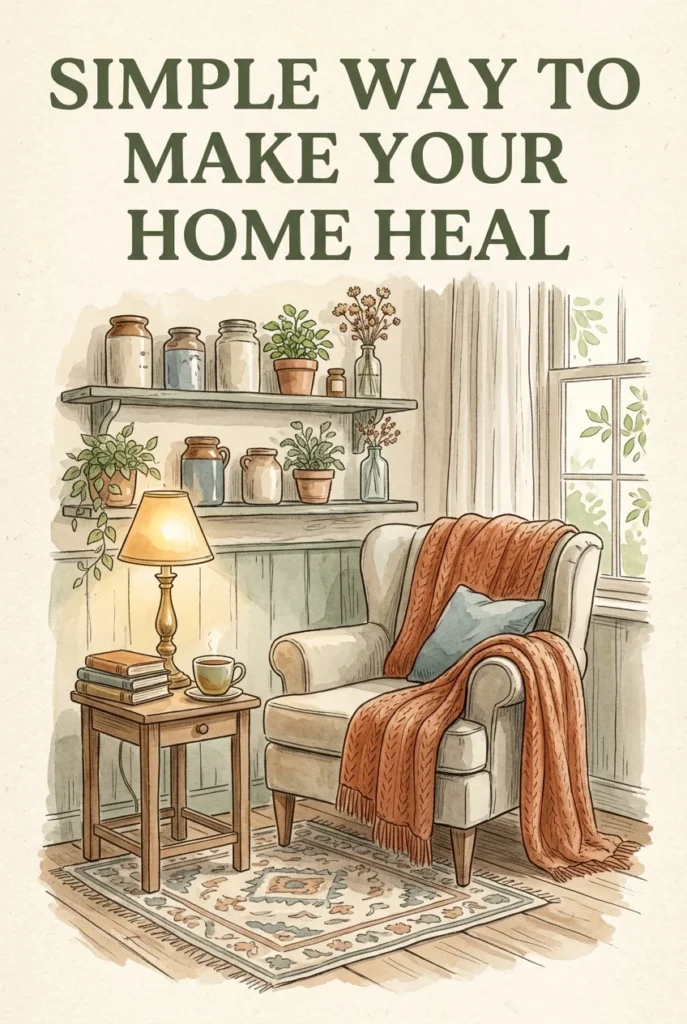
A calmer, steadier home doesn’t require a perfect aesthetic or a large budget—it requires clear choices that support how you want to feel every day.
Home is not only where you sleep, eat, and store your belongings. It is the environment that meets you at the end of a long day—and the one you wake up to each morning.
When your space is overstimulating, cluttered, or emotionally “noisy,” your nervous system often stays on alert. When it is gentle, clear, and supportive, it becomes easier to think, rest, and recover.
A healing home is not about luxury. It is about intention: light that calms instead of glares, rooms that feel breathable, and small rituals that signal safety and care. Below are thirteen grounded, practical ways to shape a home that restores you daily—without chasing perfection.
Why a “Healing Home” Matters
Your home influences your mood through constant cues: brightness, sound, visual clutter, scent, texture, and how smoothly daily routines flow. You don’t need to redesign everything to feel a difference. Small changes—one surface cleared, one harsh bulb replaced, one corner dedicated to quiet—can reduce friction and create steadiness over time.
Think of this as supportive home management, not a one-time makeover. You are building a space that helps you come back to yourself.
1) Start With Light That Feels Gentle
Lighting affects mood quickly. If your home feels harsh or tiring, the simplest improvement is often the light.
What to adjust
Swap cool, bright bulbs for warm, soft white light. Add lighting at different heights—table lamps, floor lamps, or a small lamp on a shelf—so you are not relying on a single overhead fixture.
Make natural light part of your rhythm
Open curtains early in the day to invite daylight. In the evening, dim the lights and use a softer glow (for example, warm lamps or candles) to signal to your body that it is time to slow down. Healing begins when your environment stops demanding so much from your senses.
2) Choose a Calm, Cohesive Color Palette
Color carries emotional weight. A home with too many competing tones can feel visually loud, even if it is tidy.
Colors that often feel steady
Soft neutrals, muted greens, dusty blues, warm creams, and gentle blush tones are commonly associated with calm and stability.
You don’t have to repaint
If painting feels like too much, begin with smaller elements: pillow covers, curtains, bedding, a throw blanket, a rug, or a piece of wall art. When colors flow more smoothly from room to room, your brain has less to process, and it can be easier to relax.
3) Clear Clutter With Compassion
Clutter can quietly raise stress, especially when it piles up in the places you see constantly.
A kinder approach to decluttering
Start small: one drawer, one shelf, one countertop. Keep items that are useful, meaningful, or genuinely beautiful to you. Let the rest go or store it thoughtfully.
Create “visual softness”
Use closed storage when you can—baskets, fabric bins, drawers, cupboards—so your eye can rest. A healing home is not sterile; it is intentional. When surfaces feel calmer, your thoughts often do too.
4) Create a Restorative Bedroom Sanctuary
Your bedroom is often the most direct pathway to better rest. It should feel like an exhale.
Focus on the basics that change everything
Layer bedding with soft, comfortable textures in soothing tones. Add pillows that support your body gently. Keep your bedside area simple rather than crowded.
Make the first and last sight of the day supportive
Consider what you see when you wake up and what you see when you turn off the light. A warm lamp, a book you want to read, and a small plant can make your nighttime routine feel steady instead of rushed.
5) Bring Nature Inside
Natural elements can ground the body and soften a home’s overall feel.
Easy ways to add nature
Bring in leafy plants, fresh branches, or dried florals. Use natural materials where you can: wood, stone, linen, cotton, ceramics, and woven fibers.
Small touches count
Even a simple ceramic bowl with smooth stones or a woven tray on a coffee table can reconnect your space to organic texture. Nature reduces sharpness, visually and emotionally, and gently encourages a slower pace.
6) Establish Daily Reset Rituals
Healing is supported by rhythm. When your home has simple routines built in, life feels less chaotic.
Examples of small resets
Make your bed in the morning. Open windows for a short burst of fresh air. Reset one area before you sleep. Light a candle while winding down. Play soft music while you cook.
Why this helps
These are not “extra tasks.” They are signals of care. Over time, repeated cues create emotional stability: your home starts to feel predictable in a comforting way.
7) Design a Personal Reflection Corner
You do not need an entire room for quiet. A single dedicated spot can change how supported you feel.
Pick one purpose
This might be a reading chair near a window, a meditation cushion in a calm corner, or a small desk for journaling. Keep it simple so it feels easy to use, not like another project.
Make it feel “set apart”
Add a soft throw, a plant, and a gentle light source. When you have a designated place to pause, reflect, or breathe, the habit becomes more accessible—especially during stressful weeks.
8) Use Scent to Support Emotional Balance
Scent influences mood and memory. A consistent, gentle fragrance can make a home feel nurturing and familiar.
Simple scent options
Use a diffuser with essential oils such as lavender, eucalyptus, citrus, or sandalwood. Choose natural candles with subtle scents rather than overpowering ones.
Create “scent cues” for your day
Try citrus in the morning for clarity and lavender in the evening for rest. You are not chasing a perfect atmosphere—just using scent as a quiet signal that helps your body transition from one part of the day to another.
9) Curate Meaningful Décor
What you display shapes how rooted you feel in your own space.
Choose what carries positive emotional weight
Frame photos that make you smile. Display handwritten notes, personal mementos, or quotes that feel steadying. Select art because it resonates with you, not only because it matches a color scheme.
Let your home reflect your values
When your surroundings tell the truth about who you are and what matters to you, your home can feel like a place of understanding rather than performance.
10) Soften Sound Within Your Space
Sound is easy to overlook, but it can strain the nervous system quietly—especially in echo-prone rooms.
Reduce harshness
Add rugs, curtains, and upholstered furniture to absorb sound and soften echoes. Even one rug in a high-traffic area can change how a room feels.
Add calming audio if it helps
Try gentle background music or nature sounds during quieter moments. A soft instrumental playlist or the subtle hum of a small fountain can shift the atmosphere without demanding attention. A healing home supports not only what you see, but what you hear.
11) Simplify High-Stress Areas First
Not every space creates the same level of tension. Focus where stress begins.
Common “friction zones”
For many homes, it is the entryway (shoes, bags, keys), the kitchen counter (papers, appliances, random items), or a desk (unfinished tasks and visual clutter).
Make the system obvious
Create a clear spot for essentials: a bowl for keys, a hook for bags, a tray for incoming mail. Add a touch of warmth—perhaps a small lamp or a calming print—so the area feels welcoming instead of purely functional. When your transition spaces feel orderly, your day often feels smoother too.
12) Incorporate Soft, Inviting Textures
Texture affects comfort in a direct, physical way. A room can look tidy and still feel emotionally “hard” if everything is rigid or sharp.
Ways to layer softness
Drape a throw over the sofa. Add plush cushions. Place a soft rug beside the bed so your feet land gently in the morning.
Why texture matters
Healing spaces feel supportive in the body. When your body relaxes into softness, your mind often follows.
13) Protect the Energy of Your Home With Clear Boundaries
A healing home needs boundaries—both practical and emotional.
Be mindful of what you let in
Pay attention to what enters your space physically (objects you do not need, piles that accumulate) and emotionally (constant news noise, chaotic media, or tense conversations in shared areas).
Choose what supports the atmosphere you want
Invite in activities and sounds that align with peace and growth: calming music, nourishing routines, and conversations that feel respectful. Your home can be a refuge, not an extension of outside overwhelm.
Tips: How to Start Without Getting Overwhelmed
If you want a healing home but feel short on time or energy, begin with one small win. Momentum matters more than intensity.
- Pick one “quick comfort” change: replace a harsh bulb, add a throw blanket, or place a plant where you will see it daily.
- Choose one surface to clear: a bedside table, the kitchen counter corner, or the entryway shelf.
- Set a 10-minute reset: tidy a single area each evening so you wake up to less visual noise.
- Anchor your day with light: open curtains in the morning; dim lights at night to support rest.
- Create one boundary: keep stressful media out of shared spaces during meals or wind-down hours.
A Simple “Healing Home” Weekly Plan (Optional)
If you prefer structure, use a gentle plan you can repeat. Keep it flexible—this is meant to support you, not pressure you.
| Day | Focus | Small, Realistic Action |
|---|---|---|
| Day 1 | Light | Swap one bulb to warm light or add one lamp to a commonly used room. |
| Day 2 | Clutter | Clear one surface and put items into closed storage (basket, drawer, cupboard). |
| Day 3 | Bedroom | Refresh bedding, simplify the bedside, and remove one distracting item. |