
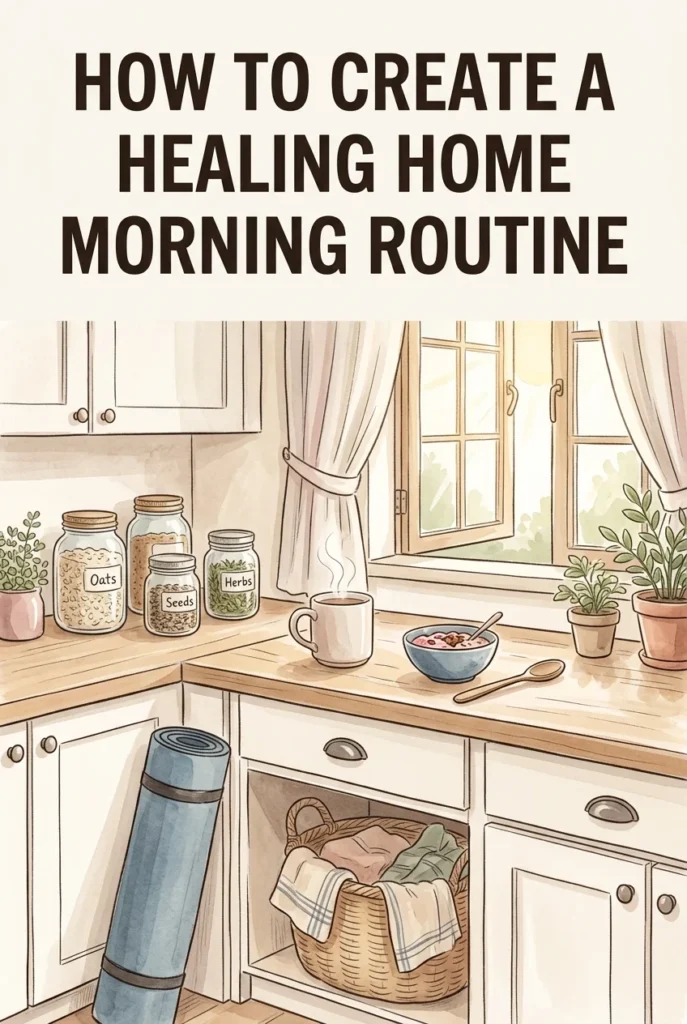
A practical first-hour rhythm that helps your home feel calmer—without rigid schedules, trends, or perfection.
The first hour of your day quietly decides what your home will feel like later.
Not because it changes your furniture or your to-do list—but because it changes how you move, speak, and respond inside your space.
For many of us, mornings start with noise: an abrupt alarm, a rushed scroll, and a mind already reacting to demands. Over time, that “response mode” becomes the emotional soundtrack of the house. A healing home begins earlier than cleaning or decor. It begins with rhythm—how you wake up inside it.
This is the healing home morning routine I should have started years ago. It’s not complicated or trendy. It’s gentle, practical, and powerful precisely because it’s simple. If you want your home to feel more like a sanctuary than a stressor, start here.
Why the First Hour Matters More Than You Think
Morning sets your baseline. If you begin the day startled, overstimulated, and already behind, you tend to carry tension into everything that follows: your tone, your pace, your interactions, even the way you move through rooms.
But when you start slowly and intentionally, your home functions differently. It becomes a support system instead of another source of pressure.
A “healing home” isn’t defined by aesthetics. It’s a home that regularly communicates safety and steadiness—through light, air, order, sound, and the words spoken within it.
The Healing Home Morning Routine (One Step at a Time)
You do not need to do every step perfectly—or do every step at all. Think of the list below as a menu. Start with one habit. Let it become natural. Then add another when you’re ready.
1) Wake Up Slowly Instead of Abruptly
The first shift is deceptively small: stop shocking yourself awake whenever possible.
If you can, swap a harsh, jarring alarm for a softer sound. Give yourself a few minutes before sitting up. Stretch your arms overhead, roll your shoulders, and let your body transition gradually rather than instantly switching into “go” mode.
Gentle light is part of the routine
Open curtains early and let natural light meet you. Light signals to your brain that it’s safe to rise. If natural light is limited, use a warm bedside lamp rather than harsh overhead lighting.
How you wake up shapes whether your home feels like refuge or pressure.
2) Make Your Bed Immediately
This is one of the highest-impact habits for the least time. Smooth the sheets. Fluff the pillows. Fold the throw at the foot of the bed. Three minutes or less can change the visual and emotional tone of the room.
A made bed communicates stability. Later, when you walk back into the bedroom, you’re greeted by order rather than visual noise. It’s a small act that signals care—for your space and for yourself.
3) Hydrate Before You Scroll
Before any screen, drink water. Keep it easy: a glass on your bedside table, a carafe in the kitchen, or a cup you fill as soon as you enter the room.
If you like, add lemon slices, mint, or cucumber for a subtle infusion. The point isn’t to be fancy; it’s to choose nourishment before information.
Scrolling first trains your mind to react. Hydrating first trains your mind to care.
4) Open a Window and Let Your Home Breathe
Fresh air changes the atmosphere immediately. Even five minutes with a window open can shift the scent, temperature, and overall feel of a room.
A healing home “breathes.” Let it breathe daily. This is one of the simplest resets available, and it doesn’t require a full clean or a full overhaul.
5) Create a Calm Beverage Ritual (Without Multitasking)
Instead of rushing through breakfast while distracted, build a small beverage ritual. Brew a warm herbal infusion, or make a nourishing plant-based smoothie. Blend fruit with leafy greens and seeds. Stir slowly. Sit down while you drink it.
Do not multitask during this moment if you can help it. This is not about perfection or performance. It’s about presence.
Why this matters for your home
When you treat your morning drink like a small ceremony instead of a task, your kitchen becomes a space associated with care. Over time, that association builds a calmer relationship with the room where so much daily life happens.
6) Journal Before the World Speaks to You
Your thoughts deserve airtime before everyone else’s. Keep a notebook near your favorite chair or at the dining table. Write freely for five to ten minutes.
This does not need to be profound. You can:
- List intentions for the day
- Unload worries onto the page
- Write three things you feel grateful for
The goal is to clear mental clutter before the day begins. A healing home isn’t only tidy physically; it’s tidy emotionally. Journaling helps you enter your home’s shared spaces with less internal noise.
7) Gentle Movement to Anchor Your Body
You don’t need an intense workout to feel grounded. Choose movement that wakes the body kindly rather than aggressively:
- Slow stretching
- Light yoga
- Walking around your home barefoot
- Rolling your neck and shoulders
- Opening your chest and breathing deeply
Movement shifts stagnant energy. It helps your nervous system settle into the day. When you move gently, your home feels like a supportive environment—not a performance space.
8) Tidy One Small Area (Not the Whole House)
Do not try to “reset” your entire home every morning. That’s a fast path to burnout. Instead, pick one small zone and maintain it consistently.
Examples that work well:
- Wipe the kitchen counter
- Clear the coffee table
- Sort yesterday’s mail
- Water your plants
Small daily maintenance prevents overwhelm. When surfaces feel calm, your mind often follows. Quiet upkeep builds the emotional tone of the home over time.
9) Add Soft Background Music (Optional, but Powerful)
Silence can be beautiful, but so can intentional sound. Low-volume instrumental music, soft piano, acoustic melodies, or nature sounds can shift the mood of a space quickly.
Keep the volume gentle—more like a whisper than a performance. This kind of sound can signal safety to your nervous system and replace mental noise with something steadier.
10) Speak Kind Words Inside Your Home
The emotional atmosphere matters more than decor. If your first spoken words of the day are harsh—especially toward yourself—your home absorbs that tone.
Instead, choose simple encouragement. You can say it quietly or out loud:
- “I will move through today calmly.”
- “This home supports me.”
- “I am building something peaceful here.”
Words echo. Energy lingers. What you say inside your home becomes part of its emotional architecture.
11) Step Outside for a Few Minutes
If possible, step onto a porch, balcony, or simply stand in your doorway. Feel the morning air. Look at the sky. Notice how light falls on trees, buildings, or the street.
This tiny pause reconnects you to the world beyond your walls without overwhelming you. It reminds you that your home is a base—not a cage. A safe launching point for the day.
12) Delay Digital Noise for 30–60 Minutes
If you can, wait at least 30–60 minutes before checking social media or the news. This single change can transform how your home feels.
When digital noise hits your brain too early, tension often enters your body. That tension shows up in your movements, your tone, your patience, and the way you interact with your space and the people in it.
Protect the first hour as fiercely as you can. Your home deserves that calm.
A Simple “First Hour” Flow You Can Copy
Use this as a flexible template, not a rigid schedule. Adjust the order and timing to match your life.
| Time | What to do | Why it helps |
|---|---|---|
| 0–5 minutes | Wake gently, light stretching, open curtains or use warm lamp | Reduces the “jolt” and sets a calmer pace |
| 5–10 minutes | Make the bed | Instant visual order; signals intention |
| 10–15 minutes | Drink water before any screens | Nourishment before information |
| 15–20 minutes | Open a window and let air circulate | Refreshes the atmosphere quickly |
| 20–35 minutes | Calm beverage ritual (tea or smoothie), sitting down | Builds presence and steadiness in the kitchen |
| 35–45 minutes | Journal for 5–10 minutes | Clears emotional and mental clutter |
| 45–55 minutes | Gentle movement | Anchors the body and releases tension |
| 55–60 minutes | Tidy one small zone, then step outside briefly | Prevents buildup; reconnects you to the day |
Tips to Make This Routine Stick (Without Becoming Another Chore)
- <