
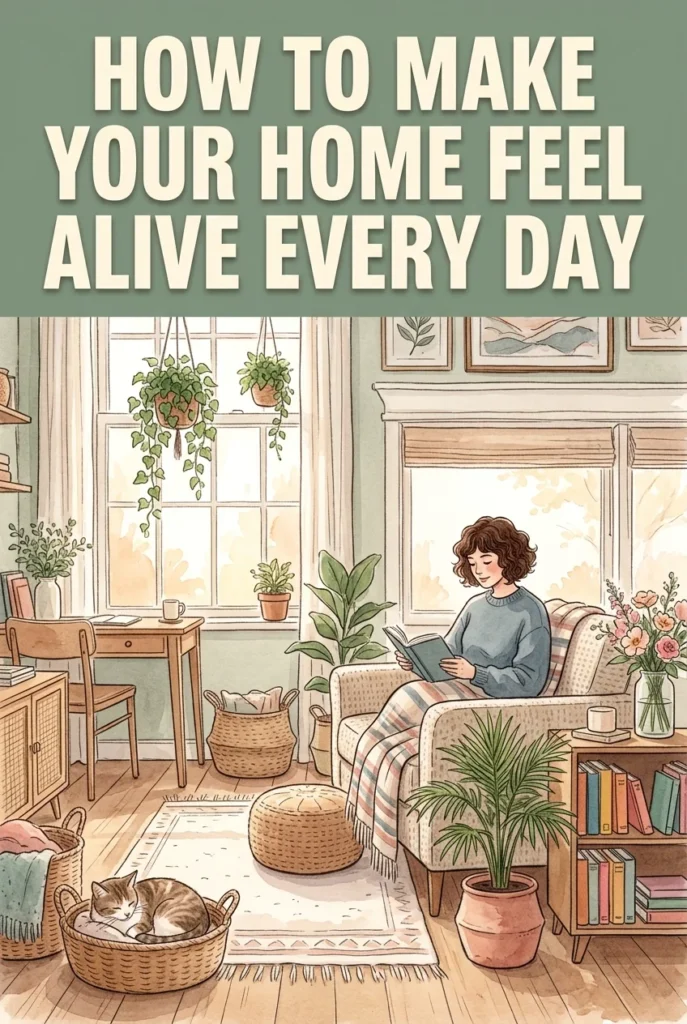
A home can be visually attractive and still feel flat. The goal here is different: a space that supports your energy, your mood, and the way you actually live—every day.
A well-styled home looks good in photos. A home that makes you feel alive feels good in real life.
It doesn’t simply sit in the background; it actively supports you. It brightens your mornings, calms your evenings, and makes it easier to move, create, connect, and rest. The difference is not “more decor.” It’s intentional choices that gently stimulate your senses while keeping the atmosphere balanced.
Why This Matters: Your Home Shapes Your Daily Energy
Your environment influences how you move through the day. Light affects your sleep-wake rhythm and focus. Colour can lift or soften a room’s mood. Clutter can create mental drag. Comfort cues your body to relax. Small adjustments—repeated consistently—can shift how you feel when you walk through the door.
Creating a home that makes you feel alive isn’t about dramatic renovations or constant redecorating. It’s about awareness: noticing what energizes you, what drains you, and what helps you feel grounded.
1) Invite in as Much Natural Light as Possible
Light is one of the fastest ways to change how a room feels. A brighter space tends to feel more open and active, while a dim space can feel heavy or stagnant—even if it’s beautifully decorated.
Make the light you already have work harder
Keep windows visually clear
Where you can, avoid blocking windows with bulky furniture or piles of objects. Even a small shift—moving a chair a few inches—can change how light spreads across a room.
Choose window treatments that filter, not fight, daylight
Swap heavy drapes for sheers or lighter fabrics so sunlight can come through softly. If you need privacy, layering a simple blind behind sheers can preserve both function and brightness.
Use mirrors with intention
Place a mirror where it can bounce daylight into a darker corner or hallway. This is especially helpful in rooms with only one window or in homes with narrow layouts.
Keep glass clean
Clean windows regularly. It’s a small habit, but it noticeably improves clarity and brightness during the day.
2) Choose Colours That Spark Energy and Joy
Neutrals create calm. But a home that feels alive usually includes colour that adds warmth, freshness, or personality—without overwhelming the space.
Think in accents and layers, not “all at once”
You don’t need a room saturated in bold shades to feel energized. Try building colour gradually: pillows, artwork, a throw, a vase, or a single painted wall in a muted, livelier tone.
Warm tones for welcome
Terracotta, warm creams, and soft golden shades can make a space feel inviting and active at the same time.
Cool tones for clarity
Sage greens, dusty teals, and other softened cool tones can bring a sense of freshness and ease—especially in rooms that get strong light.
Balance is the point
If your palette feels harmonious but not dull, the room feels lived-in and expressive rather than staged or sterile.
3) Incorporate Movement Into Your Design
A home that feels alive often includes subtle, natural movement—elements that shift with air, light, and use. This keeps rooms from feeling frozen or overly “set.”
Use gentle motion and visual rhythm
Soft textiles that respond to airflow
Light curtains that move with a breeze instantly make a room feel more dynamic.
Plants and hanging elements
Hanging plants, branches in a vase, or even a mobile in a calm corner can introduce gentle motion without creating visual noise.
Relaxed styling over rigid staging
A textured throw casually draped, layered rugs, or a basket with a blanket creates an inviting sense of use. The goal is comfort and flow, not perfection.
Arrange furniture for natural circulation
Look at how you move through the room. Are there obstacles that force you to squeeze past a table, or awkward dead zones you avoid? When furniture supports natural pathways, the whole home feels easier to inhabit.
4) Bring Nature Indoors—Generously
Natural elements add vitality quickly. Greenery, organic textures, and earthy materials bring a grounded energy that makes indoor spaces feel fresher and more connected to the outdoors.
Simple ways to add nature without overcomplicating it
Use plants at different heights
A mix of floor plants, tabletop plants, and smaller greenery creates depth and dimension. Even a single plant on a shelf can change how a corner feels.
Try natural materials you can actually use
Woven baskets, wood furniture, stone bowls, and natural-fibre textiles (like cotton and linen) add warmth and texture while staying practical.
Frame your outdoor view
If you have access to a balcony, patio, or garden view, treat it as part of the interior. Keep the window area clean and uncluttered so the greenery outside becomes part of the room’s design.
5) Design for a Full Sensory Experience
Homes don’t just look a certain way; they sound, smell, and feel a certain way. A space that feels alive engages the senses gently, without overstimulation.
Sight, scent, sound, touch, and air quality
Use scent to set the tone
Diffuse essential oils with bright citrus or herbal notes during the day if you enjoy them. The key is subtlety—enough to refresh the room, not overpower it.
Let fresh air do its job
Open windows when you can to circulate air. Even a short daily reset can make a space feel cleaner and more awake.
Use sound intentionally
Soft instrumental music can create a calm, steady background for work or winding down. Silence can also be a choice—what matters is that it supports the mood you want.
Build in touchable comfort
Layer tactile fabrics—soft cotton, linen, and woven textures—so the home feels welcoming, not fragile. Comfort encourages you to use your space fully.
Match lighting to your daily rhythm
Brighter in the morning, softer in the evening. When lighting aligns with your routine, the home feels more responsive and supportive.
6) Curate Spaces That Encourage Activity and Creativity
A home feels more alive when it makes it easy to do the things that energize you. The goal is to reduce friction between you and your interests.
Make “starting” effortless
Create a small work or writing area
A simple desk near a window can become a daily anchor. It doesn’t have to be elaborate—just functional and ready.
Set up an art or hobby corner
Keep supplies accessible. When everything is packed away in hard-to-reach places, you’re less likely to begin.
Designate a reading spot
A comfortable chair with a lamp helps reading happen more naturally, especially in the evening.
Make movement visible
Store a yoga mat rolled in a basket or keep a small open area clear. When movement is easy to start, you’re more likely to do it.
7) Eliminate Visual and Emotional Clutter
Clutter doesn’t just fill shelves; it can quietly drain attention. Even beautiful objects can become “visual noise” when there are too many competing elements in one space.
Clear space for energy to move
Edit with purpose
Keep items that serve a function or genuinely bring you joy. Move along what you no longer use, love, or need. This isn’t about minimalism as a rule; it’s about intentionality.
Protect your flat surfaces
Clear counters and tables create immediate calm. They also reflect light better, which helps rooms feel open and bright.
Use simple organization systems
You don’t need complicated setups. Woven bins, labeled containers, and straightforward shelving can transform daily life by reducing decision fatigue.
Notice the emotional layer
Some clutter is emotional: items kept out of guilt, “someday” projects that never move forward, or piles that create background stress. Removing those is often the most energizing change you can make.
8) Highlight Personal Stories and Meaning
A home comes alive when it reflects the people living in it. Trend-based styling can look polished, but authenticity creates warmth and connection.
Make your space unmistakably yours
Display what you genuinely love
Choose artwork, books, and objects that shaped your thinking, comfort you, or inspire you. Meaning brings emotional energy into the room.
Collect slowly and intentionally
You don’t need to fill every wall or shelf. A few well-chosen pieces often feel more powerful than crowded displays.
Let your values show
Handcrafted objects, family photos, a framed quote you return to—these details make a home feel personal, not copied.
9) Use Lighting to Create Emotional Contrast
Natural daylight energizes. Warm evening light restores. A lively home uses both—intentionally—so each part of the day feels supported.
Layer your light sources
Use overhead lighting for function
Ceiling lights are useful for cleaning, cooking, or focused tasks, but they aren’t always the most flattering or calming for evenings.
Add lamps for warmth
Table lamps create softer pools of light, which adds depth and comfort. They can change a room’s mood instantly.
Consider wall lighting where appropriate
Wall sconces add dimension and reduce the “flat” feeling that happens when everything relies on one central fixture.
Candles for softness
Candles can make a space feel calmer and more intimate, especially as a cue for winding down at night.
When light and shadow are balanced, rooms feel dimensional. Overly uniform lighting can make a space feel static; layered lighting tends to feel more alive.
10) Establish Daily Rituals That Activate Your Space
Design matters, but habits bring a home to life. Small rituals keep your space from feeling stagnant and help it evolve with you.
Simple routines that create steady energy
Morning air and light
Open curtains and, when possible, open windows to bring in fresh air. It’s a quick reset that makes the whole home feel awake.
Micro-tidying for clarity
Tidy key surfaces before bed so you wake up to visual calm. This supports a clearer start to the day.
Care for living elements
Water plants regularly and pay attention to what they need. A thriving plant quietly changes the atmosphere of a room.
Seasonal refreshes
Rotate small decor pieces, swap a throw, or rearrange a corner when you crave renewal. Small changes can bring the feeling of “newness” without major effort.
Use music to energize everyday tasks
Play music while cooking or cleaning if it helps you move. The goal is a home that