
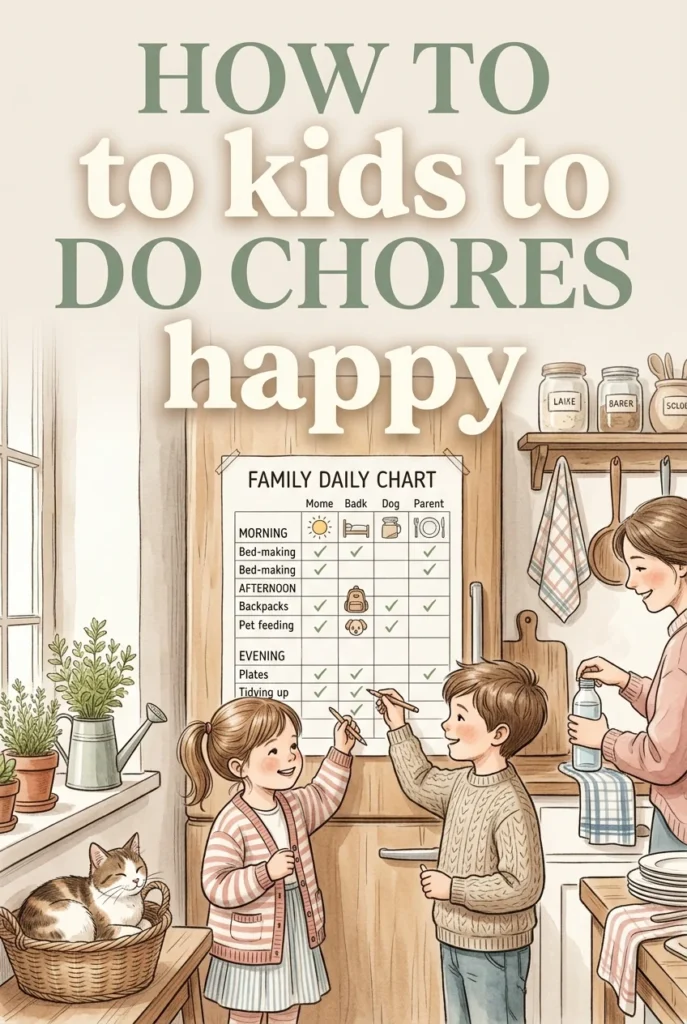
A simple, encouraging way to share daily tasks—without nagging, confusion, or a “to-do mountain.”
Most homes don’t need more pressure—they need a clearer rhythm. When everyone knows what to do (and when to do it), the day feels calmer, the workload feels fairer, and the household runs with less friction.
This is exactly what a daily chore chart is for: a practical tool that helps your family share responsibilities in a way that’s visible, predictable, and easy to follow.
Below you’ll find how this Family Daily Chore Chart works, why it matters, and how to use it with kids, teens, and adults. A PDF download is available at the link at the bottom of this post so you can print it, put it on the fridge, and start right away.
Why a Daily Chore Chart Matters (Especially on Busy Days)
Chores are rarely the real problem. The real strain usually comes from the invisible work around chores: remembering everything, noticing what’s undone, delegating, and repeating reminders.
A daily chart helps by making expectations clear and shared. Instead of one person holding the whole plan in their head, the plan is written down where everyone can see it.
What changes when chores are visible
When a routine is posted in a common space, family members don’t need to guess what’s expected. They can check the chart and take action without being prompted.
Less mental load, fewer repeated reminders
One of the biggest benefits of a daily chore chart is that it reduces the “manager” role falling onto one person. With a chart, there’s less need to keep asking who did what—or whether it got done at all.
What’s Included in the Family Daily Chore Chart
This printable is designed to feel easy and encouraging, not overwhelming. It breaks daily tasks into natural points in the day, so your routine stays flexible and realistic.
Three simple time blocks
Instead of listing every possible task at once, the chart divides responsibilities into:
- Morning Chores (start the day with a quick reset)
- Afternoon Chores (light maintenance and follow-through)
- Evening Chores (close the day with a calmer finish)
Each family member can have their own row and check off tasks as they go. That visible progress often creates a small but genuine sense of completion—especially when the day is full.
The “Don’t Forget” section (small tasks that prevent bigger messes)
At the bottom, there’s a dedicated “Don’t Forget” area for the easy-to-miss tasks that keep a household running smoothly. These are the kinds of things that are simple when done consistently, but stressful when they’re forgotten.
The reminders include everyday basics such as:
- Feeding the animals
- Watering the garden
- Tidying up
- Taking out the trash
How to Set Up the Chart So It Actually Gets Used
The best system is the one your family will follow on a normal day—not just on a “perfect” day. Set this up in a way that’s highly visible and low effort to maintain.
Step 1: Choose a visible placement
Put the chart where people naturally look:
- On the fridge
- Inside a pantry door
- Near a family command center wall
Step 2: Decide how you’ll mark it
If you want to reuse the printable, place it in a simple frame or on a clipboard and use a dry-erase marker. If you prefer paper, print multiple copies and swap them out as needed.
Step 3: Keep chores realistic and repeatable
Daily routines work best when they’re doable. If the list is too long or too complicated, it becomes easy to ignore. Aim for consistency over perfection—especially at the beginning.
Step 4: Rotate tasks for fairness
To keep things balanced (and to avoid one person getting stuck with the least-favorite tasks), switch up chores weekly so everyone shares both the “easy” and the “not-so-fun” jobs.
Making the Chart Work for Different Ages
This printable is flexible. You can use the same structure for a household with small kids, older kids, teens, or adults—just adjust the task level and how you track progress.
For younger kids: keep it concrete and rewarding
With younger children, the goal is to build routine and confidence. Make the chart feel friendly and achievable.
Simple ways to add motivation
- Let them choose their own special checkbox marker
- Give them a weekly “helper title” (something playful and encouraging)
- Create a cozy family reward at the end of the week (for example: a nature walk, a picnic with fruit and snacks, or a family movie night with popcorn and herbal tea)
For older kids and teens: support independence without lectures
For teens, a chore chart can reduce tension because it moves the conversation from repeated reminders to clear expectations. It helps them practice steady habits and responsibility without turning the home into a lecture zone.
What helps most with teens
- Keep responsibilities clear and specific
- Agree on what “done” looks like (so expectations feel fair)
- Allow flexibility in when tasks happen within the day, as long as they’re completed
Tips to Get Better Results (Without Making It Rigid)
A chore chart should feel like a teamwork tool, not a source of pressure. Use these practical adjustments to keep the system supportive and sustainable.
Tips for success
- Start small. If you’re building a new routine, fewer tasks done consistently beats a long list that gets abandoned.
- Anchor chores to existing habits. Morning tasks pair well with getting dressed or packing bags; evening tasks pair well with bedtime routines.
- Make check-ins quick. A 30-second glance at the chart can replace multiple reminders throughout the day.
- Review weekly, not constantly. Rotate chores and adjust expectations once a week so the system stays fair and realistic.
- Expect imperfect days. Homes are lived-in. Some days every box gets checked; some days it doesn’t. The goal is a steady rhythm, not flawless execution.
Common Pitfalls (and How to Avoid Them)
Even a good chart can fall flat if it becomes too complicated or emotionally loaded. These are the most common issues families run into—and the simplest ways to sidestep them.
Trying to fit every task onto one day
If the chart starts to feel like a full housekeeping plan, it becomes overwhelming. Keep the daily list focused on what truly needs daily attention, and leave deeper tasks for weekly or monthly routines.
Using the chart as a scoreboard
The checkboxes are meant to build awareness and responsibility, not competition or shame. Treat it as a shared support system: “Here’s what keeps our home running,” not “Here’s what you failed to do.”
Not updating chores as life changes
Schedules shift. Kids grow. Work seasons get busy. If the routine isn’t working, update it rather than forcing it. A quick weekly reset—rotating tasks and adjusting expectations—keeps the chart relevant.
Download the Free Printable (PDF)
If you’re ready to make daily routines feel lighter, warmer, and more organized, this printable chart is ready for you.
Click this link to download the PDF files: Family Daily Chore Chart – Free Printable PDF
Print it out, post it somewhere visible, and use it as a gentle guide for shared responsibility—morning, afternoon, and evening.
More Home Management Printables You May Like
If you want to build a fuller routine over time, these related resources pair well with a daily chart:
- Daily Homemaking Routine Checklist – Free Printable Download
- Monthly Home Reset Checklist – Free Printable Download
- Weekly Homemaking Schedule – Free Printable Download
- Household Tasks Master List – Free Printable Download
- Kids Daily Chore Chart – Free Printable Download
- Kids Weekly Chore Chart – Free Printable Download
- Adult Daily Chore Chart – Free Printable Download
- 21 Daily Habits That Will Save You Money
- How To Get Your Life Together In 30 Days
- How To Have A Soft Girl Winter
Used well, a daily chore chart isn’t about controlling the day—it’s about reducing stress and helping everyone contribute. When the responsibilities are clear and shared, the home tends to feel calmer, more cooperative, and easier to maintain.