
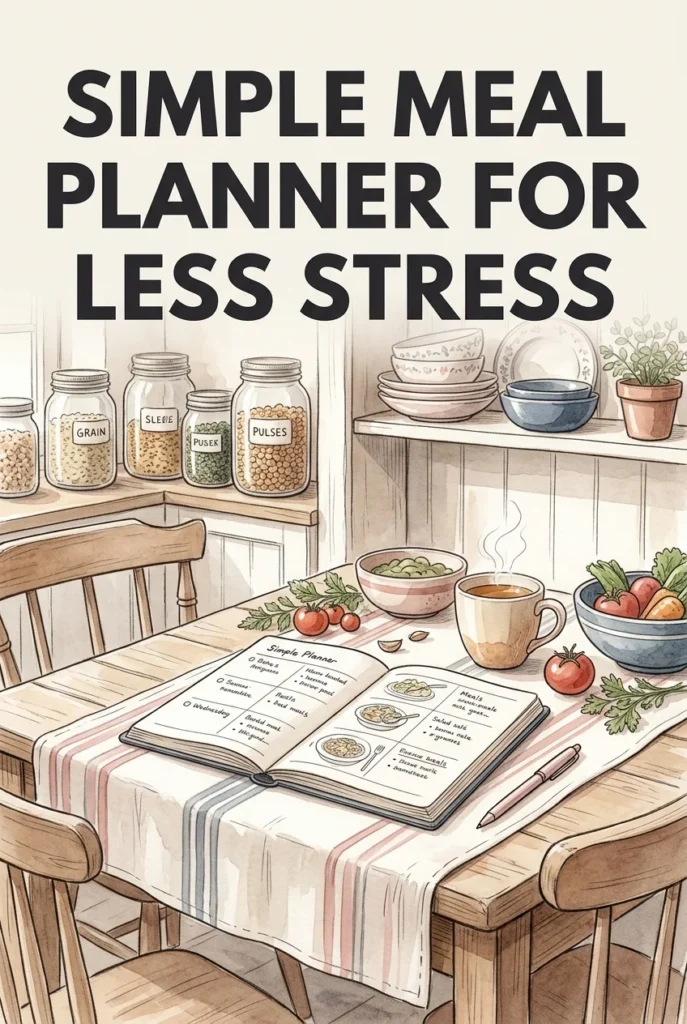
A simple weekly plan can remove daily meal stress, support your budget, and make breakfast, lunch, and dinner feel more intentional—without becoming rigid.
Deciding what to eat shouldn’t feel like an all-day negotiation with your fridge. Yet for many households, meals become a repeated, last-minute decision that adds pressure to mornings, interrupts workdays, and steals calm from evenings.
A weekly meal planner turns that pattern into something steadier. With one short planning session each week, you can map out breakfast, lunch, and dinner in a way that feels supportive and clear. It’s not about perfection or strict rules—it’s about reducing decision fatigue and making nourishing meals easier to follow through on.
Free printable: a PDF download is available via the link at the bottom of this post.
Why a weekly meal planner matters
A meal planner is more than a space to write down ideas. It’s a practical tool that helps your week run with fewer interruptions. When you already know what’s coming, you spend less time wondering, fewer minutes backtracking to the store, and less energy making choices when you’re tired.
That clarity can be especially helpful when life is busy. Planning doesn’t remove flexibility; it simply gives you a default plan to lean on. If a day changes, you can swap meals around—your plan becomes a guide, not a constraint.
Less stress and fewer last-minute decisions
When meals are planned ahead, your mind is free to focus on other things. You’re not standing in the kitchen trying to assemble a dinner idea from scratch while hungry. You’ve already decided—so you can move forward with calm confidence.
A gentle structure for breakfast, lunch, and dinner
The planner is designed with separate spaces for breakfast, lunch, and dinner. That simple layout creates rhythm. It also helps you notice patterns: are your lunches repetitive, are your dinners too complicated for weeknights, are mornings rushed because you’re starting from zero?
More intentional nourishment, without pressure
Planning can turn everyday meals into a quiet ritual. Instead of rushed choices, you create a small moment of care once a week—then let that care carry you through the next seven days. Over time, the habit tends to feel grounding rather than demanding.
How to use the planner (Sunday to Saturday)
This weekly meal planner is set up to run from Sunday through Saturday. Starting on Sunday can feel like a reset: a soft landing where you look ahead instead of scrambling behind.
Seeing the entire week in one place helps you match meals to your real schedule. Busy days often call for simpler, lighter options; slower evenings leave room for more hands-on cooking. Planning with that ebb and flow in mind makes consistency more realistic.
Step 1: Look at your week first
Before you write a single meal, glance at what’s ahead. Workdays, school runs, appointments, late meetings, social plans—these are the details that make or break meal plans.
If you know Wednesday is packed, plan something easy. If Friday is calmer, you might choose a meal that’s more involved. The planner works best when it reflects your week as it actually is.
Step 2: Fill in dinners, then lunches, then breakfasts
Many people find it easiest to plan dinner first because it’s often the most demanding meal. Once dinners are set, lunches can follow naturally (including leftovers if you like them). Breakfasts are often the simplest: a short list of go-to options can reduce morning decision fatigue immediately.
Step 3: Keep it flexible by writing “ideas,” not rules
The open spaces on the printable are intentionally inviting. You can write full meal names, quick notes, or even ingredient prompts such as “beans + greens” or “grain bowl.” Some weeks will be beautifully organized; others will be looser. Both styles can work.
A plant-based approach that stays fresh and practical
The planner pairs naturally with a plant-based approach, which can keep meals colorful, light, and varied. Vegetables, fruits, grains, legumes, herbs, and pantry staples provide a wide range of combinations without feeling heavy.
Planning ahead also encourages variety. Instead of defaulting to the same quick option, you can rotate ingredients intentionally across the week. Over time, this builds confidence in the kitchen—even on days when your energy is low.
Simple ways to build variety across the week
You don’t need complicated recipes to keep meals interesting. Small, intentional changes can create a sense of variety and seasonality:
- Switch the base: rice one night, pasta another, then potatoes or a grain the next.
- Rotate proteins: lentils, beans, tofu, and other legumes across different meals.
- Use herbs and sauces to change the “feel” of similar ingredients.
- Plan for seasonal produce so shopping feels focused and meals feel fresh.
Budget and time benefits you can feel
A written meal plan supports your budget and your time. When you know what you’re making, shopping becomes more purposeful. You buy what you need, waste less, and reduce impulse purchases.
There’s also a quiet satisfaction in opening the fridge and pantry and seeing that everything has a place in the week. That sense of “it’s handled” is one of the most useful outcomes of planning.
How planning reduces waste
Planning helps you purchase ingredients with a clear purpose. Instead of buying items you hope to use, you’re buying items you’ve already assigned to meals. That often means fewer forgotten leftovers, fewer last-minute takeaways, and less food that goes unused.
Breakfast, lunch, and dinner: what to write in each space
Breakfast: calm starts and less decision fatigue
Breakfast planning sets the tone for the day. When mornings are already busy, pre-deciding breakfast can make the entire start of the day feel calmer. Whether you prefer warm bowls, toast combinations, or blended drinks, writing a simple plan removes the need to decide while you’re half-awake.
Lunch: steady energy and smoother workdays
Lunch planning supports steady energy throughout the day, especially if you work from home or like to prepare meals ahead. Even a few quick notes—like “leftovers,” “salad + bread,” or “soup”—can prevent the midday scramble.
Dinner: less evening stress, more ease
Dinner planning often brings the biggest sense of relief because evenings are when fatigue is highest and time can feel shortest. Having a plan allows you to unwind rather than negotiate with a last-minute choice.
Tips to make weekly meal planning stick
Meal planning works best when it’s simple enough to repeat. The goal is a supportive rhythm, not a rigid system.
- Choose a consistent planning time: many people like Sunday because it feels like a natural reset.
- Plan lighter meals on busier days: match effort to your schedule.
- Repeat a few dependable meals: familiarity can be a strength, especially midweek.
- Leave one “flex” meal: build in space for leftovers, plans changing, or a lower-energy day.
- Use ingredient prompts: if full meal names feel too strict, write simple building blocks instead.
- Keep the planner visible: on the fridge or inside a household binder so it stays practical.
- Review before you shop: a quick check helps avoid duplicates and forgotten essentials.
A simple weekly rhythm you can return to
Over time, using a weekly meal planner can become a grounding ritual. You may find yourself looking forward to sitting down with a warm drink, reflecting on the week ahead, and gently filling in each day. It’s a small act of care that can ripple into calmer routines.
If you’ve been craving more structure without rigidity, more nourishment without pressure, and more peace around food, this planner is a practical place to start. It meets you where you are, and it supports consistency in a way that can feel calm and sustainable.
Free printable PDF: download link
PDF download available: Click this link to download the PDF files.
More free printables and related reads
If you’d like to build a simple home-management routine alongside meal planning, you may also find these helpful:
- Grocery List – Free Printable Download
- Monthly Amazon Shopping List – Free Printable Download
- Soft & Floral Monthly Planner – Free Printable Download
And for additional lifestyle and home inspiration, you may also like:
- How To Have A Soft Girl Winter
- 10 Cottagecore Movies To Watch
- How To Make Everything Around You Beautiful
- 10 Books To Read That Will Change Your Life
- A Practical 30-Day Soft Living Challenge
- 21 Habits Of Emotionally Intelligent Women
- 10 Soft Homemaking Habits That Turn Your Home Into a Haven
Thank you for spending this moment here. I hope the weekly meal planner brings more ease, clarity, and comfort to your days—and helps everyday meals feel a little more intentional.