
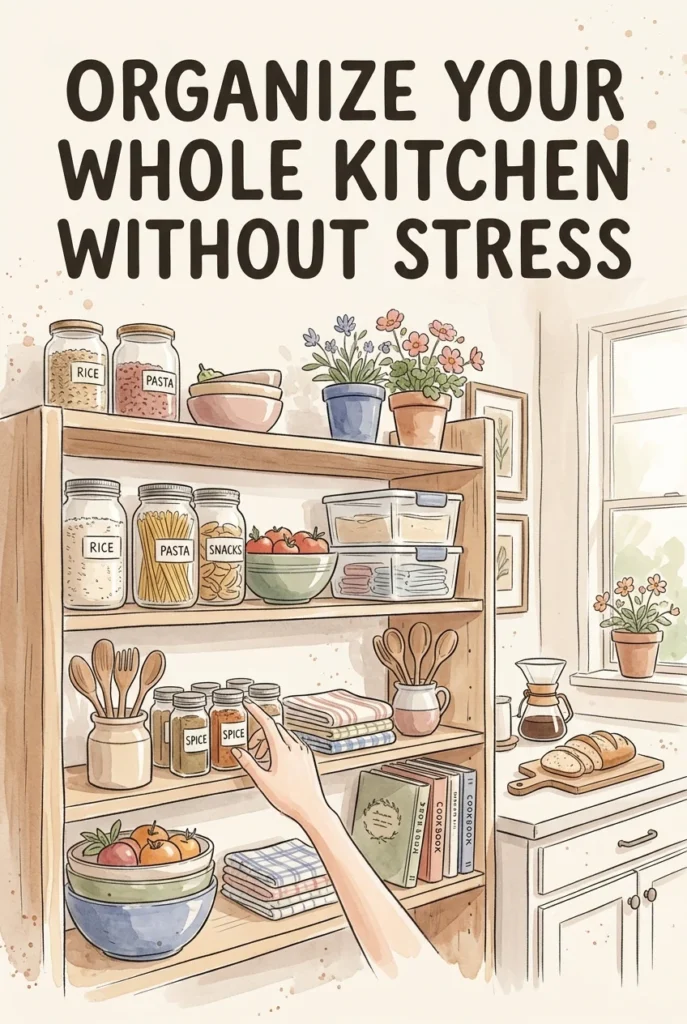
A practical, start-to-finish method to declutter, set up zones, and keep your kitchen organised for the long term.
The kitchen is often the most-used room in the home. When it’s cluttered, cooking takes longer, clean-up feels harder, and even simple routines (making coffee, packing lunches, finding a lid) turn into daily friction.
A well-organised kitchen isn’t about perfection or matching containers. It’s about building a system where every item has a logical home, frequently used tools are easy to reach, and food is stored in a way that reduces waste.
Below is a step-by-step guide you can follow to organise your entire kitchen—from cabinets and drawers to the pantry, fridge, and the space under the sink—without changing what you cook or how you live.
Why kitchen organisation matters (beyond “being tidy”)
Kitchen organisation improves function first. When storage is intentional, you spend less time searching, less money on duplicates, and you’re more likely to cook at home because the process feels manageable.
It also supports everyday habits:
- Faster meal prep: tools and ingredients are where you expect them to be.
- Easier cleaning: clear counters and grouped supplies reduce the “where do I put this?” problem.
- Less food waste: you can see what you have, use older items first, and avoid buying duplicates.
- Less stress: fewer visual piles and fewer decisions during busy moments.
Before you start: set yourself up for a smoother reset
You don’t need a full renovation to get real results. A strong system comes from clear categories, good placement, and a few simple organisers used intentionally.
Quick supplies checklist (optional, but helpful)
- Trash bag and donation box
- Microfiber cloth or cleaning rag
- Labels (or masking tape and a marker)
- A few bins or baskets (even shoeboxes work temporarily)
- Drawer dividers and shelf risers (if you already own them; buy later only if needed)
Step 1: Empty and assess (see what you actually have)
Start by removing everything from your cabinets, drawers, and pantry. Place items on counters or a table so you can view your kitchen inventory in one glance.
This step matters because it reveals what’s been hiding: duplicates, rarely used gadgets, expired food, and storage containers without lids (or lids without containers). It also helps you notice patterns—like too many mugs in one cabinet or snack items scattered in multiple places.
Mini-point: Clean as you go
Once a shelf or drawer is empty, wipe it down before items return. This is the easiest time to remove crumbs, sticky residue, and dust without working around your stuff.
Step 2: Declutter with intention (keep what supports your real routines)
Before putting anything back, edit your kitchen items. The goal is not minimalism; it’s usability. Keep what you use and trust, and remove what creates clutter without adding value.
Use these simple decision questions
- Do I use this regularly? If not, does it earn its storage space?
- Does it genuinely make cooking easier? Some tools add steps instead of removing them.
- Is it expired, broken, or missing parts? If it can’t function as intended, it’s clutter.
- Do I own multiples for no reason? Keep the best version and donate the rest.
What to do with extras
Donate duplicate gadgets, serving pieces you never reach for, and tools you’ve replaced with better ones. Discard expired food and dispose of broken items. If something is useful but not used weekly (for example, a holiday pan), keep it—but plan to store it in a less prime location.
Step 3: Group items by category (the foundation of every organised kitchen)
Organisation works when categories are clear. Categories reduce decision fatigue because you always know where to put things away.
As you sort, create kitchen-friendly groups such as:
- Cooking tools: spatulas, whisks, wooden spoons, tongs
- Bakeware: mixing bowls, measuring cups, rolling pins, baking sheets
- Cookware: pots, pans, lids
- Food storage: containers, wraps, bags
- Dinnerware: plates, bowls, glasses, mugs
- Pantry items: grains, canned goods, snacks, breakfast items
- Spices and seasonings
- Cleaning supplies
If you cook often, you may also want categories like “coffee/tea,” “lunch packing,” or “quick weeknight meals.” Keep categories broad enough to maintain, but specific enough to make finding items effortless.
Step 4: Maximise cabinet space (so items stay visible and reachable)
Cabinets can become default dumping grounds because they hide clutter. The fix is simple: create visibility and assign shelves specific jobs.
Tools that make cabinets work harder
- Shelf risers: double vertical space for plates, bowls, or mugs.
- Pull-out baskets: improve access to pots, pans, or small appliances.
- Pan organisers: store lids upright so they don’t avalanche when you grab one.
- Lazy Susans: ideal for oils, sauces, and condiments, especially in corner cabinets.
Placement rule: keep daily items at eye level
Store the most-used items where your hands naturally reach. Reserve high shelves for seasonal pieces and low shelves for heavier items (like a stand mixer or Dutch oven) to reduce strain.
Step 5: Make drawers functional (no more “junk drawer” chaos)
Drawers should support your workflow. When they’re organised, you stop rummaging and start moving through tasks smoothly.
Create purposeful drawers
- Cutlery drawer: use dividers for forks, knives, and spoons.
- Cooking tools drawer: group spatulas, peelers, and tongs.
- Gadget drawer: store specialty tools like garlic presses or thermometers.
Mini-point: Don’t overfill
Even with dividers, drawers fail when they’re stuffed. If items catch when opening or closing, it’s a sign to remove duplicates or relocate less-used tools.
Step 6: Pantry organisation (clear zones that reduce waste)
Your pantry is the powerhouse of the kitchen, and it’s one of the easiest places to lose track of what you own. A simple system makes grocery shopping easier and reduces expired items.
Core pantry principles
- Use clear containers: ideal for rice, pasta, cereal, flour, and snacks so you can see quantities.
- Label everything: include the item name; add a date if that helps your household.
- Create zones: baking supplies, canned goods, snacks, breakfast items, grains, quick meals.
- Use “first in, first out”: place newer groceries behind older ones so older items get used first.
Mini-point: Match zones to how you cook
If you bake weekly, give baking supplies prime shelf space. If you rely on quick lunches, keep lunch components together. The best pantry is designed around your real habits, not an idealised version of them.
Step 7: Streamline spices and seasonings (so cooking feels easier)
Spices are small, but they can create a lot of visual clutter and wasted time. When spice storage is consistent, you cook faster and avoid buying duplicates.
Simple spice system options
- Uniform containers: transfer spices into matching jars and label them for quick identification.
- Drawer storage: use a spice insert so labels face up and are easy to read.
- Tiered cabinet rack: makes jars visible in rows instead of hiding in layers.
Alphabetical order can make spices even easier to find, especially if multiple people cook in the household.
Step 8: Organise under the sink (create order in a clutter-prone zone)
The space under the sink often becomes a catch-all. Moisture, pipes, and awkward shapes make it tricky, but it can still be organised with simple grouping and containment.
Separate items into clear bins or caddies
- Dishwashing supplies: soap, brushes, sponges, dishwasher pods
- Cleaning sprays: surface cleaner, glass cleaner (store upright)
- Trash bags and backups: extra bags, gloves, refills
A pull-out caddy or handled bin helps you grab what you need quickly and put everything back without scattering bottles.
Step 9: Fridge and freezer order (use the same category logic)
A tidy fridge and freezer support healthier meals and less waste. You don’t need to decant everything; you do need consistency.
Use categories and simple containers
- Group by type: dairy, meats, vegetables, condiments.
- Use bins: for snacks, produce, or lunch items so things don’t get lost.
- Label shelves or bins: helps everyone in the home maintain the system.
Mini-point: Do a quick weekly wipe
Wipe shelves weekly to prevent spills and odours from building up. It’s faster than deep-cleaning once things have hardened or spread.
Step 10: Countertop control (keep prep space open)
Clear countertops make a kitchen feel larger and easier to use. They also reduce the time it takes to start cooking, because you don’t have to move piles first.
Keep out only what you use daily—such as a coffee maker or toaster. Store everything else in cabinets or drawers. If an item lives on the counter “just in case,” it likely belongs in storage instead.
Step 11: Create kitchen zones (set up your space like a working kitchen)
Zones are the difference between a kitchen that looks organised and a kitchen that stays organised. The idea is to store items where you use them most so tasks flow naturally.
Four high-impact zones to set up
- Prep zone: cutting boards, knives, mixing bowls, colanders.
- Cooking zone: pots, pans, utensils, oils, and spices near the stove.
- Cleaning zone: sink, dishwasher supplies, towels, soap.
- Serving zone: plates, cutlery, glasses near the table or dining area.
When zones are clear, putting items away becomes more intuitive, and cooking feels less like back-and-forth across the room.
Step 12: Add finishing touches (functional details that keep things calm)
An organised kitchen can still feel warm and personal. Finishing touches help the space feel lived-in without bringing clutter back.