
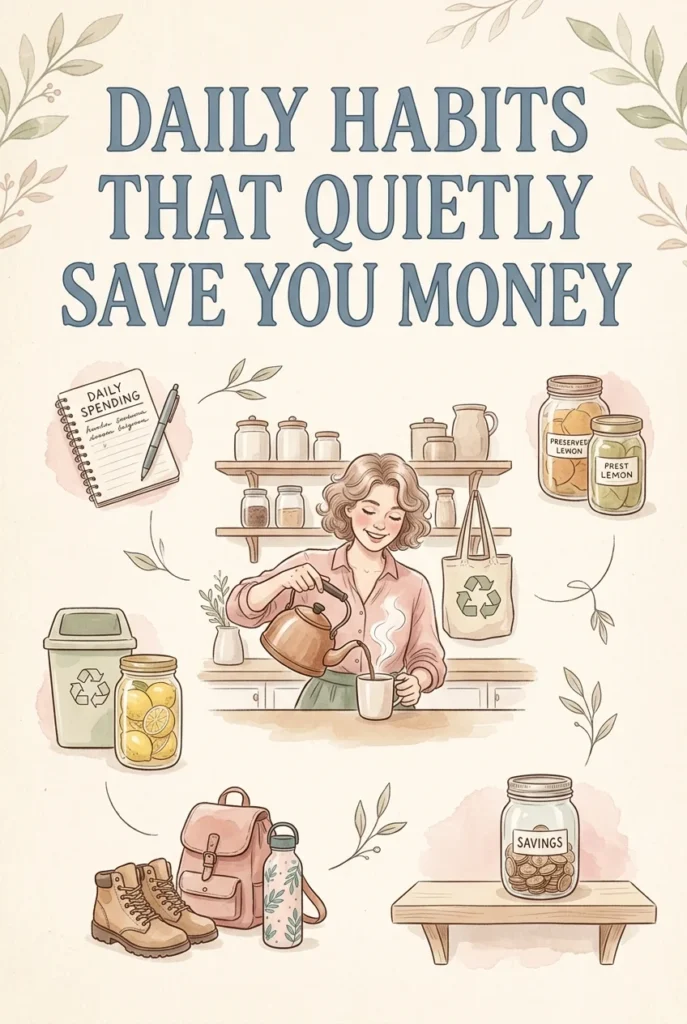
A practical, realistic set of small choices that reduce waste, prevent impulse spending, and build steady savings—one day at a time.
Most people don’t overspend because of one dramatic decision. They overspend in quiet moments: a quick “treat,” an unplanned errand, a subscription that goes unnoticed, a takeout order made when you’re tired.
That’s good news—because the fix is usually quiet, too. When you strengthen a few daily habits, your finances improve without requiring a new personality or a perfect budget.
This list focuses on simple, repeatable behaviors that help you spend less, save more, and feel more in control. Nothing here is extreme. The power comes from consistency.
Why Daily Habits Matter More Than Occasional Big Changes
Daily decisions shape your “default.” Your default determines whether money leaks out in small, frequent purchases—or stays with you to fund savings, stability, and options.
These habits work for three reasons:
- They reduce decision fatigue by creating easy rules you can follow automatically.
- They increase awareness so you catch spending patterns early (before they become expensive).
- They replace impulse with intention through planning, delays, and simple systems.
The 21 Daily Habits (In a Practical, Doable Order)
1) Start the Day With a Money Mindset Check-In
Before your day accelerates, take a minute to notice your current money mood. Are you feeling anxious, careless, reactive, or intentional?
This isn’t about judging yourself. It’s about awareness. Emotions influence spending—especially convenience spending. A quick check-in helps you make calmer choices later, when temptations show up.
Try this prompt
“What would a steady, thoughtful version of me do with money today?”
2) Make Your Morning Drink at Home
Daily café stops can quietly become a major monthly cost. Making coffee, tea, or matcha at home is one of the fastest ways to lower everyday spending.
To make the habit stick, treat it like a small ritual: use a mug you enjoy, keep your supplies easy to access, and build a calm routine around it. When your at-home routine feels satisfying, you won’t feel like you’re missing out.
3) Track Your Daily Spending (Even the Small Stuff)
Write down or log every purchase you make, including “tiny” ones. This habit turns vague assumptions into clear information.
Many people discover that the real issue isn’t one large expense—it’s repeated small purchases that add up faster than expected. Tracking also helps you adjust with intention rather than guilt.
Keep it simple
A notes app, a budgeting app, or a small notebook works. Consistency matters more than the tool.
4) Cook Simple, Thoughtful Meals
Eating at home doesn’t require complicated recipes. Focus on straightforward meals that use ingredients you already have and that you genuinely like.
When meals are planned, you’re less likely to order takeout because you’re tired, rushed, or unsure what to make. Planning also helps reduce food waste—another hidden budget drain.
5) Pack Snacks and Water When You Go Out
“Just grabbing something” while you’re out can turn into a regular expense. A water bottle and a basic snack reduce convenience purchases driven by thirst, hunger, or time pressure.
This habit is especially effective because it prevents spending that feels minor in the moment but repeats frequently.
6) Unsubscribe From Marketing Emails
Many “deals” are simply well-timed prompts designed to trigger impulse buying. Unsubscribing reduces exposure to constant offers and reminders.
When the noise disappears, so does a surprising amount of desire to shop. Out of sight really can be out of mind.
7) Use the 24-Hour Rule for Non-Essential Purchases
When you want to buy something that isn’t necessary, wait 24 hours before purchasing. This short pause creates space between an emotion and an action.
Often, the urge fades. When it doesn’t, you can revisit the decision with a clearer head and decide whether it truly fits your priorities.
What this habit builds
Patience—one of the most valuable money skills you can practice.
8) Automate a Small Daily Savings Transfer
Set up an automatic transfer to savings, even if it’s a small amount. The goal is consistency, not perfection.
Automation removes the need to “find extra money” later. It turns saving into a default action instead of a decision you have to repeatedly make.
9) Reuse and Repurpose Before Buying New
Before replacing something, ask: Can I use what I already have in a different way?
Examples are simple and practical: glass jars can become storage, older towels can become cleaning cloths, and unused notebooks can become planning pages. Resourcefulness reduces spending and increases appreciation for what you already own.
10) Check Subscriptions Regularly
Subscriptions are easy to forget because they’re automatic. Take a few minutes each week to scan for apps, memberships, and services you no longer use or value.
Those small recurring charges can quietly drain a meaningful amount over the year. Regular reviews put you back in control.
11) Keep a “Do Not Buy” List
Create a list of items you tend to buy impulsively—decor, candles, clothing, gadgets, or any personal “weak spot.”
When you’re tempted, check the list. It’s a quick way to interrupt autopilot spending and remember that you’re choosing long-term comfort over short-term satisfaction.
12) Use What You Already Have First
Before you buy something new, take inventory. Many homes already contain extra pantry items, toiletries, cleaning products, and stationery that could last weeks or months.
This habit saves money and reduces clutter at the same time. It also creates a sense of completion—using what you own feels quietly satisfying.
13) Bring Mindfulness to Small Purchases
Micro-expenses—snacks, small digital purchases, little “just because” items—are easy to dismiss. But they’re often the difference between staying on track and feeling confused about where your money went.
Pause before purchasing and ask: “Will I still care about this in three days?” If the answer is no, consider skipping it.
14) Plan Your Week in Advance
Set aside time each week (many people choose Sunday) to plan meals, errands, and expected expenses.
A planned week reduces last-minute spending on takeout, convenience items, and duplicate trips. It also saves time, which makes good money habits easier to maintain.
Planning creates stability
When you know what’s coming, your wallet doesn’t have to react to every surprise.
15) Practice the “One-In, One-Out” Rule
When you buy something new, let go of one similar item. This keeps clutter from building and forces a short pause before purchasing.
That pause matters. It helps you consider whether the new item truly adds value or is simply a momentary desire.
16) Celebrate No-Spend Days
Choose one or two days each week as “no-spend” days. On those days, you use what you have: cook from your pantry, enjoy a walk, read, or do something restorative that doesn’t require purchases.
No-spend days can reset your relationship with consumption. They’re a practical reminder that a good life isn’t automatically tied to spending.
17) Review Your Goals Each Evening
End the day with a quick reflection: Did today’s choices move me closer to my financial goals?
This doesn’t need to be intense. Five minutes is enough. The purpose is to keep your goals present so your daily actions naturally align with them over time.
18) Carry Cash for Discretionary Spending
If impulse spending is a challenge, use cash for your “fun money.” When it’s gone, it’s gone.
Cash adds friction in a helpful way. Physically handing over money often creates more awareness than tapping a card, which can reduce overspending without complicated rules.
19) Keep a Visual Savings Tracker
Create a simple visual: a jar, a notebook page, or a digital chart. The goal is to make progress visible.
When you can see your savings grow, consistency feels more rewarding. Each deposit becomes proof that your habits are working.
20) Speak Positively About Money
Your language shapes your decisions. Instead of “I can’t afford that,” try: “I’m choosing to save for something better.”
This keeps you in an empowered role. You’re not being punished—you’re making a deliberate trade for your future goals.
21) Make Contentment a Daily Practice
Contentment is one of the most effective money-saving habits because it softens the urge to chase what other people have.
Practice gratitude for your home, routines, and the comfort you’ve already created. When satisfaction becomes your baseline, spending often becomes calmer and less reactive.
Tips to Make These Habits Stick (Without Overhauling Your Life)
- Start with three habits for seven days (for example: track spending, make drinks at home, and use the 24-hour rule). Then add one more.
- Lower friction: keep your water bottle by the door, set snacks where you’ll see them, and make your savings transfer automatic.
- Link habits to an existing routine (mindset check-in while your kettle boils, goal review while you plug in your phone at night).
- Decide your “default yes” and “default no”: yes to planned meals, no to marketing emails and impulse “small purchases.”
- Measure progress weekly, not hourly: one off day doesn’t undo a steady pattern.
Common Trouble Spots (and Simple Adjustments)
When you feel bored and want to spend
Impulse buying often fills a boredom gap. Replace the urge with a short list of no-cost resets: a walk, a quick tidy, a library book, a phone call, or a simple at-home treat (tea, music, a bath).
When you’re tired and convenience spending spikes
Fatigue makes spending easier. Keep “backup” meals on hand—something easy you can make when you’re low energy—so takeout doesn’t become the default.
When you feel restricted
Shift from restriction to choice. Revisit your goals, your savings tracker, or your “why.” The point is not to say no to everything. The point is to say yes to what matters most.
Closing Thoughts
Saving money isn’t about living a smaller life. It’s about living with more intention—so your money supports your priorities instead of disappearing through everyday leaks.
These 21 habits are small on purpose. They’re meant to be realistic, repeatable, and steady. Over time, the result is meaningful: more clarity, less stress, and a growing sense of control.
Financial peace usually isn’t built in one big leap. It’s built in hundreds of mindful moments that honor both your budget and your wellbeing—one ordinary day at a time.