
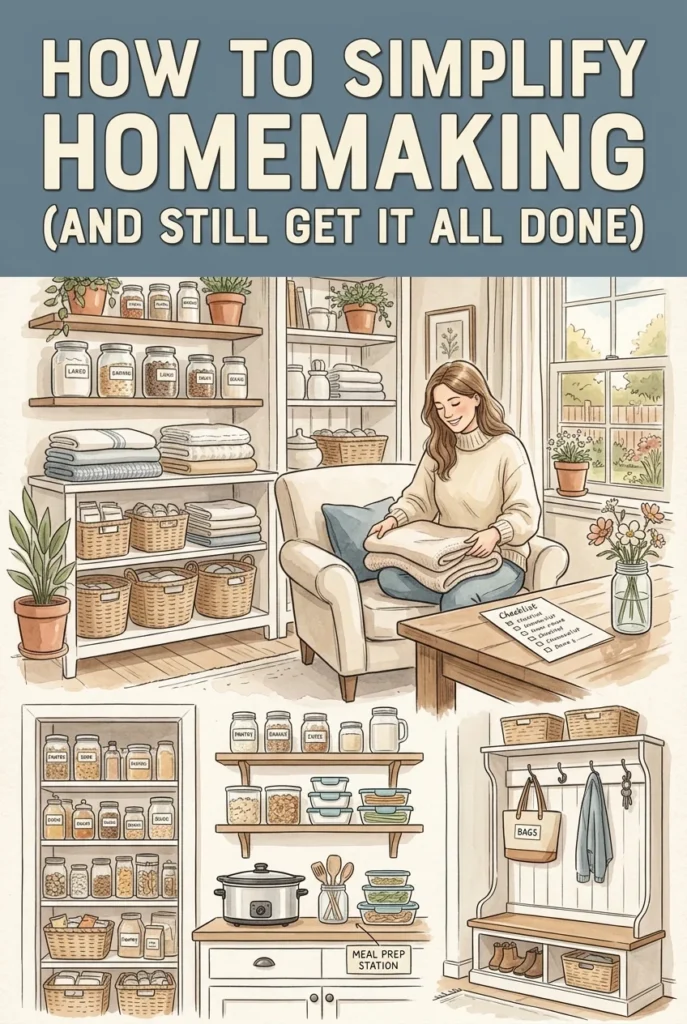
You don’t need more hours in the day—you need fewer decisions, fewer repeat tasks, and a home routine that can flex when life changes.
Homemaking can feel like a treadmill with the speed turned up: laundry that never ends, meals that need planning and cooking, clutter that reappears overnight, bills and appointments, and dozens of small “I’ll do that later” tasks that quietly stack up. The overwhelm is real, and it’s not a personal failure—it’s often a systems problem.
Simplifying homemaking doesn’t mean lowering your standards or letting the house fall apart. It means building simple structures, repeatable routines, and smart shortcuts so your home stays functional without requiring constant effort. The goal is a calm, workable home that supports your life—not a perfect one.
Below are practical, proven ways to simplify homemaking while still getting everything done, using flexible habits that hold up in real life.
Why Simplifying Homemaking Matters
When homemaking is complicated, it consumes more than time—it consumes attention. You can feel “on” all day: remembering, tracking, noticing, planning, starting, stopping, and restarting. That mental load is exhausting, even if the tasks themselves aren’t difficult.
Simplifying helps because it:
- Reduces decision fatigue (“What should I do next?”)
- Creates predictable reset points so mess doesn’t snowball
- Prevents small tasks from becoming big weekend marathons
- Makes it easier for the whole household to participate
- Supports consistency without requiring perfection
In other words: fewer moving parts, less stress, better results.
1) Build Anchor Routines Instead of Rigid Schedules
Why it works: Strict schedules often fail because homes don’t run on predictable timelines. Kids get sick, meetings run late, errands take longer, and energy levels fluctuate. Anchor routines give you structure without locking you into an hourly plan.
How to set up anchor points
Choose 3–4 moments you already have most days. Common anchors include:
- After waking up
- After lunch
- After dinner
- Before bed
What to attach to each anchor
Assign a short, high-impact “reset” to each one. Examples:
- Morning: unload dishwasher, start one load of laundry, quick bathroom wipe
- After lunch: 10-minute tidy, clear counters, handle a small admin task
- After dinner: wipe surfaces, load dishwasher, sweep high-traffic areas
- Before bed: reset living room, prep bags/clothes, quick sink check
Result: Even if the day goes sideways, your home still gets multiple “mini-resets,” which prevents chaos from building.
2) Use Checklists to Clear Mental Clutter
Why it works: Trying to remember everything is a hidden form of clutter. Checklists move tasks out of your head and into a system you can trust.
What to include on a weekly checklist
Keep it realistic and repeatable. Examples:
- Laundry (wash, dry, fold, put away)
- Vacuum or sweep
- Bathrooms (quick clean)
- Bills and paperwork
- Meal plan and grocery list
- Trash and recycling
What to include on a monthly checklist
These are the tasks that tend to get forgotten until they become urgent:
- Deep clean fridge
- Rotate linens
- Check pantry for expired items
- Pay subscriptions and review recurring charges
- Schedule seasonal home tasks
Where to keep your checklists
Use whatever you’ll actually look at: a simple binder, a planner, a note app, or a printed page pinned inside a cabinet door.
Result: Instead of constantly wondering what you missed, you follow the list and move on.
3) Practice the “One-Touch” Rule to Stop Clutter Before It Starts
Why it works: Clutter grows when items are handled multiple times—set down, moved, set down again, then piled. The one-touch rule prevents “temporary” piles from becoming permanent.
How the one-touch rule looks in daily life
When you pick something up, aim to put it in its real home immediately.
- Mail: recycle junk, file what matters, and place bills where you pay them
- Shoes: into the closet or a designated basket—never “just by the door”
- Coats and bags: hung up right away
- Kitchen items: washed or loaded, not left in the sink “for later”
Make one-touch easier with “homes” for common items
If items don’t have a clear home, one-touch feels impossible. A simple tray for keys, a basket for chargers, or a labeled bin for school forms makes follow-through automatic.
Result: Your home stays noticeably cleaner without a major tidying session.
4) Cook Smarter, Not Harder
Why it works: Meal prep and cooking can consume huge amounts of time and energy. Streamlining food routines frees hours each week and reduces the “what’s for dinner?” pressure.
Use “cook once, eat twice” as a default
When you make a meal that freezes well, double it. Examples include soups, casseroles, cooked grains, or shredded chicken. Freeze half in a labeled container so a future dinner is already done.
Create a rotating list of reliable meals
Build a simple rotation of 10–12 family favorites. This makes grocery shopping faster and lowers decision fatigue. You can still add variety, but a core rotation keeps the week manageable.
Lean on low-effort tools
Slow cookers and pressure cookers can turn a busy day into an easy dinner. Choose recipes that rely on basic ingredients you already keep on hand.
Extra tip: prep ingredients in bulk
Chop vegetables once (such as onions, carrots, and peppers), store them in containers, and use them across multiple meals. One prep session can remove several weeknight bottlenecks.
Result: Less stress, fewer last-minute takeout runs, and a kitchen routine that feels sustainable.
5) Declutter to Reduce Ongoing Maintenance
Why it works: The less you own, the less you have to clean, organize, fold, and manage. Decluttering is not just about aesthetics—it’s about reducing the workload of keeping a home running.
Start with surfaces (fastest visible impact)
Clear what you see most often: countertops, nightstands, the entryway, and dining surfaces. These spots collect “miscellaneous” items that create visual stress.
Move to storage (where clutter hides)
Once surfaces feel calmer, tackle storage areas:
- Donate clothes you haven’t worn in a year
- Remove expired pantry items
- Reduce duplicates in the kitchen
- Let go of items you keep “just in case” but never use
Aim for functional minimalism
You don’t need empty shelves. You need space for what you use and love, and fewer items competing for attention.
Result: Your home looks tidier more often, and cleaning takes less time because there’s less to move around.
6) Assign Days to Categories (So You’re Not Doing Everything Every Day)
Why it works: When every day includes every type of chore, it creates burnout. Grouping tasks by category helps you focus, finish faster, and feel less pulled in ten directions.
A simple example weekly rhythm
| Day | Focus |
|---|---|
| Monday | Laundry |
| Tuesday | Bathrooms |
| Wednesday | Dusting and vacuuming |
| Thursday | Paperwork and admin |
| Friday | Meal prep for the weekend |
Weekend structure that supports the week
If it fits your household, use Saturday as a shared clean-up window and Sunday as a true reset day (light planning, prepping, and restoring the home’s baseline).
Result: Every area gets attention regularly, without chores taking over your entire day.
7) Automate Household Essentials Wherever Possible
Why it works: Some tasks don’t need your constant involvement. Automation reduces the number of small things you must remember and removes repetitive friction.
What to automate
- Put bills on autopay
- Set recurring deliveries for basics like detergent or toilet paper
- Use digital reminders for seasonal tasks (filter changes, deep cleans)
Keep it simple, not complicated
Automation should remove effort, not create a complex setup you have to maintain. Start with one or two high-impact changes.
Result: Your systems carry the weight, and your attention stays available for what matters most.
8) Involve the Whole Household (Because Homemaking Is Not a One-Person Job)
Why it works: A home runs better when everyone contributes. Delegating reduces your load and teaches responsibility, ownership, and basic life skills.
Assign age-appropriate tasks
Examples that can work in many households:
- Sorting laundry
- Wiping tables
- Feeding pets
- Emptying small trash bins
- Putting away their own items and shoes
Give each person a “zone” to reset daily
Instead of random tasks, assign a consistent area: the entryway, the living room, or one bathroom. A zone approach makes responsibility clear and easier to track.
Make accountability visible
A simple chore chart (paper or digital) helps everyone see what’s expected and what’s done—without requiring constant reminders.
Result: The home runs on teamwork instead of one exhausted person trying to carry everything.
9) Create a Nightly Reset to Protect Tomorrow
Why it works: Waking up to clutter sets a stressful tone and forces you to start the day catching up. A short reset at night prevents morning overwhelm.
A 15-minute nightly reset plan
- Clear counters and sinks
- Load the dishwasher or wash essentials
- Reset the living room (fold blankets, return remotes, tidy surfaces)
- Lay out clothes or prep bags