
Stop trying to clean the entire house at once. Divide it into zones, rotate your focus, and keep up with the basics—without the constant feeling of being behind.
Cleaning feels never-ending when every room is “on your list” all the time. The mental load alone can be exhausting: you notice everything, but you can’t do everything in one day—so you end up doing a little here and there, without ever getting that satisfying reset.
A zone system solves that problem by giving your cleaning a simple structure. You keep a small set of daily “baseline” tasks going, then rotate through larger areas of your home (your zones) on a schedule. No space gets ignored. Nothing requires an all-day marathon. And over time, your home stays calmer with less effort.
Why the Zone System Works (and Why It Matters)
The goal of zone cleaning isn’t perfection. It’s consistency.
When you separate “daily maintenance” from “deeper zone work,” you avoid the two common extremes: doing nothing because you’re overwhelmed, or doing everything at once and burning out. Zones create a repeatable cycle, so your home gets regular attention without demanding your entire weekend.
1) What Are Cleaning Zones?
Cleaning zones are simply sections of your home grouped by use or function. Instead of treating your entire home like one big project, you break it into manageable areas you can clean on a rotation.
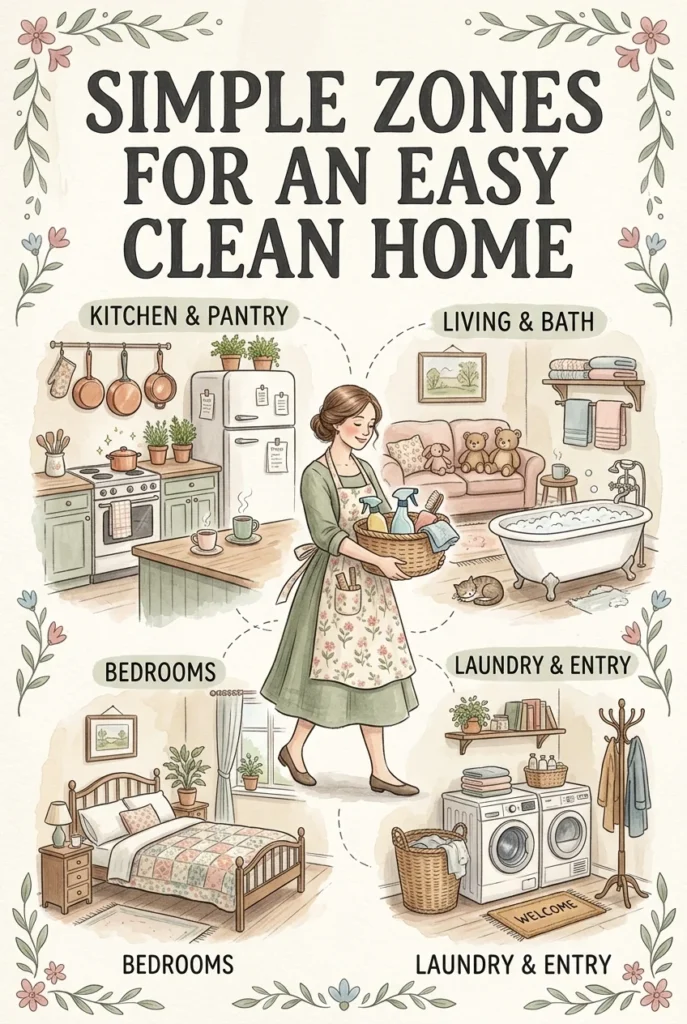
A simple 5-zone example
- Kitchen & pantry
- Living & dining areas
- Bedrooms
- Bathrooms & laundry
- Entryway, hallways, & outdoor spaces
Why this approach feels easier
Focusing on one zone at a time ensures deeper cleaning happens regularly, but in smaller doses. Instead of trying to deep clean everywhere “someday,” you give each area a turn. That structure reduces decision fatigue and makes it far more likely you’ll follow through.
2) Start With Daily “Baseline” Cleaning
Before you lean on zones, set a short list of daily habits that prevent mess from turning into chaos. Think of these as the minimums that keep your home functioning.
Baseline ideas to choose from
- Make the bed
- Wipe kitchen counters after use
- Run or load the dishwasher
- Quick sweep of high-traffic areas
- One load of laundry if needed (wash, dry, or fold—any progress counts)
Why the baseline matters
If the daily basics are ignored, zone cleaning turns into constant catch-up. But when baseline tasks are handled, zone work becomes a deeper refresh—less stressful, more predictable, and easier to finish.
3) Choose a Zone Rotation That Fits Your Life
The best schedule is the one you’ll actually use. Choose a rotation that matches your energy, your household size, and your available time.
Option A: Weekly rotation
Focus on one zone each week. With five zones, you’ll cover your whole home in five weeks. This is a practical choice if you want a clear structure and don’t want to think about cleaning every day.
Option B: Monthly rotation
Assign each zone a few days during the month. This works well if your weeks are unpredictable and you’d rather spread tasks out more gently.
Option C: Daily micro-zones
Some people prefer a weekday pattern (for example: Monday kitchen, Tuesday bathrooms, and so on). This can be especially helpful if short routines feel more manageable than longer sessions.
Pro tip
Match the rotation to your lifestyle. If you work outside the home, a weekly focus can be simpler. If you’re home more often, daily micro-zones may feel natural. Either way, the system works as long as it’s repeatable.
4) Build a Clear Task List for Each Zone
Zones work best when you don’t have to decide what to clean every time. A written list turns your zone into a checklist you can simply move through.
Kitchen & pantry tasks
- Deep-clean the fridge (discard expired items, wipe shelves)
- Wipe cabinet doors and handles
- Organise pantry shelves
- Clean stovetop and backsplash
- Mop floors
Living room & dining area tasks
- Dust furniture and surfaces
- Wash or refresh throw pillow covers if needed
- Wipe electronics (screens, remotes, controllers)
- Vacuum under furniture
- Clean windows or glass doors
Bedroom tasks
- Change bedding
- Declutter nightstands and dressers
- Dust fans and light fixtures
- Vacuum floors (and under the bed if possible)
- Wipe mirrors
Bathrooms & laundry tasks
- Scrub toilet, sink, and shower/bath
- Wash bath mats and towels
- Organise toiletries and restock essentials
- Clean washer/dryer exterior and surrounding area
- Mop floors
Entryway, hallways, & outdoor spaces tasks
- Sweep or vacuum floors
- Shake out rugs and doormats
- Wipe light switches and door handles
- Declutter shoes, coats, bags, and “drop zone” items
- Tidy porch/patio basics (as applicable)
Why a detailed list changes everything
Without a list, you waste time deciding what “counts” as cleaning. With a list, you can start immediately, track what you’ve done, and stop when the session is over—without second-guessing.
5) Time-Block Zone Cleaning (Instead of Marathon Cleaning)
Zone systems are designed to be sustainable. That means smaller time blocks you can realistically repeat.
15–30 minute bursts
Set a timer and do what you can. This keeps you focused and prevents a small task from expanding into an entire afternoon. It also makes it easier to fit cleaning into real life—before work, after dinner, or during a quiet window.
Weekly deep dive (1–2 hours)
Once a week, spend longer on your current zone to knock out heavier tasks—like cleaning out the fridge, scrubbing grout, or washing cushion covers. Not every week will be perfect, but having a default plan keeps you moving forward.
Helpful mindset shift
Don’t wait for “enough time.” Use the time you have. A short, consistent routine beats occasional overhauls.
6) Create a Zone Basket (So You’re Not Hunting for Supplies)
One of the most common reasons people avoid cleaning is friction: you’re ready to start, but you can’t find what you need. A zone basket (or portable caddy) reduces that friction.
Example baskets by zone
- Kitchen basket: degreaser spray, microfiber cloths, sponge, gloves
- Bathroom basket: scrubbing brush, glass cleaner, disinfectant spray, toilet wand
- Living room basket: dusting spray, vacuum attachments, lint roller, fabric refresher
Why this saves time
When your supplies are ready to go, you’re more likely to start. It also helps you stay in the zone (literally): fewer trips back and forth and less distraction.
7) Add Decluttering to Your Zone Work
Zones aren’t just for cleaning—they’re ideal for decluttering, because you’re already focused on one defined area. Even a small declutter makes every future clean easier.
A simple method that works
While you’re in your zone, set aside 10 minutes to:
- Toss trash
- Rehome items that don’t belong in that space
- Create a small donation pile for items you don’t use
Practical examples
- Kitchen: clear expired food, recycle old containers, reduce duplicates
- Bedroom: check drawers for clothes you don’t wear, remove clutter from surfaces
Why pairing cleaning with decluttering matters
Cleaning around clutter is slower and more frustrating. Decluttering as part of the zone cycle prevents pile-ups and keeps your home easier to maintain over the long term.
8) Assign Zones (and Tasks) to Family Members
A zone system works even better when the household shares responsibility. You don’t need everyone to do everything—just clear, age-appropriate expectations.
Ways to involve kids
- Pick up toys and return items to bins
- Dust lower shelves or baseboards (with a simple cloth)
- Match socks, fold small items, or wipe safe surfaces
Ways to involve partners
- Assign a repeating task (for example: vacuum living areas every Saturday)
- Give ownership of a zone during the rotation
- Split a zone by task type (one person declutters, the other cleans)
Keep it fair with rotation
Switch zones each week (or each cycle) so no one gets stuck with the same least-favourite area. Shared systems last longer when they feel equitable.
9) Pair Zones With Your Weekly Rhythm
Cleaning is easier when it’s connected to routines you already have. Pairing zone work with existing habits reduces the mental effort of planning.
Simple pairing examples
- Laundry day: focus on the bathrooms & laundry zone
- Grocery day: clean and organise the pantry, wipe fridge shelves, reset food storage
Why this creates momentum
You’re already in the right mindset and often in the right location. Linking tasks helps the routine become automatic, which is exactly what makes a system sustainable.
10) Celebrate the Reset (So It Feels Worth Doing)
Finishing a zone creates a noticeable change in your space. Marking that moment—briefly—helps you associate cleaning with a positive outcome rather than a chore you never finish.
Simple “reset” rituals
- Light a candle
- Use a favourite room scent
- Put fresh flowers in the cleaned space
Why it matters
Small rituals reinforce the payoff: your effort transformed the room. That positive association can make it easier to start next time.
Tips: Make Zone Cleaning Easier to Stick With
- Keep the baseline small. If daily tasks take too long, they’ll get skipped—and the system will feel like it’s failing.
- Write the zone list once. Reuse it each cycle. Update it only when your home’s needs change.