
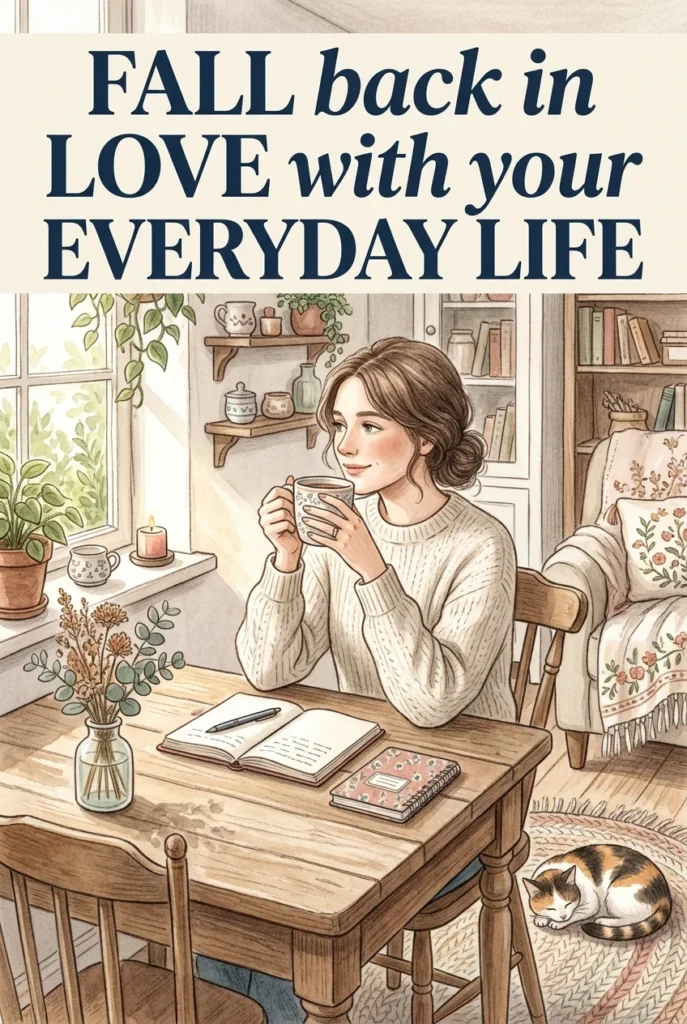
A practical, grounded guide to noticing what’s already good—and building days that feel calmer, warmer, and more like you.
Most people don’t need a brand-new life. They need a clearer way to live the one they already have.
Falling in love with your life isn’t about pretending everything is fine or forcing positivity. It’s about learning to experience your days more fully—so the ordinary stops feeling like something to rush through.
This matters because your life is mostly made of “regular” moments: mornings, errands, laundry, conversations, quiet evenings. When those moments feel calmer and more meaningful, everything else improves, too.
What “Falling in Love With Your Life” Actually Means
To love your life doesn’t mean every part of it is easy. It means you’re building a life that feels aligned with who you are becoming—one that makes room for peace, purpose, and simple joy.
It’s not about having more. It’s about seeing more, feeling more, and appreciating more of what’s already here.
10 Practical Ways to Fall in Love With the Life You Have
1) Slow Down So You Can Be Present
You can’t enjoy a life you never fully experience. Many days are spent racing from one task to the next, multitasking, and mentally living in “what’s next.”
Try taking your foot off the gas in small, realistic ways. Pause before you move to the next thing. Finish one task, then start the next. Look up when you’re walking. Take one deep breath before you check your phone.
What to notice today
Pay attention to small sensory details: the sound of rain, the warmth of sunlight through a window, the scent of freshly washed clothes, the comfort of clean sheets. Presence turns background noise into something you can actually enjoy.
2) Romanticize the Ordinary (In a Grounded Way)
“Romanticizing” doesn’t have to mean being unrealistic. It simply means treating everyday life like it deserves care and attention.
Use your favorite mug for your morning drink. Put music on while you clean. Light a candle before journaling. Fold laundry with a show you like in the background. Open a window while you reset the kitchen.
When ordinary tasks become small rituals, you stop waiting for big moments to feel alive—you create more of those moments right where you are.
3) Curate a Peaceful Environment
Your environment quietly shapes your mood, energy, and focus. A space that feels chaotic often makes life feel heavier than it needs to.
Aim for “peaceful,” not perfect. Declutter slowly. Put a few items away each day. Make your bed if it helps your mind feel settled. Add simple comforts: a soft blanket, fresh flowers (even inexpensive ones), natural light, and scents that you personally find soothing.
Start with one high-impact area
If you’re overwhelmed, choose one small zone that you see often—your bedside table, kitchen counter, or entryway. A single calm corner can change how your whole home feels.
4) Practice Appreciation for What You Already Have
Gratitude is not denial. It’s a way of training your attention to notice what’s working, what’s supportive, and what’s quietly good.
You can keep a gratitude journal or simply pause during the day to name three things you appreciate. They can be big (your health, your home) or small (a kind message, a warm shower, a moment of quiet).
Appreciation turns the ordinary into abundance. It reminds you that your life contains more “good” than you may be giving it credit for.
5) Take Care of Yourself Intentionally
When you care for yourself, life often feels softer. Your nervous system settles. Your thoughts get clearer. Even your home and relationships can feel easier to manage.
Keep it simple and repeatable: wash your face slowly, drink water consistently, stretch gently, rest when you need to, and feed yourself in a way that feels supportive.
Try treating yourself with the same care you would offer someone you love deeply. Loving your life starts with loving the person living it.
6) Build a Routine That Feels Like You
A good routine isn’t rigid. It’s a rhythm that supports your wellbeing and reduces daily decision fatigue.
Consider what helps you feel steady: morning sunlight, a few minutes of journaling, quiet meals, daily movement, reading at night, or an evening reset that makes tomorrow smoother.
Make your routine realistic
If a routine only works on “perfect” days, it won’t last. Choose small actions you can do even when you’re tired, busy, or not in the mood. Consistency beats intensity.
7) Do More of What Makes You Feel Alive
What makes you lose track of time—in a good way? Painting, dancing, gardening, cooking, listening to music, writing, walking, learning something new, or making something with your hands.
Reconnect with hobbies and interests that bring you back to yourself. You don’t need to be impressive at them. You only need to enjoy them.
Every time you choose joy on purpose, you reinforce a powerful message: life is meant to be lived, not just managed.
8) Let Go of What Drains You
Falling in love with your life often requires subtraction. Not everything deserves space in your home, schedule, or mind.
Release what feels heavy: clutter that stresses you out, habits that leave you anxious, commitments that no longer fit, and relationships that consistently drain your energy.
Peace doesn’t always come from adding more. Often, it arrives when you stop carrying what isn’t yours to hold.
9) Celebrate Small Wins (Because They Are the Real Work)
It’s easy to overlook progress when it comes in small steps, but that’s how most change happens.
Celebrate what you did today: kept a promise to yourself, cleaned your space for ten minutes, made a healthy choice, answered the email you were avoiding, or rested instead of pushing through.
Small wins create momentum and pride. They remind you that your life is happening now—not only after you reach a future milestone.
10) Be Gentle With Your Journey
You won’t love every season equally. Some days are quiet and heavy. Some parts of life are simply hard.
Gentleness is what makes your life sustainable. Speak to yourself kindly. Forgive mistakes quickly. Give yourself room to be a work in progress.
When you meet yourself with grace, you can feel peace even in imperfect moments—and that peace makes it easier to appreciate the life you’re building.
Tips You Can Try This Week (Simple, High-Impact)
- Choose one daily “slow moment.” Tea, a short walk, or sitting by a window for two minutes—no phone.
- Turn one chore into a ritual. Music on, candle lit, timer set, then stop when it ends.
- Reset one surface each night. A clear counter or tidy coffee table can change the next morning.
- Write down three good things. Keep them specific: “sunlight on the floor,” “fresh towels,” “a kind conversation.”
- Add one nourishing habit. Water beside your bed, stretching after you brush your teeth, or a consistent bedtime wind-down.
- Schedule one “alive” activity. Thirty minutes of a hobby counts. Enjoyment is the point.
- Unfollow or mute one draining influence. Protect your attention; it shapes your experience of life.
When It Still Doesn’t Feel Like Enough (A Helpful Reframe)
If you’re trying these ideas and still feel disconnected, it doesn’t mean you’re doing it wrong. It may simply mean you’re in a season that requires extra patience.
Falling in love with your life is not a switch—it’s a practice. You notice. You adjust. You return to what helps. You let the process be imperfect.
Even on difficult days, you can often find one small thing worth caring for: a cleaner corner of your home, a calmer evening, a kind word to yourself, a moment of real rest.
Suggested Reading
- How to Fall in Love With Yourself
- A Realistic Glow Up Checklist
- 21 Sunday Self-Care Ideas for a Peaceful Mind
- The Weekly Budget Routine That’ll Save You Time & Money
- The Weekly Evening Routine That’ll Keep Your Life & Home on Track
- The Weekly Laundry Routine That’ll Keep You on Top of Laundry All the Time
- 10 Routines That Make Your Life Simpler & Home Easier to Manage
- The Daily Routine of a Vintage Housewife
- 10 Evening Routine Tips That Will Transform Your Home
- How to Create a Home Reset Sunday Routine
Closing Thought
Falling in love with your life isn’t about escaping it. It’s about embracing it: the imperfect mornings, the quiet evenings, the ordinary days that make up your real life.
When you slow down, nurture yourself, release what drains you, and build rhythms that feel like home, something changes. You start noticing what’s already here. You start living more of your life instead of rushing past it.
And little by little, it becomes easier to think, with honesty and calm: This is it. This is the life I’m learning to love.