
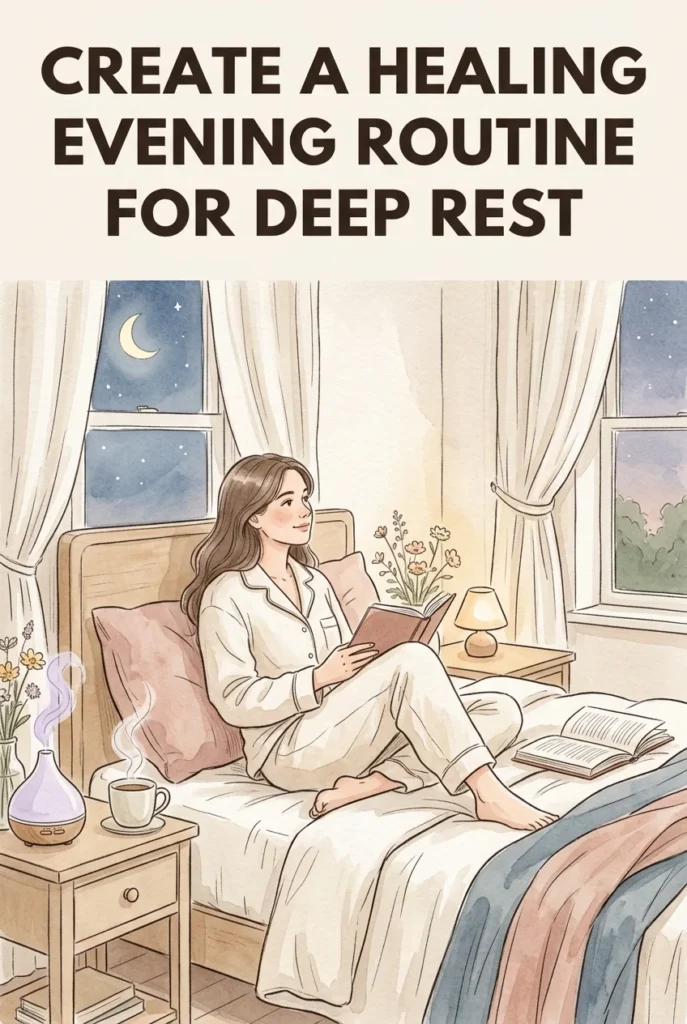
A practical, step-by-step guide to winding down, restoring balance, and setting yourself up for deeper rest.
Evenings quietly shape the quality of your sleep—and the tone of your next day. If your nights tend to disappear into chores, phone scrolling, and a last-minute collapse into bed, you’re not alone.
The good news: a healing evening routine doesn’t need to be long or elaborate. It needs to be intentional, calming, and aligned with what your mind and body actually need after a full day.
Why a Healing Evening Routine Matters
Your day doesn’t end when work ends. If you move straight from “doing” into bed, your nervous system often stays stuck in “go” mode. That can show up as restlessness, racing thoughts, shallow sleep, or waking up still tired.
A healing evening routine creates a deliberate transition: you close the day, lower stimulation, and signal safety to your body. Over time, this rhythm can make it easier to fall asleep, sleep more deeply, and wake up with more steadiness—because you’re no longer dragging unfinished stress into tomorrow.
The 11-Part Evening Routine That Heals
Use these steps as building blocks. You don’t have to do every single one every night. The goal is consistency, not perfection.
1) Transition Out of “Day Mode”
Start your routine with a clear shift from productivity to rest. Think of this as your “closing time” for the day.
Practical step
About an hour before dinner, put away work devices, silence non-essential notifications, and reset your workspace. Even a quick straighten-up counts.
Why it heals
Without a transition, your brain keeps scanning for tasks. A physical reset helps your nervous system stop bracing for the next demand.
Make it easier
Change into comfortable clothes—not necessarily pajamas yet, but something soft and cozy that tells your body you’re off-duty.
2) Nourish Yourself With a Calm Dinner Ritual
Dinner can either be another rushed task—or the first truly restorative moment of the evening.
How to do it
Keep the setup simple: a placemat, a candle, or a tidy surface. Put your phone aside and eat at a slower pace, chewing well to support digestion.
Optional add-on
End with an herbal tea such as chamomile, peppermint, or lavender.
Why it heals
Mindful eating lowers stress and supports digestion. When dinner is rushed and heavy, sleep can be more restless.
3) Do Light Chores as a Reset (Not a Punishment)
A small amount of evening upkeep can create a sense of closure—without turning your night into another work shift.
Good options
Load the dishwasher, wipe the counters, fold a quick load of laundry, or set out what you’ll wear tomorrow.
The rule that keeps it healing
Keep it under 20 minutes. Stop while you still feel calm.
Why it heals
A tidier environment reduces mental clutter. You’re also quietly helping your morning self start with fewer decisions and less visual stress.
4) Use Gentle Movement to Release the Day
Stress doesn’t just live in your thoughts. It can settle into your shoulders, hips, jaw, and lower back.
Choose one
Try 10–15 minutes of stretching, especially for shoulders, hips, and lower back. You could also do gentle yoga, such as “legs up the wall,” or take a slow evening walk for fresh air.
Why it heals
Gentle movement releases tension and helps your body recognize that the day’s effort is done. It’s a physical cue that it’s safe to soften.
5) Create a Wind-Down Ritual With Light and Scent
Your environment affects your nervous system more than most people realize. You can use that to your advantage.
Lighting
Turn off harsh overhead lights and switch to softer options—lamps, fairy lights, or candles.
Scent
If you enjoy fragrance, use calming essential oils such as lavender or eucalyptus in a diffuser.
Why it heals
Dim light supports melatonin production, and soothing scents can help regulate stress and mood.
6) Care for Your Skin With Intention
Skincare doesn’t have to be vanity. Done slowly, it can be a grounding act of self-care.
A simple, effective routine
If you wore sunscreen or makeup, double cleanse. Then apply a hydrating toner or essence, follow with serums (such as niacinamide or hyaluronic acid), and finish with a nourishing moisturizer.
Small upgrade, big difference
Massage products in gently instead of rushing. The act of touch can be soothing in itself.
Why it heals
Taking time to hydrate your skin barrier and slow your pace can calm both your body and your stress response.
7) Set a “Digital Sunset” Before Bed
Screens can keep your brain stimulated long after you’re technically done for the day.
Step-by-step
Set a digital curfew at least 30–60 minutes before sleep. Replace scrolling with a quiet activity like reading, journaling, or soft music.
If you use your phone as an alarm, place it across the room so it’s not within easy reach.
Why it heals
Less blue light and less stimulation often leads to deeper sleep—one of the body’s most powerful healers.
8) Clear Emotional Static With Journaling
If you carry the day’s worries into bed, your mind may keep working when you’re trying to rest. Writing is a simple way to empty the mental “inbox.”
A gentle structure that works
Start with a brain dump: everything that’s on your mind, without editing. Then write three things you’re grateful for. Close with one intention for tomorrow.
Why it heals
Journaling creates perspective, reduces racing thoughts, and helps you end the day with clarity rather than mental clutter.
9) Choose Mindful Connection or Meaningful Solitude
Healing isn’t only physical. It’s emotional, too—and evenings are often when that becomes most obvious.
If you live with others
Choose a small, slow point of connection: a real conversation, a cuddle, playing with your kids, or a few minutes with a pet. It doesn’t have to be long to matter.
If you live alone
Build a ritual you genuinely enjoy—tea, reading, creative hobbies, or a peaceful home activity that helps you feel settled.
Why it heals
Emotional connection can lower stress, and meaningful solitude strengthens inner calm. Both support more restorative rest.
10) Set Up Tomorrow for Peace
Tomorrow’s chaos is often created the night before. A few minutes of preparation can remove friction where it hurts most: the morning rush.
Quick wins
Lay out your outfit, pack bags for work or school, and jot down your top three priorities for the next day.
Why it heals
This reduces decision fatigue and helps you fall asleep knowing key details are already handled.
11) Close the Day With a Sleep Ritual
Your final minutes matter. End with something that signals “safe, quiet, done.”
Simple options
Read a few pages of a book (avoid stressful genres), listen to a sleep meditation or soft instrumental music, or do a few minutes of deep breathing—inhale for 4, exhale for 6.
Why it heals
Sleep is where the body repairs, the brain detoxes, and energy is restored. A consistent closing ritual helps protect that process.
Tips to Make Your Evening Routine Stick
- Start smaller than you think you need. A 10–30 minute version done consistently beats an ambitious routine you abandon after a week.
- Anchor your routine to one reliable cue. For example: “After dinner, I do my 20-minute reset,” or “After I wash my face, screens are done.”
- Keep the environment on your side. Set out your tea, book, journal, or diffuser so the healthy choice is the easy choice.
- Use a timer for chores. The “under 20 minutes” rule protects your evening from turning into a second workday.
- Decide your minimum standard for hard days. On low-energy nights, commit only to the digital sunset and a short sleep ritual.
Sample Evening Routine Timelines (Choose What Fits Your Life)
You can combine the same steps in different lengths depending on your schedule. Here are three flexible templates.
| Routine Length | What It Can Include | Best For |
|---|---|---|
| 30 minutes | Digital sunset (30 min), quick wash/skincare, 3-minute journal, breathing (inhale 4/exhale 6) | Busy nights, low-energy days, consistency building |
| 60 minutes | Light chores (under 20 min), gentle stretch (10–15 min), skincare, journaling, reading or meditation | Most weeknights when you want structure without pressure |
| 90 minutes | Calm dinner ritual, longer wind-down lighting/scent, walk or yoga, deeper journaling, connection time, sleep ritual | Weekends or nights when you want extra restoration |
Common Roadblocks (and How to Handle Them)
“I don’t have time for a routine.”
You don’t need a long routine. Choose two non-negotiables: a digital curfew and a closing sleep ritual. Add one more step only after those feel automatic.
“Evenings are the only time I can catch up.”
That urge often comes from a real need for control. Use the “set up tomorrow for peace” step to