
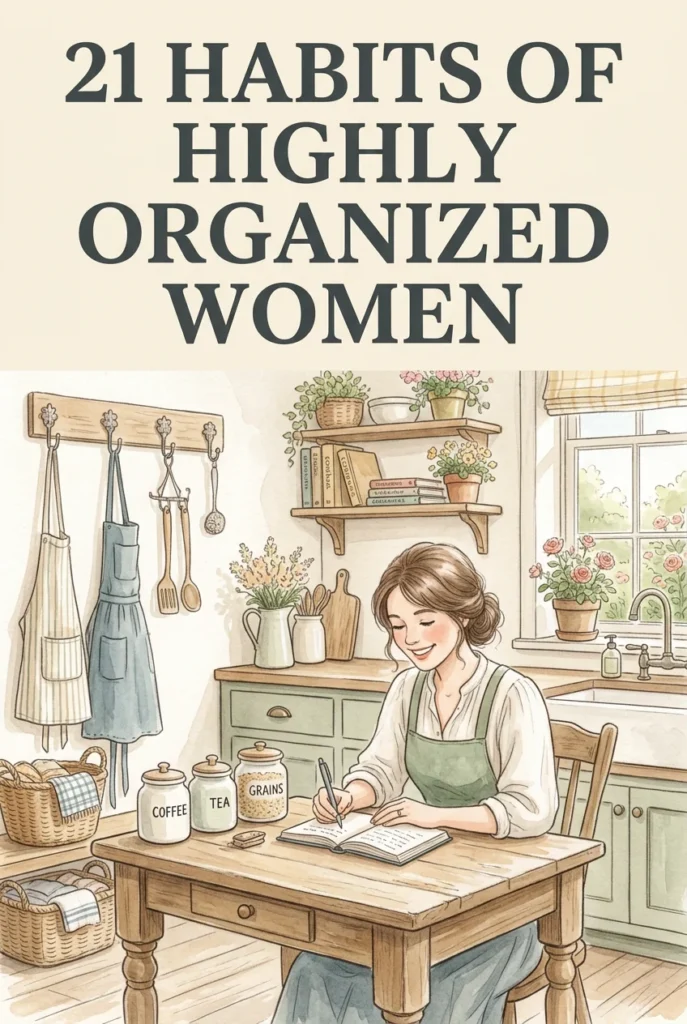
A calm, functional home isn’t a personality trait—it’s a set of repeatable habits you can learn.
Most people don’t need a perfect home. They need a home that runs smoothly: mornings that aren’t frantic, meals that aren’t last-minute crises, and spaces that don’t feel like they’re constantly “behind.” That’s the real value of being organised at home. It’s not about doing more. It’s about creating simple rhythms, small systems, and clear priorities so daily life takes less effort.
Highly organised women aren’t magically “together.” They’ve simply built habits that reduce decision fatigue, prevent clutter from compounding, and make home management easier to maintain. The good news: these habits are learnable, and you don’t have to adopt them all at once.
Why Home Organisation Matters (Beyond a Tidy Look)
Organisation works because it protects limited resources: time, energy, and attention. When your home has predictable systems, you spend less time searching for items, re-cleaning the same mess, or negotiating what needs to happen next. Clear routines also make it easier to share responsibilities with family members or housemates—because expectations are visible, not assumed.
In short, organisation isn’t just about a clean countertop. It’s about creating a home that supports real life: busy seasons, changing schedules, and the everyday needs of the people who live there.
The 21 Habits That Make Homemaking Feel Simpler
Think of the habits below as building blocks. Each one removes a friction point that typically creates clutter, stress, or last-minute scrambling. Start with the ones that solve your biggest pain point first.
1) They Plan the Next Day the Night Before
Instead of waking up and reacting, organised women take 10–15 minutes before bed to preview tomorrow. They may review a to-do list, check a calendar, set out clothes, and do light prep for breakfast (for example, setting up coffee items or prepping oats or smoothie components). This small step lowers morning stress and helps the day start with intention.
2) They Keep Daily-Use Items Minimal
They don’t aim for extreme minimalism; they aim for fewer “extras” that create cleanup work. Keeping a smaller set of everyday items—like favorite mugs, practical kitchen tools, and a manageable set of cleaning products—makes tidying faster and reduces visual clutter. Less excess also means less to store, less to wash, and fewer decisions.
3) They Rely on Simple Morning and Evening Routines
Routines act like bookends that keep mess from building. A morning routine might include hydration, a quick sweep of key areas, and food prep. An evening routine often includes a kitchen reset, folding or containing laundry, and wiping down surfaces. The point isn’t a long checklist—it’s consistency.
4) They Prioritise Starting with a Clean Kitchen
The kitchen tends to set the tone for the whole home. Organised women know that dishes and cluttered counters create a ripple effect: cooking feels harder, cleaning takes longer, and the space becomes stressful to enter. Many prioritise unloading the dishwasher, clearing counters, and wiping surfaces early in the day so the kitchen stays functional.
5) They Write Things Down Instead of Holding It All in Their Head
Groceries, bills, appointments, birthdays, and household tasks are too easy to forget when you rely on memory. Organised women use a planner, a wall calendar, or a digital tool such as Notion or Google Calendar. Writing things down protects mental space for better decisions, calmer days, and more restful downtime.
6) They Follow the “One-Touch Rule” When Possible
Clutter often forms when items get handled multiple times: mail moved from counter to table, bags dropped “just for now,” laundry piled in corners. The one-touch rule means dealing with something promptly: sort mail into “pay, file, or toss,” put items back where they belong, and move laundry straight into a basket or the washer. Fewer “temporary piles” means fewer future cleanups.
7) They Batch Similar Tasks
Batching reduces setup time and mental load. Instead of doing laundry every day, they may assign laundry days (for example: whites, darks, towels and sheets). The same concept applies to food prep: chopping multiple vegetables at once or cooking extra portions to freeze for later. Grouping tasks helps the home feel steady without constant effort.
8) They Keep Flat Surfaces as Clear as Possible
Counters, tables, and coffee surfaces attract clutter quickly. Organised women aim to keep these areas mostly clear so rooms look calmer and clean-up is easier. If certain items must live out, they often use trays or baskets to corral them intentionally rather than letting them spread across the surface.
9) They Declutter Seasonally
Season changes provide a natural checkpoint. Organised women often review wardrobes, pantry areas, and storage spaces at the start of a new season. They ask practical questions: Do I love it? Do I use it? Does it serve this season of life? Items that no longer fit the household’s needs can be donated, sold, or repurposed.
10) They Meal Plan as a Normal Weekly Habit
Daily “What’s for dinner?” decisions drain time and increase impulse grocery runs. A simple weekly meal plan—written on a fridge list, a chalkboard, or inside a planner—reduces waste, saves money, and helps meals feel more balanced. Meal planning doesn’t have to be elaborate. Even a short list of dinners can change the week.
11) They Assign a Clear Home for Every Item
This habit is foundational: scissors live in a specific drawer, bills have a dedicated file, keys belong in a bowl or hook location. When items have a consistent “home,” tidying becomes quicker, and lost-item searches become rare. It also makes it easier for other people in the household to put things away correctly.
12) They Use Timers to Stay Focused
Organised women understand that momentum matters. A timer turns vague intentions into a defined sprint: 10–15 minutes to reset a room, a set block to declutter, or a focused window to handle emails and admin tasks. Timers also prevent “all-day cleaning” by giving a clear stop point.
13) They Treat Self-Care as Part of Organisation
Home management runs better when the person managing it is rested and nourished. Organised women often protect self-care—quiet time, movement, basic skincare, and adequate rest—because a depleted person has less capacity for planning, patience, and follow-through. This isn’t indulgence; it’s maintenance.
14) They Follow the Five-Minute Rule
If a task takes five minutes or less, they do it now rather than later. That might look like hanging up a coat, clearing mugs, folding a throw, or wiping a small spill. Small, immediate actions prevent “tiny messes” from merging into overwhelming cleanups later.
15) They Delegate Without Guilt
Organised women avoid doing everything themselves. They assign roles to family members or housemates—unloading the dishwasher, feeding pets, taking out trash, or managing specific chores. Delegation keeps the household functioning and helps prevent burnout and resentment.
16) They Use Labelled Seasonal and Holiday Storage
Instead of scattering holiday décor across closets and corners, they use labelled bins by season (for example: “Autumn Décor” or “Christmas Lights”). Clear storage makes decorating easier and cleanup far less stressful because everything has a predictable place to return to.
17) They Schedule Rest Days
Organisation isn’t a commitment to constant productivity. Highly organised women intentionally build in slower days—time to read, enjoy the home, or have an unhurried morning. Rest helps routines stay sustainable and keeps homemaking from feeling like an endless to-do list.
18) They Maintain Master Lists
Recurring tasks are easier when they’re documented. Organised women often keep master lists for cleaning, pantry staples, and longer-term house projects. These lists might live in a planner or an app so they can be updated over time and reviewed when planning the week or month.
19) They Label Frequently Used Storage
Labels reduce decision fatigue and speed up daily routines. Pantry jars, bins, shelves, and bathroom drawers become easier to use when they’re clearly marked (for example: “rice,” “oats,” “pasta,” or “first aid”). The goal is instant visibility, especially for shared household areas.
20) They Edit Their Wardrobe Regularly
Organised women don’t keep clothing that doesn’t fit, doesn’t feel good to wear, or doesn’t suit their current lifestyle. Regular edits—often tied to seasons—make getting dressed faster and help closets stay functional. A simpler wardrobe also makes laundry and storage easier to manage.
21) They End the Day with a Simple Home Reset
Before bed, they do a short reset: load dishes, clear the sink, fluff cushions, put shoes away, and contain laundry in baskets. The payoff is immediate and powerful—waking up to a calmer space rather than last night’s unfinished mess. This habit alone can shift how the whole home feels.
Tips to Start Without Overwhelm
You don’t need a complete life overhaul to benefit from these habits. Choose one small change, repeat it until it feels normal, and then add another.
- Pick one “anchor habit” first. A kitchen reset or a five-minute nightly plan often creates the fastest relief.
- Match the habit to your current season. In busy weeks, focus on containment and routines, not deep decluttering.
- Lower the bar for consistency. A 10-minute reset done regularly beats a two-hour clean that happens once a month.
- Make the next step obvious. Put the planner where you’ll see it, keep donation bags accessible, and store cleaning tools near where they’re used.
- Use timers to avoid all-or-nothing thinking. Commit to one timed sprint and stop when the timer ends.
A Practical Way to Combine These Habits into Daily Rhythm
Morning (10–20 minutes)
Choose a short routine that keeps the day from starting in chaos: clear or unload dishes, wipe counters, do a quick sweep of the most-used area, and confirm what’s happening on the calendar. If food prep helps your week, prep something small early (even if it’s just pulling ingredients forward).
Afternoon (one focused block)
This is often the easiest time for a batched task: a laundry load, a short admin session for bills or planning, or a timed declutter session in one drawer or shelf. The key is focus—one category, one space, one goal.
Evening (10–15 minutes)
End with a reset: contain clutter, return items to their homes, load dishes, and set up tomorrow’s basics. Then plan the next day briefly so you’re not starting from zero in the morning.
Common Sticking Points (and How Organised People Handle Them)
“I tidy, but it never stays tidy.”
This usually means items don’t have clear homes, or the home is holding too many “daily-use” objects. Start with habit #11 (a place for everything) and habit #2 (reduce excess in high-traffic areas).
“I’m the only one who notices what needs doing.”
Move toward habit #15 by assigning simple, visible responsibilities. Clear roles are often more effective than repeated reminders because they turn chores into shared expectations.
“I don’t have time for routines.”
Make routines smaller. A routine is not a long checklist; it’s a repeatable sequence. Even a five-minute version can keep clutter from compounding, especially when paired with habit #14.
Final Thought: Build Systems That Protect Your Peace
Highly