
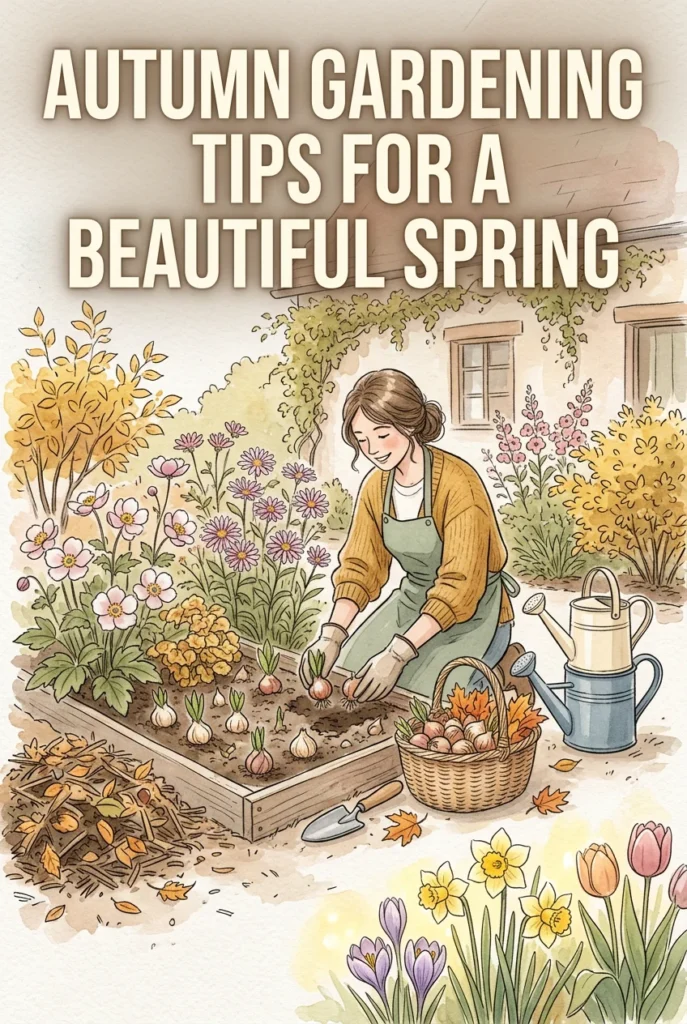
Use the warm soil, steady moisture, and cooler days of autumn to tackle the jobs that make next season easier.
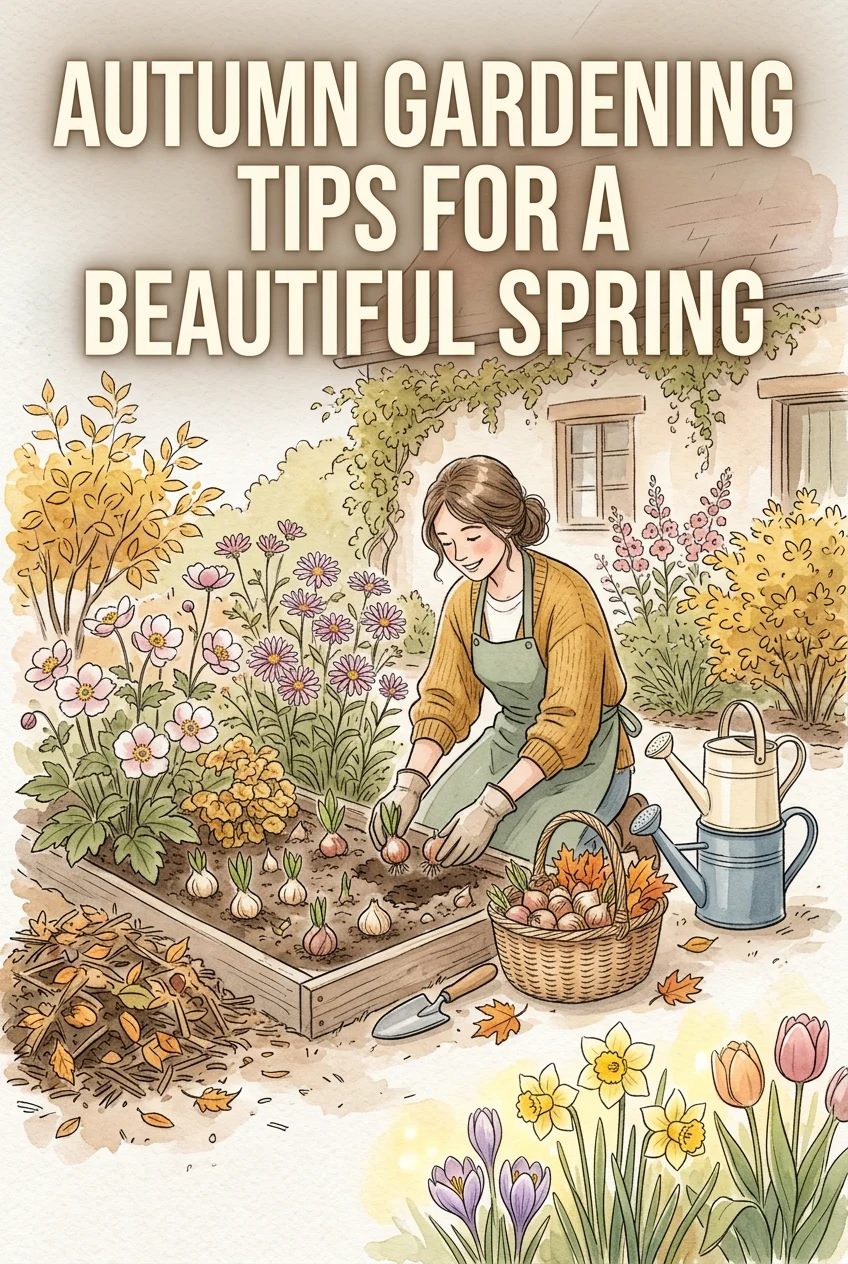
Autumn is one of the most practical times of year to get meaningful work done in the garden. The heat of summer may be fading, but the soil still holds warmth—often enough to support new roots and steady growth. Cooler air also makes outdoor jobs more comfortable, and the season’s natural moisture can reduce how often you need to water.
If you’re new to gardening, this is a great season to build momentum. You don’t need to do everything at once. A few well-chosen tasks now—mulching, cleaning up plant debris, planting bulbs, and improving your soil—can help your garden make it through winter and come back looking fresh in spring.
Why Autumn Gardening Matters
Autumn work pays off because it supports two goals at once:
- Protecting what you already grew by reducing disease and pest problems that can carry over.
- Preparing for what comes next by improving soil conditions and planting at the right time for spring results.
Think of it as “quiet-season” gardening: less about nonstop growth, more about smart preparation.
Mulching Your Garden
Mulch is one of a garden’s best friends in autumn. It acts like a natural fertilizer over time as it breaks down, and it supports healthier soil with less effort from you.
What mulch helps you do
Mulch supports the garden in a few simple, high-impact ways:
- Reduces weeds by blocking light from reaching weed seeds.
- Helps soil hold moisture, so you may not need to water as often.
- Improves soil gradually as organic mulch breaks down and feeds the ground with nutrients.
How to approach mulching in autumn
Mulch after you’ve done basic cleanup (such as removing diseased leaves and spent stems). Spread mulch around plants rather than piling it directly against them. The goal is steady coverage, not a tight mound.
Building a Garden Bed
A garden bed is a focal point in many gardens, whether you want vegetables, herbs, or flowers. Autumn is a useful time to plan and prepare beds because you can set the structure, enrich the soil, and be ready to plant when conditions are right.
Choose the right location first
Before you build, think carefully about placement. Sun exposure matters, but it isn’t one-size-fits-all: some plants prefer full sun, while others perform better with less direct light. Picking the right spot now saves frustration later.
Start with good soil
When building your garden bed, consider adding topsoil so your plants have enough nutrients to get established. A strong start matters, especially for new gardeners who want consistent results without guessing what the soil might be missing.
Fertilizing for Stronger Plants
Autumn fertilizing can support plant health heading into winter. The key is to keep it balanced and practical.
What to look for in a fertilizer
Choose a well-balanced fertilizer with equal parts of nitrogen, phosphorus, and potassium. The original guidance also recommends that it should contain calcium.
Why calcium is mentioned
Calcium supports plant structure: it encourages plant cells to become thicker. With stronger plant tissue, your plants are better positioned to keep off fungus disease during the winter season.
As with any fertilizer, follow the directions on the product you choose and apply it thoughtfully—more isn’t automatically better.
How to Make Compost from Autumn Leaves
Autumn naturally provides one of the easiest compost “ingredients”: fallen leaves. Instead of treating them as waste, gather them to begin (or add to) a compost pile.
Compost materials you can use
Compost can be made from everyday organic scraps and garden leftovers, including:
- Fallen leaves
- Kitchen scraps
- Banana peels
- Orange skins
- Garden waste
Why compost is worth the effort
Compost acts as a natural fertilizer and can save you money over time. It also helps you recycle what you already have—turning seasonal cleanup into something your garden can use.
If you’re just starting, keep it simple: gather materials in one spot and let nature do the long, slow work. Even a basic compost setup can become a reliable resource.
Flower Planting in Autumn
Autumn moisture can give newly planted flowers a helpful push. The cooler season is often easier on young plants, and the ground still has warmth left over from summer.
Choose flowers suited to the season
Not every flower is a good match for autumn planting, but there are plenty of colorful options that can work well. Examples mentioned include:
- Japanese anemones
- September charms
- Buttercups
- Asters
When you plant, focus on giving each plant a good start: place it where conditions fit its needs, settle the soil gently, and water if the weather is dry.
Cleaning Up the Garden (Especially Diseased Material)
Autumn cleanup isn’t only about making the garden look tidy. It can also reduce problems that return in the next growing season.
Remove disease and pest issues now
Try to remove any diseased or pest-infested plant material. For example, roses may have dead leaves with black spots. It’s better to remove these now to reduce the problems that might follow in the coming year.
Be thorough in the areas that struggled most during the growing season. This step is simple, but it can make spring maintenance easier and less reactive.
Planting Bulbs for Spring Color
If you already have a garden full of plants, bulbs are still worth adding. Autumn is the right time to plant bulbs because they have enough time to grow during the winter season.
Where to plant bulbs
After you buy a variety of bulbs, place them in a spot with plenty of sunlight. With the right timing and location, spring can welcome you with lovely colored flowers—often when you need them most after winter.
Bulbs are also a practical choice for newer gardeners because they don’t require constant attention once they’re planted in the right place.
Quick Autumn Gardening Tips (Checklist)
If you want a simple plan you can follow over a weekend or two, use this list to stay focused.
- Work with the season: take advantage of warm soil and cooler air for planting and bed prep.
- Mulch after basic cleanup: it helps moisture retention, reduces weeds, and feeds soil as it breaks down.
- Build or refresh a garden bed: choose the location based on sunlight needs, then add topsoil for a stronger start.
- Fertilize thoughtfully: pick a balanced fertilizer (equal nitrogen, phosphorus, potassium) that also contains calcium.
- Start composting: collect fallen leaves and add kitchen scraps like banana peels and orange skins.
- Plant suitable flowers: use autumn moisture to help them settle in; choose varieties that can be planted in this season.
- Remove diseased material: especially leaves or stems showing signs of pests or fungus (such as black-spotted rose leaves).
- Plant bulbs in sun: autumn planting sets you up for spring color with minimal work later.
A Simple Way to Think About Your Autumn Garden
Try to do your prep and planting in autumn, because it’s one of the best times to work. It’s also a season that rewards consistency: a little effort now can make the next season noticeably smoother.
And there’s a practical bonus to growing your own food: it’s easy to imagine those warm, lovely soups you can make from what you planted, helping you keep warm through winter.
With the steps above—mulching, bed-building, balanced fertilizing, composting, careful flower choices, cleanup, and bulb planting—your garden is better prepared to survive the cold winter and come out looking beautiful in spring.