
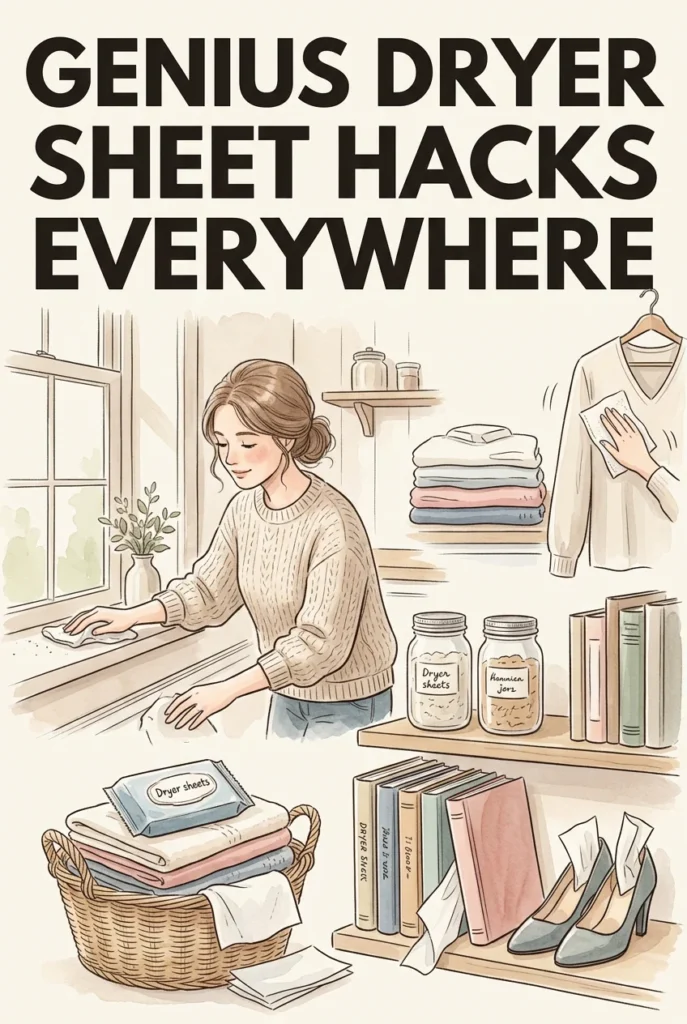
Dryer sheets aren’t just for softening laundry. With a little creativity, they can help you deodorize, dust, de-static, and tackle small cleaning jobs all over the house—and even in your vehicle.
Most people think of dryer sheets as a one-purpose laundry add-on. In reality, their texture, anti-static properties, and lingering fragrance make them handy for dozens of quick fixes. This article pulls together more than 40 proven, everyday ways to repurpose them—without changing what they’re good at: reducing static, lifting light dust, and freshening enclosed spaces. Think of them as a “little helper” for quick maintenance and in-between cleaning, especially when you want something fast, low-mess, and easy to toss afterward.
Why Dryer-Sheet “Hacks” Matter (Beyond the Laundry Room)
Small household problems add up: dusty baseboards, musty closets, smelly shoes, hair-covered upholstery, and soap scum that seems to return overnight. Dryer sheets offer a low-effort, low-cost tool you may already have on hand. They’re not a replacement for deep cleaning products, but they can be a convenient in-between solution when you want something fast and simple. They’re also useful for “maintenance cleaning,” meaning quick touch-ups that keep a space feeling fresher until you have time for a more thorough scrub or wash.
Another reason these ideas work so well is that many of the messes we notice day-to-day are light: a thin film of dust, a bit of static cling, mild odors trapped in fabric, or a small patch of residue. Dryer sheets are often enough for these minor annoyances, and because they’re disposable, they’re handy for jobs you don’t necessarily want to do with a reusable cloth.
Before You Start: Quick, Common-Sense Guidelines
Dryer sheets are designed for fabric care, so use them thoughtfully outside the dryer. A few practical reminders make these ideas safer and more effective.
- Test first on a small, hidden spot—especially on painted walls, delicate fabrics, upholstery, and plastics. Some finishes can react to added fragrance or leave a faint film.
- Use light pressure on screens, glass, and finishes to avoid scratching. Let the sheet do the work instead of scrubbing hard.
- Keep airflow clear if attaching a sheet near vents or filters; don’t block the vent. A loose sheet can get pulled into moving parts or restrict airflow.
- Dispose after heavy-duty jobs (like greasy pots or bug residue) so you’re not spreading grime elsewhere. If the sheet looks dark or oily, it’s done.
- Be cautious with skin contact if you choose to rub a sheet on your body for insect-repelling purposes, as some people are sensitive to fragrances. If you have sensitive skin, keep sheets on clothing or nearby items instead.
Over 40 Ways to Use Dryer Sheets Around the Home
Below are practical, scannable uses you can try right away. Each mini-guide keeps the original intent: simple steps, quick results, and realistic expectations. For many of these, a used dryer sheet works just as well as a fresh one, especially for dusting and wiping, so consider saving a few from laundry day in a small bin under the sink.
Deodorize and Freshen (Shoes, Bags, Drawers, Books, Bedding)
1) Freshen shoes overnight
Fold a dryer sheet in half and place it inside each shoe. Leave it overnight, then remove in the morning for a fresher smell. This works best for everyday odors; if shoes are soaked with sweat, let them dry fully first so the scent doesn’t just mix with moisture.
2) Deodorize sports gear
Tuck a sheet into gym bags, sports equipment bins, or with pads and helmets to help reduce odor between uses. It’s especially helpful when gear has to sit in a closed space (like a trunk or locker) until you can properly air it out.
3) Freshen up a gym bag (quick version)
Keep a dryer sheet in a side pocket of your bag to absorb sweaty odors. Replace it regularly so the scent stays clean. If the pocket gets damp, remove the sheet and let the bag air out to prevent that “old gym bag” smell from building up.
4) Keep luggage smelling fresh while you pack
Layer a sheet between clothes in your suitcase so everything smells fresher when you unpack. This is a simple way to keep that “stored suitcase” smell from transferring to clean clothes, especially on longer trips.
5) Prevent musty suitcases between trips
Store a dryer sheet inside an empty suitcase so it stays fresh in storage (especially helpful for long gaps between travel). If your suitcase has internal pockets, place a sheet in one pocket and another near the bottom where odors tend to linger.
6) Make a simple drawer sachet
Fold a dryer sheet and place it in clothing drawers to lightly scent and freshen stored items. For a gentler fragrance, tuck it into a corner rather than laying it across the full drawer. Replace every few weeks, or whenever the scent fades.
7) Deodorize trash cans
Place a sheet at the bottom of the can before inserting the liner. It helps neutralize odors that tend to linger. For extra impact, wipe the inside of the can quickly first so you’re not asking the sheet to cover up old residue.
8) Freshen musty, older books
Slip a dryer sheet between the pages of an old book to reduce musty odors. Leave it for a while, then remove. To avoid leaving a strong fragrance behind, start with a short time (like a day or two) and check before storing it back on the shelf.
9) Keep bedding fresher in storage
Place sheets between mattresses and box springs, or between pillows and pillowcases, to help keep stored bedding smelling clean. This is also useful for guest bedding that stays tucked away most of the year.
10) Refresh a stale breadbox
Place a dryer sheet at the bottom of a breadbox to help absorb and reduce odors. Remove it before storing unwrapped food if you prefer to avoid fragrance transfer. If you keep bread in bags, the sheet can sit underneath without direct contact.
Dusting, Pet Hair, and Everyday Pickup
11) Use as a quick “dust buster” cloth
Lightly swipe a dryer sheet over tables, shelves, blinds, and other dusty surfaces. The texture helps trap dust rather than just pushing it around. When one side looks gray, flip it or fold it so you’re always wiping with a cleaner section.
12) Tackle dusty blinds (and help deter dust buildup)
Run a dryer sheet along each slat. This picks up dust and can help reduce static that attracts more dust later. For faster cleaning, close the blinds fully and wipe in long strokes from one end to the other before reversing direction and repeating on the other side.
13) Wipe baseboards fast
Glide a sheet along baseboards to collect dust. It’s a fast way to keep edges and corners from looking dull. If you have textured baseboards, use short strokes so the sheet can get into the grooves.
14) Remove pet hair from furniture and clothing
Gently rub a dryer sheet over couches, chairs, bedding, or clothing where pet hair collects. The sheet helps lift and grab hair for easy disposal. For best results, use on dry surfaces; damp fabric tends to hold hair more stubbornly.
15) Pet hair pickup for quick touch-ups
For stubborn hair on fabric surfaces, use short strokes in one direction and fold the sheet to expose a cleaner area as it fills up. This method also helps you “gather” hair into a small pile you can pick up and toss.
16) Make a Swiffer-style pad alternative
Attach a dryer sheet to a sweeper head for a quick pass over hard floors. It’s a simple way to grab dust and debris in a pinch. Use it for dry sweeping only; if you need wet cleaning, switch to a proper mop or floor-safe cleaner.
Static Control (Clothes, Hair, and On-the-Go Fixes)
17) Stop static cling on clothing
Rub the dryer sheet over the area where static is clinging. Focus on the inside of the garment for best results. If you’re wearing multiple layers, treat the layer that’s rubbing most (for example, tights under a skirt).
18) Reduce static in hair
Brush the sheet lightly from roots to ends to calm static and flyaways. A gentle touch is key—too much pressure can leave hair overly fragranced or slightly coated.
19) Tame flyaways and frizz (handy before you leave home)
Swipe a dryer sheet gently over the surface of your hair to smooth down flyaways. Use a light touch to avoid overloading hair with fragrance. If you have fine hair, focus on the outer layer rather than rubbing through the entire length.
20) Tackle static while wearing clothes
Pin a dryer sheet to the inside of your clothing to help reduce static as you move around, especially in dry, cold weather. Place it inside a seam or near the hem so it stays hidden and doesn’t bunch uncomfortably.
Bathroom and Glass: Soap Scum, Hard Water, Mirrors
21) Clean glass shower doors
Slightly dampen a dryer sheet and scrub glass shower doors to help break down soap scum. Rinse the doors afterward. For a clearer finish, dry with a clean towel so minerals in water don’t leave fresh spots.
22) Help prevent soap scum buildup
Hang a dryer sheet in the shower area to help reduce soap scum over time. Replace periodically. Keep it away from direct water flow so it doesn’t break down quickly or stick to surfaces.
23) Remove hard water stains
Dampen a sheet and scrub hard water marks on shower doors or faucets. Rinse and wipe dry for a clearer finish. If a spot doesn’t budge, it may be etched or heavily mineralized and might require a dedicated descaler.
24) Clean windows and mirrors
Use a slightly damp dryer sheet to wipe windows or mirrors. Follow up with a dry cloth if needed for a cleaner, streak-free shine. Use minimal moisture; overly wet sheets can leave streaks, especially on mirrors.
25) Clean chrome bathroom fixtures
Rub chrome faucets with a dryer sheet to remove light residue and bring back shine. Finish by buffing with a dry microfiber cloth for a brighter look and fewer water spots.
Kitchen Cleanup: Pots, Pans, Grills, and Sticky Messes
26) Make stuck-on pot and pan mess easier
Fill the dirty pot with warm water and add a dryer sheet. Let it soak for about an hour, then wash as usual—the grime should lift more easily. This is especially helpful for starches and sauces that cling to the bottom after cooking.
27) Scrub grill grates after a cookout
While the grill is still warm (not scorching), scrub the grates with a used dryer sheet to help loosen stuck-on food. Use tongs to hold the sheet so your hands stay away from heat and residue, then discard the sheet afterward.
28) Lift gum from shoes or clothing
Place a dryer sheet on the gum and rub gently. The gum should loosen so it can peel away more easily. On clothing, go slowly so you don’t spread the gum into fibers; then launder as usual once the bulk is removed.
29) Remove sticky residue in cup-like spaces (home version)
If you have small sticky spots in containers or holders, press a dryer sheet into the area and wipe to help pick up residue. Fold the sheet into a tight point for narrow grooves, like cup holders or utensil organizers.
Walls, Markings, and Household “Oops” Moments
30) Remove crayon marks
Gently rub a dryer sheet over crayon marks on walls or furniture to help lift the waxy color. Use a light hand and test paint first. Work from the outer edge of the mark toward the center so you don’t spread the wax further across the wall.
31) Remove deodorant marks from clothing
Rub the mark with a dryer sheet to help lift the residue. This can be especially useful for quick touch-ups before heading out. For dark fabrics, use small strokes and check as you go so you don’t leave a visible film behind.
Sewing, Crafting, and Small Workshop Tasks
32) Smooth sewing thread and reduce tangles
After threading your needle, drag the thread through a dryer sheet to reduce tangles and make stitching smoother. This can be helpful with hand quilting, embroidery floss, or any thread that tends to twist and knot as you work.
33) Prevent thread tangling in storage
Store needles in a folded dryer sheet to help keep thread and small notions from tangling and snagging. You can also wrap a dryer sheet around a small bundle of yarn or cord to keep it from fraying and picking up static.
34) Use as quilt block backing (handy in a pinch)
For some craft and quilting tasks, dryer sheets can serve as a simple backup “backing” material when you need something thin and flexible on hand. This is best for temporary positioning, practice blocks, or craft experiments rather than heirloom projects.
35) Sharpen and clean scissors
Open the scissors and make several cuts through a dryer sheet. This helps clean the blades and can improve cutting performance. If your scissors have sticky residue (like tape), follow with a proper cleaner for a more complete fix.
36) Clean paint brushes with dried paint
Soak paintbrushes in warm water with a dryer sheet for a few hours to help loosen hardened paint, then rinse and clean. Afterward, reshape the bristles and let the brush dry flat so it keeps its form.
Electronics and Office-Friendly Uses
37) Wipe computer screens (gently)
Use a very gentle touch to wipe fingerprints and reduce static on computer screens. Avoid pressing hard and stop if you notice streaking. For best results, use on the screen’s frame or on non-glare surfaces, and follow device manufacturer guidance for screen care.
38) Dust electronics and small surfaces
Lightly swipe a sheet over keyboards, shelves near electronics, and other dust-prone areas. The sheet’s texture helps trap dust. Keep sheets away from open ports and avoid snagging on keys by using light, smooth passes.
39) Clean dry erase boards
Wipe a dry erase board with a dryer sheet to help remove marker haze and leftover “ghosting” between deeper cleanings. Use light pressure, and then wipe with a clean, dry cloth if you notice any residue. This is a convenient option when you need the board presentable quickly for a meeting or class.
40) Reduce static on paper stacks and folders
If papers or plastic folders cling together, lightly wipe the outside of the stack or the folder with a dryer sheet. This can help reduce static so papers separate more easily. Keep it light so you don’t transfer fragrance directly onto important documents.
41) Freshen a small office trash bin
Just like kitchen trash cans, small office bins can hold onto odors from snack wrappers or coffee cups. Place a dryer sheet under the liner or at the bottom of the bin to keep the space smelling cleaner between emptying days.
Closets, Closures, and “In-Between” Laundry Help
42) Freshen a hamper or laundry basket
Drop a dryer sheet under the laundry bag or at the bottom of a hamper to help keep sweaty clothing from making the whole laundry area smell stale. Replace it whenever you notice the scent fading, and wash the hamper occasionally so odors don’t build up on plastic or fabric.
43) De-static and smooth light wrinkles on clothes in a pinch
If you have a slightly wrinkled, static-prone item right before leaving, rub it lightly with a dryer sheet to reduce cling and help the fabric drape more smoothly. This won’t replace ironing, but it can make lightweight fabrics look less “grabby” and more wearable.
44) Help remove lint and fuzz from dark clothing
For a quick touch-up, rub a dryer sheet across dark pants, sweaters, or coats to lift light lint and fuzz. It’s not as strong as a dedicated lint roller, but it’s handy when you