
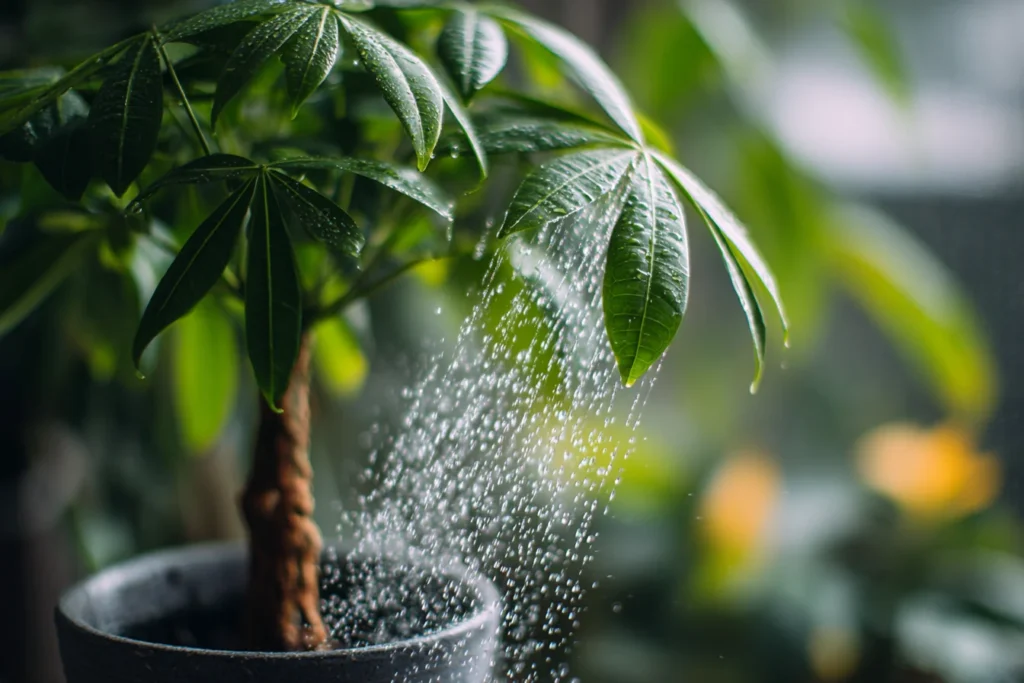
How To Water Money Tree Plants: A Complete Care Guide
Understanding Your Money Tree’s Watering Needs
Money tree plants (Pachira aquatica) thrive with consistent moisture but are sensitive to overwatering. The key to proper watering is understanding when your plant actually needs a drink. Check the soil by inserting your finger about 2 inches deep—if it feels dry at this depth, it’s time to water.
These tropical plants typically need watering every 7-10 days during spring and summer, and every 10-14 days during fall and winter. However, each plant’s needs vary based on its environment and growing conditions.
Visual cues can also help determine when to water. Drooping or wilting leaves often indicate your money tree is thirsty, though you should always confirm with a soil check before watering.
Environmental Factors Affecting Watering Frequency
Several environmental conditions influence how often you’ll need to water your money tree:
- Light exposure: Plants in brighter locations use water more quickly than those in shadier spots
- Temperature: Higher temperatures increase water consumption
- Humidity: Lower humidity levels mean more frequent watering
- Air circulation: Drafts from vents, windows, or heaters can dry out soil faster
- Pot size and material: Smaller pots and porous materials (like terracotta) dry out more quickly
Money trees prefer temperatures between 65-75°F (18-24°C) and humidity levels of at least 50%. Maintaining these conditions helps establish a more consistent watering routine.

Seasonal Watering Adjustments
Your money tree’s watering needs change with the seasons. During spring and summer (the growing season), water more frequently as the plant actively grows and uses more moisture. Check the soil every 5-7 days during these months.
In fall and winter, the plant enters a period of dormancy with slower growth. Reduce watering frequency, checking the soil every 10-14 days. Overwatering during dormancy can be particularly harmful.
Be especially mindful during winter when indoor heating can create drier conditions, potentially increasing water needs despite the dormant period.
Proper Watering Technique
When watering your money tree, use these best practices for optimal results:
- Use room temperature water (cold water can shock the roots)
- Water thoroughly until it flows from the drainage holes
- Empty the saucer or cachepot after 15-30 minutes to prevent standing water
- Direct water at the soil, avoiding the trunk and leaves
- Use filtered or distilled water if possible, as money trees can be sensitive to chemicals in tap water
The thorough watering approach encourages deeper root growth and ensures all the soil receives moisture. This is more effective than frequent shallow watering, which can lead to weak root development.
Signs of Overwatering
Overwatering is the most common problem with money trees. Watch for these warning signs:
- Yellowing leaves, especially lower ones
- Soft, mushy stems or trunk
- Foul smell from the soil
- Mold or fungus on soil surface
- Dropping leaves despite moist soil
- Root rot (dark, soft roots when examined)
If you notice these symptoms, immediately check the roots and reduce watering frequency. You may need to repot the plant in fresh, well-draining soil if root rot has developed.
Signs of Underwatering
While less common than overwatering, underwatering can also harm your money tree. Look for these indicators:
- Crispy, brown leaf edges or tips
- Curling leaves
- Drooping despite firm stems
- Slow or stunted growth
- Soil pulling away from the pot edges
If your plant shows these signs, gradually increase watering frequency. Don’t compensate by drenching an underwatered plant, as this can shock the roots. Instead, water thoroughly but allow proper drainage.
Water Quality Considerations
The type of water you use matters for money trees. These plants can be sensitive to chemicals commonly found in tap water, such as chlorine, fluoride, and salts. When possible, use filtered, distilled, or rainwater.
If you must use tap water, let it sit out overnight to allow chlorine to evaporate. Another option is to collect and use air conditioner condensate, which is essentially distilled water.
Avoid using softened water, as the sodium content can build up in the soil and damage your plant over time.
Supporting Humidity Between Waterings
Money trees are tropical plants that appreciate humidity levels of 50% or higher. While proper watering addresses soil moisture, maintaining adequate air humidity helps the plant thrive between waterings.
Increase humidity by misting the air around the plant (not directly on leaves), using a humidifier, or placing the pot on a pebble tray with water. Grouping plants together also creates a more humid microclimate.
During winter when indoor air is typically drier, paying attention to humidity becomes especially important for your money tree’s health.
Soil and Drainage Requirements
The right soil mix plays a crucial role in proper watering. Money trees need well-draining soil that still retains some moisture. A quality potting mix with added perlite, pumice, or orchid bark provides the ideal balance.
Always use pots with drainage holes to prevent water from pooling at the bottom. If using decorative pots without drainage, keep the plant in a nursery pot inside the decorative container and remove it for watering.
Consider repotting every 2-3 years with fresh soil to maintain proper drainage capabilities, as soil can become compacted over time.
Adjusting Watering for Different Growth Stages
Young money trees typically need more frequent watering than mature specimens, as their smaller root systems access less soil volume. As your plant matures, you may find you can extend the time between waterings.
During active growth periods when new leaves are forming, your money tree may require slightly more water. Similarly, after repotting, reduce watering slightly until the plant shows signs of new growth, indicating it has adjusted to its new container.
Conclusion
Watering your money tree correctly strikes a balance between providing adequate moisture and avoiding soggy conditions. By checking the top 2 inches of soil before watering and adjusting your schedule based on environmental factors and seasons, you’ll help your plant thrive for years to come.
Remember that each money tree is unique, and learning to read your specific plant’s signals is the most reliable watering guide. With consistent care and attention to its watering needs, your money tree will reward you with lush foliage and the symbolic prosperity these beautiful plants are known for.