

How to Grow Stunning Black Petunias: When to Plant, Best Varieties & Care Tips for Dramatic Garden Impact
Intro for Stunning Black Petunias
Black petunias are dramatic flowering plants that add a sophisticated, unexpected element to any garden display. With their deep, velvety blooms ranging from near-black to deep purple-black, these unique annuals create striking contrast against traditional garden colors. Black petunias thrive in full to partial sun conditions and perform beautifully in containers, hanging baskets, and garden beds. Their unusual coloration makes them perfect focal points, border accents, or conversation pieces. Despite their exotic appearance, black petunias are just as easy to grow as their more common cousins, making them accessible to gardeners of all experience levels across most temperate regions.
When to plant Black Petunias
Black petunias should be planted after all danger of frost has passed in your region. They prefer soil temperatures of at least 18-21°C (65-70°F) for optimal growth. In most temperate regions, this means waiting until spring is well established. These tender annuals have zero frost tolerance, so early planting without protection can lead to disappointment. For gardeners in USDA zones 8-10, planting can begin earlier (late winter to early spring), while those in zones 3-7 should wait until mid to late spring. In warmer climates, black petunias can also be planted in fall for winter and early spring blooming.
Best time to plant Black Petunias
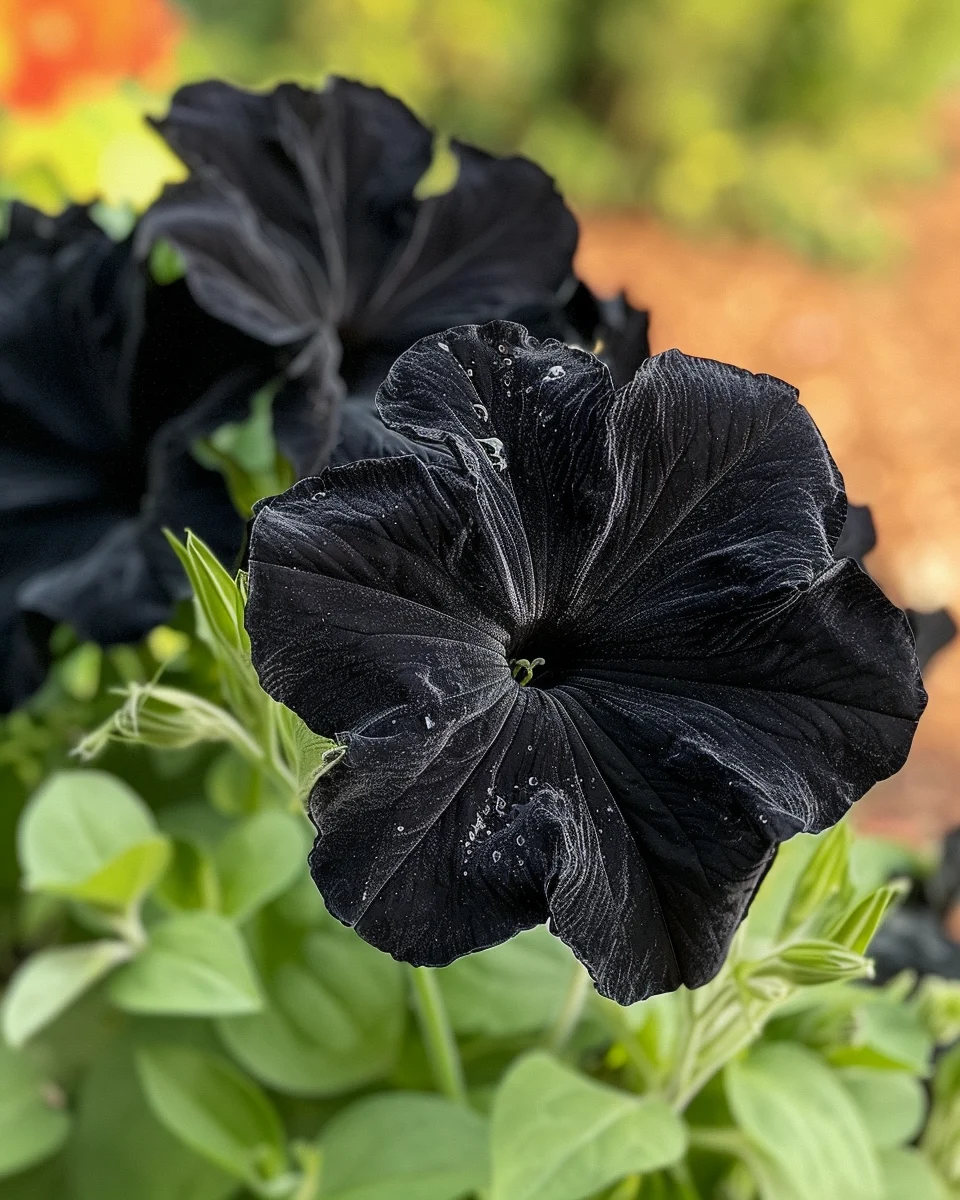
For cool temperate regions (USDA zones 3-6), plant black petunias outdoors from mid-May through early June when nighttime temperatures consistently stay above 10°C (50°F). In warmer regions (zones 7-10), planting can begin in March or April. For an early start in all regions, seeds can be started indoors 8-10 weeks before your last expected frost date. Transplanting should occur when seedlings have developed 2-3 sets of true leaves. In hot-summer areas, aim to get plants established before intense summer heat arrives, as extreme temperatures can stress young plants.
Best Black Petunia varieties to grow
- Black Cat – Features intense, nearly pure black blooms with excellent weather resistance and a slightly compact growth habit.
- Phantom – Offers deep black flowers with subtle purple undertones that create a mysterious, shifting color effect in different lights.
- Black Velvet – The original black petunia variety with true black, velvety blooms that maintain their color throughout the season.
- Black Magic – Produces large, dramatic black flowers with slight ruffling along the edges for added texture.
- Pinstripe – Features black blooms with striking white stripes for a dramatic bicolor effect.
- Black Cherry – Offers deep burgundy-black flowers that appear nearly black from a distance but show rich red undertones up close.
- Black Mamba – Boasts excellent heat tolerance with consistently dark blooms even during hot weather.
How to plant Black Petunias
Materials needed:
- Black petunia plants or seeds
- Quality potting mix or garden soil amended with compost
- Containers with drainage holes (if container planting)
- Slow-release fertilizer
- Garden trowel
- Watering can or hose with gentle spray attachment
- Mulch
Planting steps:
- Select a planting location that receives at least 6 hours of sunlight daily, with some afternoon shade in hot climates.
- Prepare the soil by loosening it to a depth of 20-25 cm (8-10 inches) and mixing in compost to improve drainage and fertility.
- For garden beds, space plants 20-30 cm (8-12 inches) apart to allow for proper air circulation and growth.
- Dig holes slightly larger than the root ball of each transplant.
- Gently remove plants from their nursery containers, being careful not to damage the root system.
- Place each plant in its hole at the same depth it was growing in its container.
- Backfill with soil, firming gently around the roots to eliminate air pockets.
- Water thoroughly after planting to help settle the soil around roots.
- Apply a 2.5 cm (1 inch) layer of mulch around plants, keeping it away from stems to prevent rot.
- If starting from seed, sow on the surface of moist soil and press lightly (don’t cover as petunias need light to germinate).
How to grow Black Petunias
Black petunias thrive in full sun but appreciate some afternoon shade in hot climates. They need consistent moisture, especially when grown in containers. Water whenever the top 2.5 cm (1 inch) of soil feels dry, typically every 2-3 days in warm weather and less frequently in cooler conditions. For container-grown plants, daily watering may be necessary during hot spells.
Feed black petunias with a balanced, water-soluble fertilizer every 2-3 weeks throughout the growing season. Alternatively, incorporate a slow-release fertilizer at planting time and supplement with liquid fertilizer monthly. For the darkest blooms, ensure plants receive adequate phosphorus.
Regular deadheading (removing spent flowers) encourages continuous blooming and prevents plants from setting seed. For leggy plants, pinch back stems by one-third to promote bushier growth and more flowers. In containers, choose pots at least 25-30 cm (10-12 inches) in diameter with excellent drainage. Hanging baskets should be at least 30 cm (12 inches) across to provide adequate root space.
Caring for Black Petunias
Monitor plants regularly for signs of pests like aphids, whiteflies, and spider mites. Treat aphid and whitefly infestations with insecticidal soap or a strong spray of water on the undersides of leaves. For spider mites, increase humidity around plants and apply neem oil as needed.
Black petunias can be susceptible to fungal diseases in humid conditions. Prevent issues by watering at the base of plants rather than overhead, ensuring good air circulation, and avoiding overcrowding. If powdery mildew appears (white powdery substance on leaves), treat with a fungicide or a solution of 1 tablespoon baking soda in 1 gallon of water with a few drops of dish soap.
To keep plants blooming continuously, remove faded flowers promptly. For a mid-season refresh, cut back leggy plants by half their height and provide a boost of fertilizer to encourage new growth. Black petunias don’t require harvesting, but you can collect seeds from spent flowers at the end of the season if desired. Allow seed pods to dry on the plant before collecting.
Understanding bolting in Black Petunias
Unlike edible garden plants, petunias don’t technically “bolt” in the traditional sense. However, they can experience stress-related flowering changes. When exposed to extreme heat (consistently above 32°C/90°F), black petunias may produce smaller flowers or fewer blooms. This stress response allows the plant to conserve energy during unfavorable conditions.
To prevent heat stress, provide afternoon shade in hot climates, maintain consistent moisture, and apply mulch to keep root zones cooler. If plants become stressed during summer heat, trim them back by about one-third, provide extra water, and apply a light dose of fertilizer. The plants will typically recover and produce new growth as temperatures moderate.
Some black petunia varieties may also stretch and become leggy in response to heat or insufficient light. Regular pinching back encourages bushier growth and more abundant flowering throughout the season.
Why does Black Petunias turn bitter?
Since petunias are ornamental rather than edible plants, bitterness isn’t a concern. However, black petunias can experience color fading or changes that might be disappointing:
- Excessive sun exposure – Some black varieties may develop purple undertones or fade slightly in intense, direct sunlight.
- Nutrient deficiency – Insufficient phosphorus can lead to less vibrant coloration; use a bloom-boosting fertilizer (higher middle number).
- Age of blooms – Older flowers naturally fade; regular deadheading maintains the darkest overall appearance.
- Genetic reversion – Some black petunias may occasionally produce flowers with purple patches due to genetic instability.
- Temperature extremes – Very hot conditions can cause color intensity to diminish temporarily.
Companion planting for Black Petunias
Black petunias create dramatic contrasts when paired with complementary plants:
- Silver-leaved plants (like dusty miller or silver sage) – The silvery foliage creates striking contrast against black blooms.
- Bright yellow flowers (like marigolds or coreopsis) – Yellow and black create a bold, eye-catching combination that draws attention.
- White flowers (such as alyssum or white vincas) – Creates a sophisticated monochromatic display that highlights the darkness of the petunias.
- Chartreuse foliage plants (like lime coleus or sweet potato vine) – The bright yellow-green leaves make black petunias appear even darker.
- Pink or red flowers (such as geraniums or verbena) – Creates a rich, romantic color scheme.
Avoid planting black petunias near aggressive spreaders like mint or plants with similar water needs but different sun requirements, as this can lead to care conflicts.
Seasonal calendar
- January-February: Order seeds or plan purchases; start seeds indoors in warm regions.
- March: Start seeds indoors in cooler regions; plant outdoors in zones 9-10.
- April: Continue indoor seed starting in cool regions; plant outdoors in zones 7-8; fertilize established plants.
- May: Transplant seedlings outdoors in zones 5-6 after frost danger; begin regular feeding program.
- June: Plant in zones 3-4; deadhead regularly; monitor for pests in all regions.
- July-August: Maintain consistent watering; provide afternoon shade in hot regions; trim back leggy growth.
- September: Continue deadheading; plant fresh black petunias for fall in warm regions (zones 8-10).
- October: Begin to reduce watering in cooling regions; continue care in warm zones.
- November-December: Collect seeds if desired; continue growing in frost-free regions; plan for next season.
Problems & solutions
| Problem | Quick Fix |
|---|---|
| Leggy, stretched growth | Pinch back stems by one-third and ensure plants receive at least 6 hours of sun daily |
| Few or small flowers | Apply phosphorus-rich fertilizer (higher middle number) and ensure consistent watering |
| Yellow leaves | Check for overwatering; ensure containers have proper drainage; reduce watering frequency |
| White powdery coating on leaves | Treat with fungicide or baking soda solution; improve air circulation; avoid overhead watering |
| Sticky leaves with tiny insects | Spray with insecticidal soap or neem oil to control aphids; repeat weekly until resolved |
| Flowers fading to purple | Provide afternoon shade in hot regions; select varieties known for color stability |
| Wilting despite moist soil | Check for root rot; ensure proper drainage; inspect for stem damage from pests |
Common questions about growing Black Petunias
How often should I water my black petunias?
Water when the top inch of soil feels dry to the touch. In containers, this may mean daily watering during hot weather. In garden beds, watering every 2-3 days is typically sufficient. Always water at the base of plants to keep foliage dry and prevent disease.
Can black petunias grow in partial shade?
Yes, black petunias can grow in partial shade, especially in hot climates where afternoon shade is beneficial. However, they perform best with at least 6 hours of sunlight daily. Too much shade will result in fewer flowers and leggier growth.
What size container is best for black petunias?
Use containers at least 25-30 cm (10-12 inches) in diameter with good drainage. Hanging baskets should be at least 30 cm (12 inches) across. Larger containers require less frequent watering and provide more root space for robust growth.
How far apart should I space black petunias?
Space plants 20-30 cm (8-12 inches) apart in garden beds. In containers, you can plant them slightly closer (15-20 cm/6-8 inches) for a fuller immediate appearance, but be prepared for more frequent watering and fertilizing.
Are black petunias heat tolerant?
Most black petunia varieties have moderate heat tolerance. They perform best when temperatures range from 18-29°C (65-85°F). During extreme heat (above 32°C/90°F), they may need extra water and afternoon shade. Varieties like ‘Black Mamba’ offer superior heat resistance.
Will black petunias come back next year?
Black petunias are typically grown as annuals in most regions. In USDA zones 9-11, they may survive as short-lived perennials with protection. In colder zones, they won’t survive winter outdoors. You can collect seeds or take cuttings in fall to propagate new plants for the following year.
Can I grow black petunias from cuttings?
Yes, black petunias root easily from stem cuttings. Take 10-15 cm (4-6 inch) cuttings from healthy stems, remove lower leaves, dip in rooting hormone (optional), and place in moist potting mix. Keep humid and warm until new growth appears, typically within 2-3 weeks.