

How to Grow Cucumbers Vertically in a Bucket: Space-Saving Method for Abundant Harvests
Intro for Growing Cucumbers Vertically in a Bucket
Growing cucumbers vertically in a bucket is a brilliant solution for gardeners with limited space who still want to enjoy fresh, homegrown cucumbers. This space-efficient method allows you to grow climbing cucumber varieties upward rather than letting them sprawl across your garden. By utilizing vertical space, you can produce an impressive yield from just a single 5-gallon bucket. This technique works particularly well in urban settings, balconies, patios, and small gardens. Beyond saving space, vertical growing improves air circulation around plants, reduces disease pressure, makes harvesting easier, and produces straighter, cleaner fruits that are less likely to rot or be damaged by ground pests.
When to plant Cucumbers Vertically in a Bucket
Cucumbers are warm-season crops that thrive when temperatures consistently stay above 15°C (60°F). Plant your bucket cucumbers after all danger of frost has passed in your region. The soil temperature should be at least 18°C (65°F) for optimal germination, with 21-29°C (70-85°F) being ideal. In most temperate regions, this means waiting until late spring. Cucumbers are extremely frost-sensitive, so if unexpected cold weather threatens, be prepared to cover your bucket or temporarily move it to a protected location.
Best time to plant Cucumbers Vertically in a Bucket
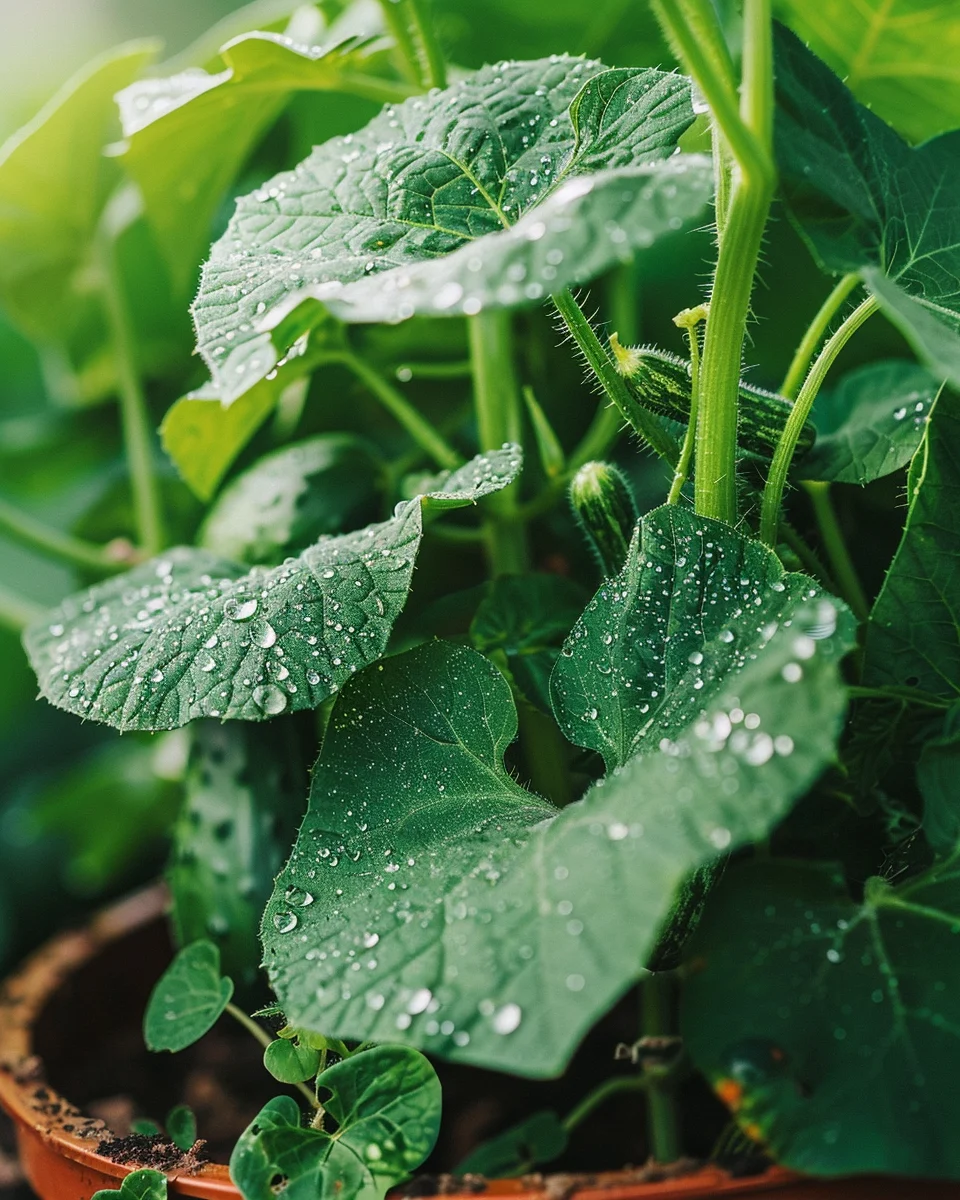
In cool-temperate regions (UK, Northern US, Canada), plant cucumber seeds directly in buckets from mid-May to early June, or start seeds indoors 3-4 weeks earlier for transplanting. In warm-temperate regions (Southern US, Mediterranean), you can plant from mid-April through July, with some regions allowing for a second planting in late summer for a fall harvest. For indoor seed starting, sow seeds 3-4 weeks before your last expected frost date. Transplant seedlings when they have 2-3 true leaves and nighttime temperatures consistently remain above 10°C (50°F).
Best Cucumber varieties to grow vertically in buckets
- Spacemaster – Compact vines (under 3 feet) specifically bred for container growing with full-sized fruits.
- Marketmore 76 – Disease-resistant slicing cucumber with manageable 4-5 foot vines that climb well.
- Lemon Cucumber – Unique round, yellow fruits on vines that respond well to vertical training.
- Picolino – Compact plants producing abundant mini cucumbers perfect for small-space growing.
- Diva – Seedless, thin-skinned variety with excellent disease resistance and no bitterness.
- Salad Bush – Award-winning compact hybrid designed specifically for container growing.
- Telegraph Improved – English cucumber variety with long, thin fruits ideal for vertical growing.
How to plant Cucumbers Vertically in a Bucket
Materials needed:
- 5-gallon bucket with drainage holes
- Good quality potting mix
- Cucumber seeds or seedlings
- Trellis, stake, or tomato cage
- Drill (for making drainage holes)
- Organic compost or slow-release fertilizer
- Garden twine or plant clips
Step-by-step planting process:
- Drill 8-10 drainage holes (1/2 inch diameter) in the bottom of your bucket if it doesn’t already have them.
- Add a 2-inch layer of gravel or broken pottery pieces at the bottom to improve drainage.
- Fill the bucket with high-quality potting mix to about 2 inches below the rim, mixing in 1-2 cups of compost or a handful of slow-release fertilizer.
- Insert your trellis, stake, or tomato cage into the bucket, pushing it down until it feels secure.
- Plant 2-3 cucumber seeds 1/2 inch deep and 2-3 inches apart, or plant 1-2 seedlings.
- Water thoroughly until water drains from the bottom holes.
- Place the bucket in a location that receives at least 6-8 hours of direct sunlight daily.
- If starting from seed, thin to the strongest 1-2 plants once seedlings have their first true leaves.
How to grow Cucumbers Vertically in a Bucket
Cucumbers in buckets need full sun, at least 6-8 hours daily. Position your bucket where it will receive maximum sunlight, ideally with some afternoon shade in very hot climates. Water consistently to keep the soil evenly moist but not waterlogged—typically every 1-2 days during hot weather, less frequently in cooler conditions. Always check soil moisture by inserting your finger 1-2 inches into the soil; water when it feels dry at that depth.
Feed your bucket cucumbers every 2-3 weeks with a balanced liquid fertilizer or compost tea. Switch to a lower-nitrogen, higher-potassium fertilizer once flowering begins to encourage fruit production. Apply a 1-2 inch layer of mulch on top of the soil to retain moisture and regulate soil temperature.
As vines grow, gently guide them up your trellis using garden twine, soft plant ties, or clips. Prune side shoots selectively to maintain airflow and direct energy to fruit production. For maximum yield in a bucket system, limit each plant to 1-2 main vines and remove any damaged or yellowing leaves promptly.
Caring for Cucumbers Growing Vertically in a Bucket
Monitor your cucumber plants daily for signs of stress or pest issues. Common pests include cucumber beetles, aphids, and spider mites. For cucumber beetles, use row covers until flowering or apply neem oil; control aphids with a strong water spray or insecticidal soap; and manage spider mites by increasing humidity around plants and applying insecticidal soap to the undersides of leaves.
Watch for powdery mildew (white powdery spots on leaves) and downy mildew (yellow spots on leaf tops, gray fuzz underneath). Prevent these by maintaining good air circulation, watering at the base of plants rather than overhead, and applying a baking soda spray (1 tablespoon baking soda, 1 teaspoon mild liquid soap, 1 gallon water) as a preventative measure.
Harvest cucumbers when they reach the appropriate size for their variety—typically 6-8 inches for slicing types and 3-5 inches for pickling varieties. Harvest frequently to encourage continued production. Cut rather than pull fruits from vines to avoid damaging the plant. Store harvested cucumbers in the refrigerator for up to one week.
Understanding bolting in Cucumbers
Unlike leafy greens, cucumbers don’t technically “bolt” in the traditional sense of prematurely producing flowers and seeds. However, cucumber plants can experience stress-related issues that affect production. Extended periods of high temperatures (above 32°C/90°F) can cause plants to produce more male flowers and fewer female flowers (which develop into fruits). Inconsistent watering, particularly drought stress, can trigger similar responses.
To prevent stress-related flowering issues, maintain consistent soil moisture, provide afternoon shade during extreme heat, and ensure adequate nutrition. If your cucumber plant is producing mostly male flowers (which drop without forming fruits), try increasing watering frequency and applying a fertilizer higher in phosphorus and potassium to encourage female flower development.
Why does Cucumber turn bitter?
- Environmental stress – Inconsistent watering and temperature fluctuations trigger cucurbitacin production; maintain even soil moisture and consider shade cloth during heat waves.
- Genetic factors – Some varieties naturally contain more cucurbitacins; choose “burpless” or “no-bitter” varieties like ‘Diva’ or ‘Sweet Success’.
- Improper harvesting – Overripe cucumbers develop more bitterness; harvest regularly when fruits are still young and firm.
- Nutrient imbalance – Excessive nitrogen can contribute to bitterness; switch to a balanced or low-nitrogen fertilizer once flowering begins.
- Growing conditions – Poor growing conditions increase stress; ensure adequate sunlight, proper spacing, and good air circulation.
Companion planting for Cucumbers in Buckets
When growing cucumbers vertically in buckets, you can place companion plants in nearby containers to create beneficial relationships:
- Marigolds – Repel cucumber beetles and other pests while attracting pollinators to your cucumber flowers.
- Nasturtiums – Act as trap crops for aphids, keeping these pests away from your cucumbers.
- Dill – Attracts beneficial insects that prey on cucumber pests and can improve cucumber flavor.
- Radishes – Deter cucumber beetles when planted in adjacent containers.
- Sunflowers – Provide partial shade during intense summer heat and attract pollinators.
Avoid placing your cucumber buckets near:
- Potatoes – Compete for nutrients and can increase susceptibility to blight.
- Aromatic herbs (rosemary, sage) – May inhibit cucumber growth through chemical interactions.
Seasonal calendar
- February-March: Start seeds indoors in warm regions; prepare buckets.
- April: Start seeds indoors in cooler regions; direct sow in warm regions after last frost.
- May: Transplant seedlings or direct sow in most temperate regions; install trellises.
- June: Continue care; begin regular feeding program; guide vines onto supports.
- July-August: Main harvest period; continue regular watering and feeding; monitor for pests and diseases intensively during heat.
- September: Continue harvesting; plant a fall crop in warm regions; begin end-of-season care in cooler areas.
- October: Final harvests in most regions; clean up plants after first frost.
Problems & solutions
| Problem | Quick Fix |
|---|---|
| Yellowing leaves | Check for overwatering; ensure proper drainage; apply balanced fertilizer if nutrient deficiency is suspected. |
| Few or no fruits forming | Ensure adequate pollination by hand-pollinating flowers with a small brush; check for too much nitrogen fertilizer. |
| Curling, distorted leaves | Look for aphids on leaf undersides; spray with insecticidal soap or neem oil solution. |
| White powdery coating on leaves | Treat powdery mildew with a baking soda spray (1 tbsp baking soda, 1 tsp mild liquid soap, 1 gallon water). |
| Fruits with rotting ends | Blossom end rot from calcium deficiency; maintain consistent watering and add calcium supplement. |
| Stunted growth | Check for root binding; ensure adequate bucket size; verify proper nutrition and sunlight exposure. |
Common questions about growing Cucumbers Vertically in a Bucket
Q: How often should I water cucumbers growing in a bucket?
A: Check moisture daily, especially during hot weather. Water when the top inch of soil feels dry, typically every 1-2 days during summer. Ensure consistent moisture without waterlogging.
Q: How many cucumber plants can I grow in one 5-gallon bucket?
A: For optimal growth and yield, limit to 1-2 plants per 5-gallon bucket. Overcrowding leads to competition for nutrients, poor air circulation, and increased disease risk.
Q: How tall of a trellis do I need for bucket-grown cucumbers?
A: Provide a trellis that’s at least 5-6 feet (1.5-1.8 meters) tall. Most cucumber varieties can climb 6-8 feet when properly supported.
Q: Do I need to hand-pollinate cucumbers growing in buckets?
A: Not necessarily, but hand-pollination can increase yields, especially for container plants grown on balconies or indoors. Transfer pollen from male flowers (thin stems) to female flowers (with tiny cucumber behind the bloom) using a small brush.
Q: Can I reuse the soil in my cucumber bucket next year?
A: It’s best to replace at least 2/3 of the soil each year. Cucumber plants are heavy feeders and deplete soil nutrients. If reusing some soil, refresh with compost and avoid planting cucumbers or related crops (squash, melons) in the same soil for disease prevention.
Q: How do I know when my bucket-grown cucumbers are ready to harvest?
A: Harvest timing depends on the variety. Generally, pick slicing cucumbers when they’re 6-8 inches long, pickling varieties at 3-5 inches, and specialty varieties according to their specific guidelines. Harvest regularly to encourage continued production.