
How to Grow Celeriac in Cool Climates: When to Plant, Best Varieties & Care Guide
Intro for how to grow celeriac in cool climates
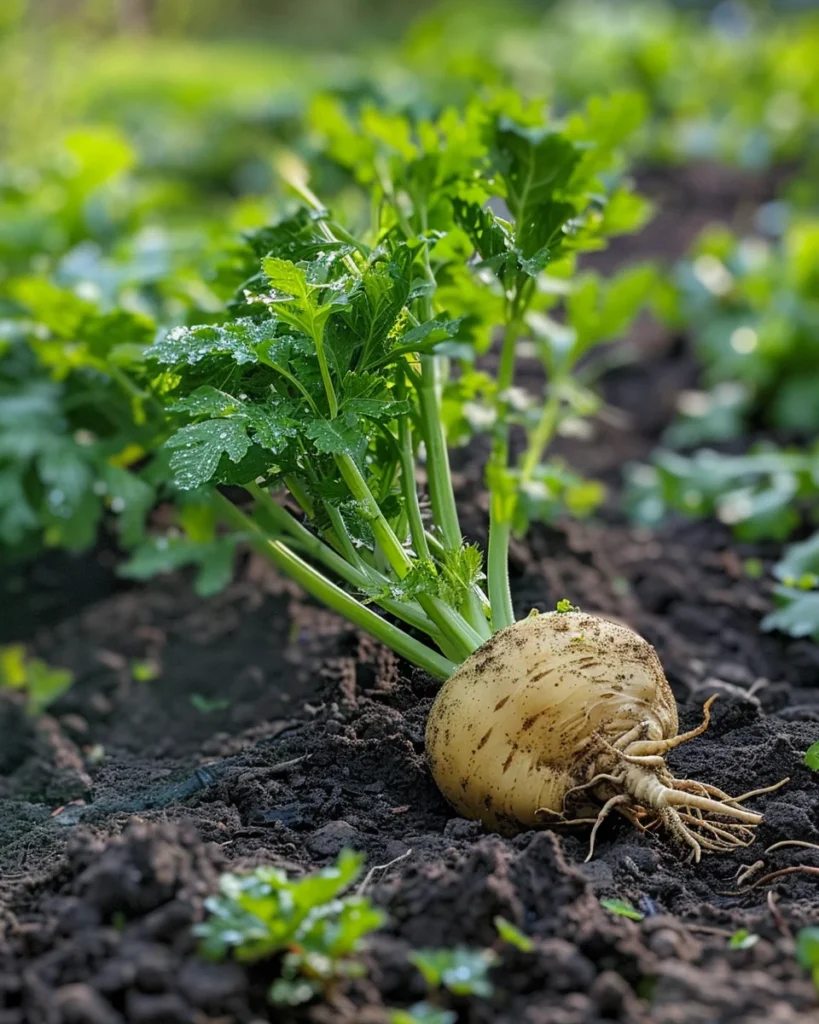
Celeriac (Apium graveolens var. rapaceum), also known as celery root, is a delicious yet often overlooked root vegetable that thrives in cool climates. With its distinctive knobby appearance and subtle celery-like flavor, celeriac makes a wonderful addition to soups, stews, and roasted vegetable medleys. This hardy biennial prefers temperatures between 15-21°C (60-70°F), making it perfect for gardeners in cooler regions. Unlike many root vegetables, celeriac has a long growing season but rewards patient gardeners with nutritious, versatile roots that store exceptionally well through winter. Whether you’re in the UK, northern US, or other temperate regions, celeriac offers a satisfying growing experience with minimal pest problems.
When to plant how to grow celeriac in cool climates
Celeriac performs best when planted in early spring after the soil has warmed to at least 10°C (50°F). In most cool temperate regions, this typically falls between mid-March and early May. Unlike many vegetables, celeriac can withstand light frosts once established, making it suitable for extended growing seasons in cooler climates. For optimal development, aim to have your celeriac maturing during the cooler autumn months rather than summer heat. In regions with mild winters (USDA zones 7-9 or UK hardiness zones 7-10), you can even start seeds in late summer for a winter harvest the following year.
Best time to plant how to grow celeriac in cool climates
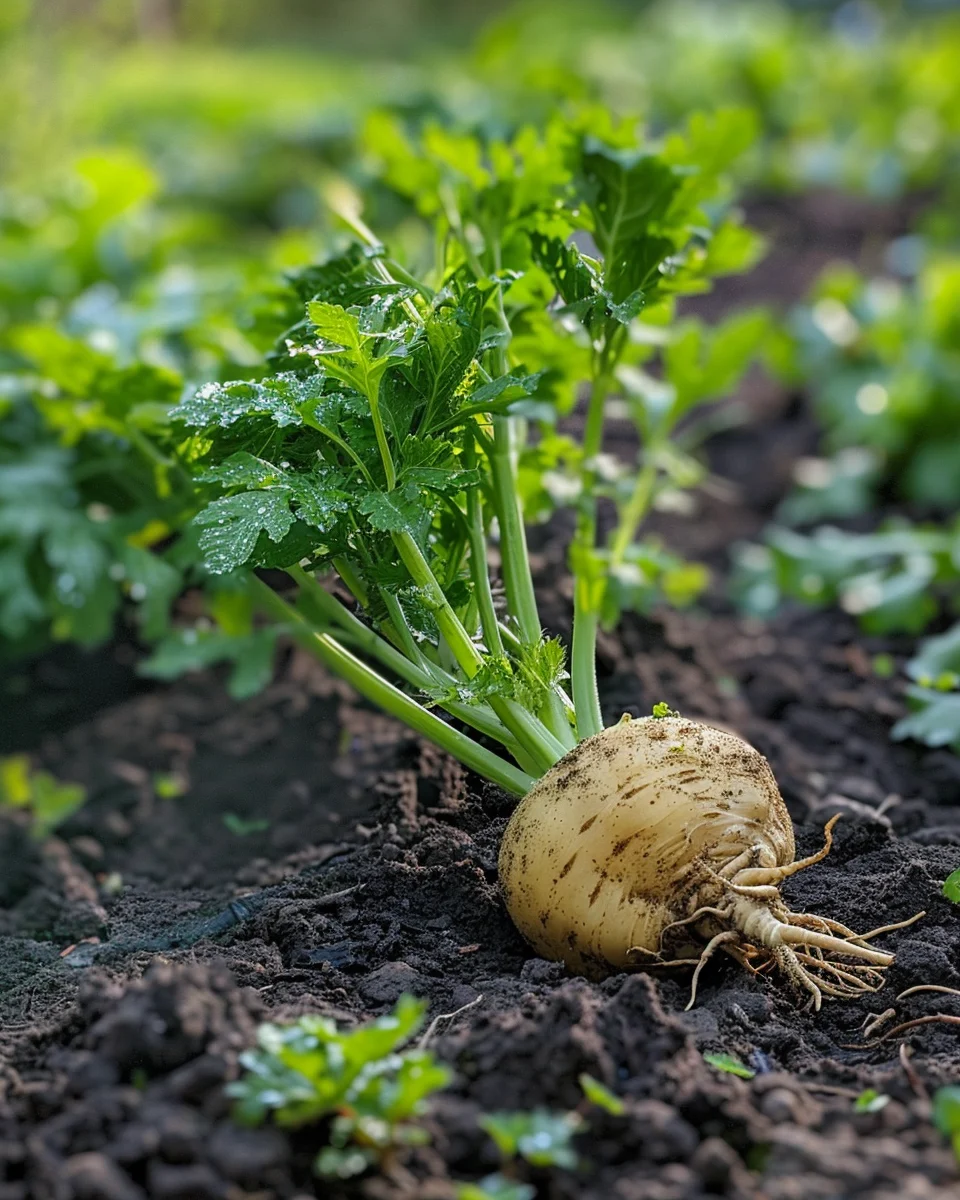
In cool northern regions (USDA zones 3-6, UK zones 6-8), start seeds indoors 10-12 weeks before your last spring frost date, typically January to March. Transplant seedlings outdoors in April to May when soil temperatures consistently reach 10-13°C (50-55°F). For milder temperate regions, direct sowing is possible from mid-April to early June, though starting indoors is still recommended for a longer growing season. In Mediterranean or warmer climates, plant in late summer (August-September) for winter harvests, as summer heat can cause bolting and poor root development.
Best how to grow celeriac in cool climates varieties to grow
- Prinz – Early-maturing variety (110 days) with smooth roots and excellent cold tolerance, perfect for shorter northern growing seasons.
- Monarch – Widely available variety producing large, uniform roots with minimal side roots, excellent for commercial and home growers alike.
- Brilliant – Disease-resistant variety with bright white flesh that resists discoloration when cut, ideal for salads and raw preparations.
- Diamant – Compact variety with excellent bolt resistance, suitable for container growing and smaller garden spaces.
- Giant Prague – Heirloom variety with exceptional flavor and storage qualities, though requires longer growing season.
- Alabaster – Smooth-skinned variety with fewer rootlets, making cleaning easier at harvest time.
- Mars – Quick-maturing variety (100 days) with good resistance to septoria leaf spot, ideal for regions with wetter conditions.
How to plant how to grow celeriac in cool climates
Materials needed: Celeriac seeds or seedlings, compost, balanced organic fertilizer, garden fork, trowel, watering can with fine rose attachment, row covers (optional), mulch material.
- Prepare your growing area by deeply digging the soil to at least 30cm (12in) depth, removing stones and breaking up clumps.
- Incorporate plenty of well-rotted compost or manure (about 1 bucket per square meter/yard) to improve moisture retention and nutrient levels.
- Add a balanced organic fertilizer according to package directions, as celeriac is a heavy feeder.
- For transplants, dig holes 30-40cm (12-16in) apart in rows spaced 45cm (18in) apart.
- Set seedlings at the same depth they were growing in their containers, being careful not to bury the crown.
- For direct sowing (less common), sow seeds 6mm (¼in) deep in rows, then thin to final spacing once seedlings reach 5cm (2in) tall.
- Water thoroughly after planting, ensuring the soil is evenly moist but not waterlogged.
- Apply a 5cm (2in) layer of mulch around plants, keeping it away from the stems to prevent rot.
- Consider using row covers in early spring to protect young plants from late frosts and to warm the soil.
How to grow how to grow celeriac in cool climates
Celeriac thrives in full sun to partial shade, requiring at least 6 hours of direct sunlight daily. In very cool climates, maximize sun exposure; in warmer regions, afternoon shade is beneficial. Consistent moisture is crucial—provide 2.5-4cm (1-1.5in) of water weekly, increasing during dry spells. Apply a balanced liquid fertilizer every 3-4 weeks throughout the growing season. When plants reach 15cm (6in) tall, remove any competing side shoots to encourage the main root’s development. For container growing, choose pots at least 30cm (12in) deep and 30cm (12in) in diameter per plant, using high-quality potting mix with added compost. In mid-summer, gently remove soil from around the upper portion of the root to expose the crown, which helps develop larger roots. Mulch with straw or shredded leaves to maintain soil moisture and suppress weeds.
Caring for how to grow celeriac in cool climates
Throughout the growing season, keep celeriac beds weed-free as these plants compete poorly with weeds. As roots develop, you may need to remove lower leaves to expose the crown. Watch for aphids, which can be controlled with insecticidal soap or a strong water spray. Leaf spot diseases may appear as dark patches on foliage—remove affected leaves and improve air circulation. Slugs can damage young plants; use organic slug bait or beer traps. Harvest celeriac when roots reach 10-15cm (4-6in) in diameter, typically 14-20 weeks after transplanting. To harvest, carefully lift plants with a garden fork, cut off foliage leaving 2.5cm (1in) of stem, and brush off excess soil. For storage, trim side roots, place unwashed roots in boxes of slightly damp sand, and keep in a cool cellar or garage at 0-5°C (32-41°F) where they’ll last 4-6 months.
Understanding bolting in how to grow celeriac in cool climates
Bolting occurs when celeriac prematurely produces flower stalks instead of developing its root, rendering the vegetable tough and bitter. This is typically triggered by temperature fluctuations, particularly a cold period followed by warm weather, or by extended daylight hours during long summer days. Drought stress can also induce bolting. To prevent bolting, maintain consistent soil moisture, provide afternoon shade during hot periods, and ensure plants are hardened off properly before transplanting. If your celeriac does begin to bolt, immediately remove the flower stalk as soon as it appears. While this won’t completely reverse the process, it may redirect some energy back to root development. Bolted plants will never produce ideal roots, but younger plants caught early may still produce usable, if smaller, roots.
Why does how to grow celeriac in cool climates turn bitter?
- Heat stress – Temperatures consistently above 24°C (75°F) can cause bitterness; provide afternoon shade and consistent watering during hot periods.
- Irregular watering – Drought followed by heavy watering creates stress that can affect flavor; maintain even soil moisture with regular watering and mulching.
- Bolting – Once flowering begins, roots quickly turn bitter; harvest immediately if you notice flower stalks forming.
- Overly mature roots – Celeriac left in the ground too long, especially during warm weather, can develop bitter compounds; harvest at appropriate size.
- Soil deficiencies – Lack of potassium or calcium can affect flavor; conduct a soil test and amend accordingly before planting.
Companion planting for how to grow celeriac in cool climates
Celeriac grows well alongside several garden companions. Plant with bush beans, which fix nitrogen that benefits celeriac’s growth. Onions and leeks help deter pests that might affect celeriac while taking up minimal space. Brassicas like cabbage and kale make good neighbors as they have different nutrient requirements and pest profiles. Spinach works well as a quick-growing crop between slower-developing celeriac plants. Tomatoes can also complement celeriac in the garden, as they don’t compete for the same nutrients. Avoid planting near potatoes, which can compete for nutrients and potentially share diseases. Also keep celeriac away from corn, which casts too much shade and competes heavily for nutrients.
Seasonal calendar
- January-February: Start seeds indoors in cool regions; prepare growing beds with compost.
- March-April: Continue indoor seed starting; begin hardening off seedlings in mild areas; direct sow in warmer regions.
- May: Transplant seedlings outdoors after last frost; direct sow in cooler regions.
- June-July: Maintain consistent watering; apply liquid fertilizer; begin removing lower leaves to expose crown.
- August: Continue regular feeding; monitor for bolting in hot weather; begin harvesting early varieties.
- September-October: Main harvest period for most varieties; begin soil preparation for next season.
- November-December: Harvest remaining roots before hard freeze; store properly for winter use; in very mild regions, plant for spring harvest.
Problems & solutions
| Problem | Quick Fix |
|---|---|
| Small, underdeveloped roots | Ensure consistent watering, feed with liquid seaweed every 2 weeks, and check spacing (thin to 30cm/12in apart) |
| Cracked roots | Maintain even soil moisture, especially after dry periods; mulch well to retain moisture |
| Leaf spot diseases | Improve air circulation, avoid overhead watering, remove affected leaves, and apply organic copper fungicide if severe |
| Slug damage | Apply organic slug bait, use copper tape barriers, or set beer traps near plants |
| Roots with excessive side growth | Ensure soil is deeply worked before planting; gently remove soil from crown as plant develops |
| Hollow roots | Maintain consistent watering and avoid excess nitrogen fertilizer late in the season |
Common questions about growing how to grow celeriac in cool climates
How often should I water celeriac?
Water deeply once or twice weekly, providing 2.5-4cm (1-1.5in) of water each time, adjusting for rainfall. Consistent moisture is crucial, especially during root development.
Can celeriac grow in partial shade?
Yes, celeriac can tolerate partial shade (4-6 hours of direct sun), though full sun produces the best yields in cool climates. In warmer regions, afternoon shade is actually beneficial.
What size container works for growing celeriac?
Use containers at least 30cm (12in) deep and 30cm (12in) in diameter per plant. Larger containers (40-45cm/16-18in) are preferable as they maintain more consistent soil moisture.
How far apart should I space celeriac plants?
Space plants 30-40cm (12-16in) apart in rows 45cm (18in) apart. Proper spacing allows roots to develop fully and reduces disease pressure.
How cold-tolerant is celeriac?
Established plants can withstand light frosts down to -2°C (28°F). Young seedlings need protection below 4°C (40°F). Mature roots can remain in the ground until hard freezes (below -5°C/23°F) in many regions.
When is celeriac ready to harvest?
Harvest when roots reach 10-15cm (4-6in) in diameter, typically 14-20 weeks after transplanting. The tops should be full and vibrant, and roots should feel firm when gently squeezed.
Can I grow celeriac from celery stalks?
No, celeriac is a different variety than stalk celery. While related, you must use celeriac seeds or seedlings to grow true celeriac with its distinctive large root.