
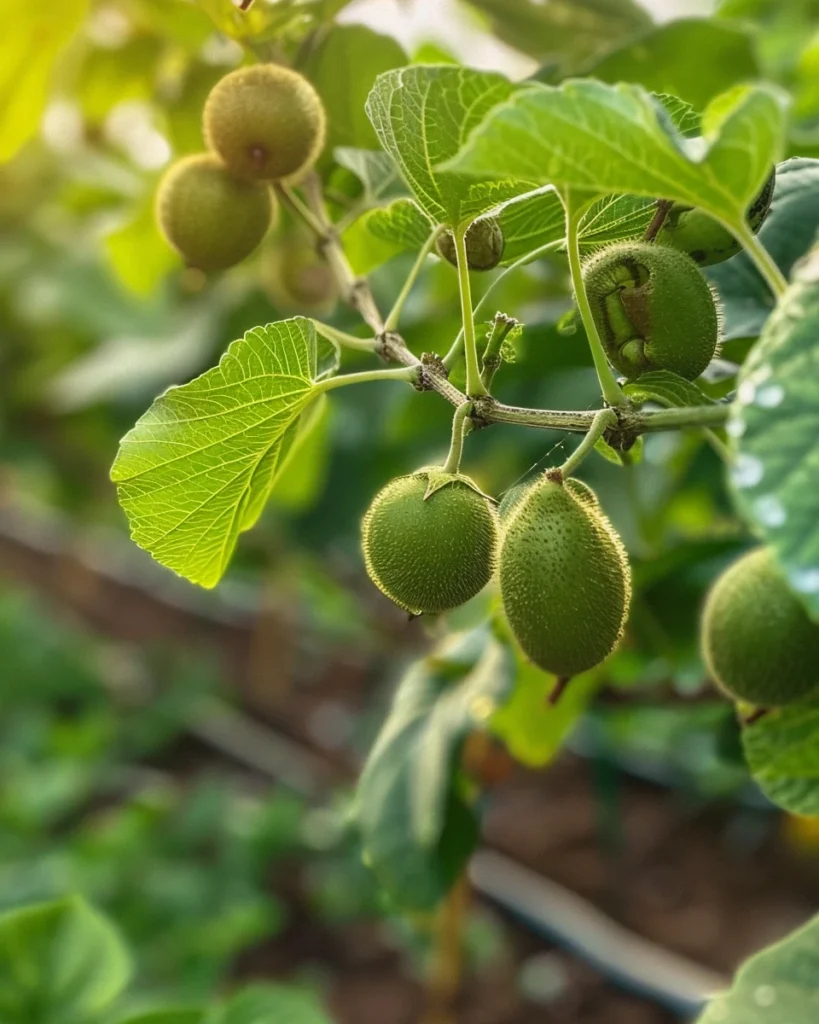
How to Grow Kiwi on an Arbor: A Complete Guide to Planting, Training, and Harvesting
Intro for growing kiwi on an arbor
Kiwi vines (Actinidia species) are vigorous climbers that transform an ordinary garden arbor into a lush, fruit-bearing paradise. These woody vines not only provide delicious vitamin-rich fruits but also offer ornamental value with their broad leaves and, in some varieties, colorful foliage or fuzzy stems. Growing kiwi on an arbor maximizes vertical space while creating an attractive garden feature. While many gardeners associate kiwi with tropical climates, hardy varieties can thrive in temperate regions as cold as USDA zones 4-9, depending on the species. With proper planning, a sturdy arbor, and the right male and female plants, you can enjoy homegrown kiwi fruits for decades to come.
When to plant kiwi on an arbor
Kiwi vines should be planted when the soil has warmed and all danger of frost has passed. In most temperate regions, this means waiting until late spring when soil temperatures reach at least 10°C (50°F). Established kiwi plants can tolerate light frosts, but young plants are vulnerable to cold damage. In Mediterranean climates, fall planting is also possible, giving roots time to establish before summer heat arrives. Regardless of your planting time, ensure your arbor is fully constructed and sturdy before introducing the vines, as mature kiwi plants become quite heavy and can damage weak structures.
Best time to plant kiwi on an arbor

For cool temperate regions (UK, Northern US, Canada), plant kiwi vines from mid-May through June when soil has reliably warmed. In warmer climates (Southern US, Mediterranean regions), the planting window extends from April through May or September through October. Container-grown kiwi plants can be transplanted any time during the growing season, but avoid planting during extreme heat or drought conditions. Direct sowing of kiwi seeds is not recommended for home gardeners, as they’re slow to germinate and may not produce true-to-type plants. Always purchase established plants from reputable nurseries for best results.
Best kiwi varieties to grow on an arbor
- Actinidia deliciosa ‘Hayward’ – The classic fuzzy commercial kiwi with excellent flavor, though requires warm summers and mild winters (zones 7-9).
- Actinidia arguta ‘Issai’ – Self-fertile hardy kiwi producing grape-sized smooth-skinned fruits that can be eaten whole; excellent for colder regions (zones 4-8).
- Actinidia kolomikta ‘Arctic Beauty’ – Extremely cold-hardy (to zone 3) with stunning pink and white variegated foliage and small sweet fruits.
- Actinidia chinensis ‘Golden Sunshine’ – Yellow-fleshed kiwi with sweeter flavor and fewer fuzz than green varieties, suitable for zones 7-9.
- Actinidia arguta ‘Ken’s Red’ – Hardy kiwi producing red-fleshed fruits with a sweet-tart flavor, creating visual interest when sliced.
- Actinidia purpurea ‘Hardy Red’ – Produces purple-red fruits with a sweet berry-like flavor and can withstand temperatures to -25°C (-13°F).
How to plant kiwi on an arbor
Materials needed:
- Sturdy arbor (minimum 2.4m/8ft tall and 1.8m/6ft wide)
- Male and female kiwi plants (unless self-fertile variety)
- Compost or well-rotted manure
- Garden spade and fork
- Garden stakes and plant ties
- Mulch (wood chips or straw)
- Watering can or hose
- Pruning shears
Step-by-step planting:
- Ensure your arbor is sturdy and well-anchored, as mature kiwi vines can weigh hundreds of pounds.
- Position your arbor in a location that receives 6-8 hours of sunlight daily, with some afternoon shade in hot climates.
- Dig planting holes at the base of the arbor, spacing plants 3-4.5m (10-15ft) apart for standard kiwi or 2-3m (6-10ft) for hardy kiwi varieties.
- Make each hole twice as wide as the root ball and equally deep.
- Mix the excavated soil with compost or well-rotted manure at a ratio of 2:1.
- Place one male plant for every 6-8 female plants, positioning the male centrally if possible.
- Set each plant in its hole at the same depth it was growing in its container.
- Backfill with the soil-compost mixture, firming gently around the roots.
- Water thoroughly, applying at least 4-5 gallons per plant to eliminate air pockets.
- Apply a 5-7cm (2-3in) layer of mulch around each plant, keeping it away from the stems.
How to grow kiwi on an arbor
Kiwi vines require full sun to partial shade, with at least 6 hours of direct sunlight daily. In hot regions, afternoon shade is beneficial. Water deeply once weekly during the growing season, providing 2.5cm (1in) of water per week. Increase watering during fruit development and drought periods. Apply a balanced organic fertilizer (10-10-10) in early spring, followed by a potassium-rich fertilizer when flowering begins.
Training is crucial for kiwi on arbors. In the first year, select a strong central stem and train it vertically to the top of the arbor. Once it reaches the top, train it horizontally along the arbor’s top. From this main stem, allow lateral branches to develop and cascade down the sides of the arbor. Prune in late winter to maintain shape and encourage fruiting.
For container-grown kiwi (suitable only for dwarf or hardy varieties), use a minimum 60-75cm (24-30in) diameter pot with excellent drainage. Container plants require more frequent watering and feeding, typically weekly during the growing season.
Caring for kiwi on an arbor
Kiwi vines require regular maintenance throughout the growing season. Prune in late winter to remove dead wood and maintain the desired shape. Summer pruning may be necessary to control excessive growth, but avoid heavy pruning during the growing season. Thin fruits if the vine produces excessive clusters, allowing remaining fruits to grow larger.
Common pests include aphids, scale insects, and Japanese beetles. Control aphids with strong water sprays or insecticidal soap. For scale, apply horticultural oil during dormant periods. Japanese beetles can be hand-picked or controlled with neem oil.
Root rot is a common disease in poorly drained soils. Prevent by ensuring good drainage and avoiding overwatering. Powdery mildew may appear in humid conditions; improve air circulation through pruning and apply sulfur-based fungicides if necessary.
Harvest kiwi fruits when they’re firm but yield slightly to pressure. Standard fuzzy kiwi should be harvested before frost and allowed to ripen off the vine. Hardy kiwi can be left to ripen on the vine until soft. Store harvested kiwi in the refrigerator for up to 6 weeks or at room temperature to accelerate ripening.
Understanding bolting in kiwi on an arbor
Unlike annual vegetables, kiwi vines don’t bolt in the traditional sense. However, they can experience excessive vegetative growth at the expense of fruit production. This is typically caused by over-fertilization with nitrogen, improper pruning, or young plant age. To prevent this imbalance, use balanced or low-nitrogen fertilizers once the plant is established, and follow proper pruning techniques to maintain a balance between vegetative growth and fruiting wood.
If your kiwi vine grows vigorously but produces little fruit, reduce nitrogen fertilization and increase potassium. Implement a more rigorous pruning regimen in winter, removing up to one-third of the previous year’s growth to encourage fruiting spurs. Remember that most kiwi varieties don’t produce significant crops until 3-5 years after planting, so patience is essential.
Why does kiwi on an arbor turn bitter?
- Harvested too early: Kiwi fruits picked before maturity contain high levels of astringent compounds. Allow fruits to ripen fully before consumption.
- Improper storage: Storing kiwi near ethylene-producing fruits like apples can cause uneven ripening and off-flavors. Store separately or consume promptly.
- Drought stress: Insufficient water during fruit development can concentrate compounds that create bitter flavors. Maintain consistent soil moisture.
- Variety characteristics: Some kiwi varieties naturally have more astringent compounds. Try different varieties if bitterness persists.
- Soil mineral imbalance: Excessive nitrogen or deficient potassium can affect fruit flavor. Test soil and amend accordingly.
Companion planting for kiwi on an arbor
Good companions for kiwi vines include:
- Comfrey – Its deep roots mine nutrients from subsoil and its leaves make excellent mulch when cut.
- Daffodils and alliums – Repel rodents that might damage kiwi roots and don’t compete for nutrients.
- Clover – Fixes nitrogen in the soil and attracts pollinators necessary for fruit set.
- Yarrow – Attracts beneficial insects that prey on kiwi pests and improves soil health.
- Nasturtiums – Act as trap crops for aphids that might otherwise attack kiwi vines.
Avoid planting kiwi near:
- Black walnut trees – Produce juglone, a compound toxic to kiwi vines.
- Other vigorous vines – Will compete for space and may tangle with kiwi, making maintenance difficult.
- Shallow-rooted trees – Compete for water and nutrients in the root zone.
Seasonal calendar
- January-February: Dormant pruning of established vines. Apply winter wash if scale insects are present.
- March: Apply balanced fertilizer as buds begin to swell. Check arbor structure and repair if needed.
- April: Plant new vines in warmer regions. Begin regular watering as growth commences.
- May: Plant new vines in cooler regions. Monitor for late frosts and protect if necessary.
- June: Apply mulch to conserve moisture. Watch for pest infestations and treat promptly.
- July: Increase watering during fruit development. Apply potassium-rich fertilizer.
- August: Continue regular watering. Thin excessive fruit clusters if necessary.
- September: Reduce nitrogen fertilization to prepare plants for winter. Hardy kiwi harvest begins.
- October: Harvest fuzzy kiwi before first frost. Fall planting in warm regions.
- November: Clean up fallen leaves and debris. Apply compost around base of plants.
- December: Protect young vines from severe cold with mulch or wrapping in northern regions.
Problems & solutions
| Problem | Quick Fix |
|---|---|
| Vine grows but doesn’t flower | Check plant gender; ensure you have both male and female plants unless using self-fertile varieties. May also need more maturity (3-5 years). |
| Flowers appear but no fruit develops | Improve pollination by planting male varieties nearby or hand-pollinate using a small brush during flowering. |
| Yellow leaves | Check for overwatering or poor drainage; may indicate iron deficiency – apply chelated iron supplement. |
| Cracked or sunburned fruits | Maintain consistent watering and consider partial shade in hot climates or during heat waves. |
| Winter dieback | Select varieties appropriate for your climate zone; protect young vines with burlap or straw in cold regions. |
| Arbor collapsing under vine weight | Reinforce arbor structure; prune vine more aggressively to reduce weight; consider replacing with stronger materials. |
| Fruits drop before ripening | Ensure consistent watering during fruit development; check for pest damage at fruit stems. |
Common questions about growing kiwi on an arbor
How often should I water my kiwi vines?
Water deeply once a week, providing about 2.5cm (1in) of water. Increase frequency during fruit development and hot, dry periods. Reduce in winter when plants are dormant.
How much sun do kiwi vines need?
Kiwi vines require at least 6-8 hours of sunlight daily. In hot climates, afternoon shade is beneficial to prevent leaf scorch and fruit sunburn.
Can I grow kiwi in containers on my arbor?
Dwarf or hardy kiwi varieties can be grown in large containers (minimum 60-75cm/24-30in diameter) with excellent drainage. Standard fuzzy kiwi varieties become too large for container culture.
How far apart should I space kiwi plants on my arbor?
Space standard fuzzy kiwi plants 3-4.5m (10-15ft) apart. Hardy kiwi varieties can be planted closer, about 2-3m (6-10ft) apart. Always include at least one male plant for every 6-8 female plants.
How cold-hardy are kiwi vines?
Cold hardiness varies by species: Hardy kiwi (A. arguta) tolerates temperatures to -25°C (-13°F), Arctic Beauty kiwi (A. kolomikta) to -40°C (-40°F), while fuzzy kiwi (A. deliciosa) is damaged below -10°C (14°F).
When will my kiwi vine produce fruit?
Most kiwi varieties take 3-5 years to begin producing fruit after planting. Hardy kiwi may fruit slightly earlier, while standard fuzzy kiwi can take longer, especially in cooler climates.
How long will a kiwi arbor last?
A well-maintained kiwi vine can live and produce fruit for 50+ years. The arbor structure should be built with this longevity in mind, using durable materials like cedar, redwood, or metal that can support the considerable weight of mature vines.