
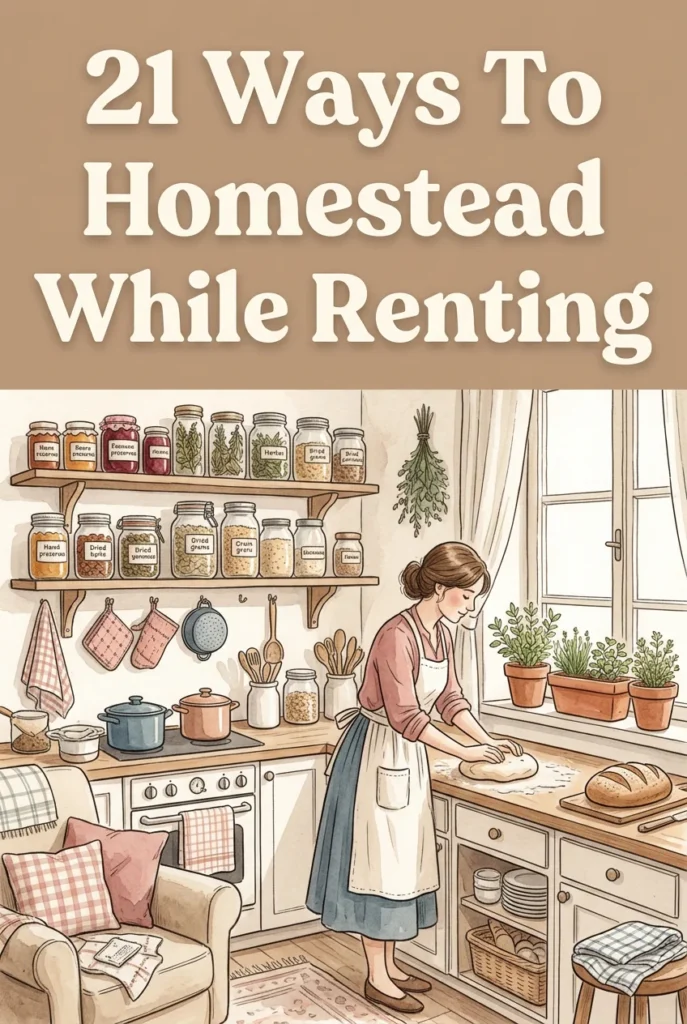
21 Practical Ways to Homestead While Renting (Yes, It’s Possible)
You don’t need to own land to build real self-sufficiency.
Homesteading isn’t reserved for people with “a hundred acres and a herd of animals.” At its core, homesteading is self-sufficiency: learning skills and building habits that help you provide more of what you need—food, household goods, and everyday essentials—through your own effort.
That matters because self-sufficiency reduces reliance on the market, can lower ongoing expenses, and builds practical competence you carry with you anywhere. If you’re renting, the limitation is real: you may not control the property, you may not be allowed to build, and you may not have much space. But the good news holds: you can still homestead while renting, and you can do it successfully.
This guide keeps the spirit and intent of traditional homesteading, while focusing on renter-friendly options—skills, small-space strategies, and improvements that are portable or permission-based.
Start Here: A Renter’s Mindset for Homesteading
Homesteading while renting works best when you treat it as a set of skills and systems, not a single location. You can learn to bake, preserve food, sew, and reduce waste in any home. And for anything that affects the property—animals, structures, or permanent changes—your first step is always the same: ask the landowner.
Think of your homestead as “modular.” The tools, routines, and knowledge you build now can move with you later. Even small wins compound quickly.
The 21 Ways to Homestead While Renting
1) Bake your own bread
Bread is an everyday staple in many homes, which makes it one of the most practical homesteading skills to learn first. Baking your own bread (and other basics like muffins, biscuits, or simple cakes) can reduce how often you need to buy packaged goods.
If time is limited, batch-bake. Make multiple loaves at once, freeze or refrigerate what you won’t use immediately, and rotate through them during the week. Learning good bread is approachable: follow a reliable online recipe or a pastry book, measure carefully, and repeat the same recipe until it becomes second nature.
2) Rear animals (when it’s allowed)
If your landlord allows it and the property has enough space and appropriate pasture, keeping animals can be part of a rental homestead. Cows can provide milk, manure, and companionship. Honeybees can provide honey. Other useful farm animals may fit your situation depending on space and rules.
Because this affects the property, have a direct conversation with your landlord first. Clarify where animals can be kept, what fencing is allowed, who is responsible for repairs, and what happens if you move. Products from animals can also support other homesteading skills—for example, milk can be used in projects like soap-making.
3) Grow a simple herb garden
Herbs are one of the easiest renter-friendly ways to start producing food at home. They take little space, they’re expensive to buy in small quantities, and they can be grown indoors or outdoors.
Useful kitchen herbs include basil, cilantro, rosemary, thyme, mint, and parsley. You can grow them in mini containers, in window boxes, or in a small outdoor pot near a doorway. A smart placement is close to the kitchen—such as a sunny windowsill—so you actually use them.
Pick what you need, rinse, and add directly to meals. If you have extra, preserve herbs by air drying or freezing.
4) Reduce your household waste
Self-sufficiency includes learning to use what you already have. Reducing waste helps you spend less and rely less on frequent store trips.
Focus on recycling and reusing where possible: repurpose old clothing into rags or other household items, reuse glass jars for pantry storage, and choose washable plates and containers rather than disposable plastics. If your rental situation allows it, you can also explore composting to return food scraps to soil for gardening.
5) Learn how to make your own soap
Body care products are a common reason people feel tied to the market. Soap-making is a practical skill that can help you save money and control what goes into your products.
Basic soap-making materials can include lye, oils, fragrance, and optional additives. You can make soap from scratch using a cold process method, or use a re-batching method where you melt a base soap, mix in fragrance or additives, then remold it into bars. With clear instructions (available online and in books), this is a skill many people can learn with practice.
There’s real satisfaction in choosing the ingredients yourself. And with consistency, soap-making can also become a small side income if you decide to sell.
6) Learn how to make cheese
Cheese is widely used in everyday cooking, and making it at home can be more approachable than many people expect. The key is having the right ingredients and learning the steps. Once you understand the process, it becomes easier with repetition.
Fresh milk helps—having a cow makes that more accessible—but cheese-making can still be a learning goal even without livestock. Start simple, focus on technique, and build from there.
7) Plant fruits and vegetables (small-space friendly)
Growing produce is one of the most recognizable homesteading activities, and it can work in rentals through container growing, raised beds (with permission), or small in-ground plots where allowed.
The value is freshness and control: you oversee the planting, care, and harvesting. Many fruits and vegetables do not require large spaces. Examples include tomatoes, lettuce, eggplant, pole beans, avocados, edible flowers, and lemons. Each plant has its own needs, so invest in learning: a gardening class, a solid book, or reputable videos can help you avoid common mistakes.
8) Learn to make or mend your own clothes
Homesteading includes making and maintaining what you use daily. Learning to knit or crochet can help you create gloves, scarves, and sweaters for cold weather. Learning to sew can help you mend clothing, alter fit, and eventually create your own garments.
Over time, sewing can also become a service you offer to friends and family, and potentially a way to bring in extra money. Even basic mending—buttons, hems, small repairs—adds up in savings and reduces waste.
9) Grow your own tubers
If you have a bit more space, tubers can be a satisfying crop. Potatoes and cassava are examples that can be grown without massive planting areas, depending on your setup and local conditions.
There’s a unique fulfillment in eating a meal you planted, cared for, harvested, and cooked yourself. If you’re new to growing tubers, start by learning the basics, then scale up once you see what your rental space can support.
10) Learn to mill your own grains
If you want more control over your flour, milling can help. People often complain about flour that tastes bitter or seems less nutrient-rich after long storage. Grinding grains at home can help you feel confident about freshness and quality.
With a grain mill, you can process grains like barley, oats, wheat, rye, millet, rice, and more. This is a skill-and-tool investment that can move with you from rental to rental.
11) Grow herbal (medicinal) plants
Herbal plants remain widely used for everyday wellness. Growing a few at home can be a practical complement to a self-sufficient lifestyle—especially for minor, everyday needs.
Examples of herbal plants you can grow include garlic, ginger, echinacea, rosemary, lavender, and turmeric. Basil is a notable multi-purpose herb: beyond being a cooking herb, it’s commonly valued for general health benefits such as supporting digestion and metabolism.
12) Learn to make quilts
Cold weather always returns, and warm bedding is a practical necessity. Quilt-making is a traditional homesteading skill that can be done by hand or with a machine.
A well-made quilt can serve your household for years. If you become skilled, quilting can also be something you sell, especially if you develop a style and consistent workmanship.
13) Preserve your food to prevent waste
Harvest is only half the work. Without preservation, fresh produce can spoil quickly—especially when your garden produces more than you can use at once.
Different foods require different preservation methods, so it’s important to learn what fits each item. Building this knowledge helps you store food longer and reduces the frustration of wasted effort and wasted groceries.
14) Learn how to generate your own electric power (where feasible)
Energy independence is part of the bigger homesteading dream. Generating your own power can be done with solar power or a solar-battery-powered wind system, but it typically requires significant time, cost, and technical skill.
In a rental, feasibility depends on permission, local rules, and your budget. If you pursue it, you may need to hire someone with the expertise to install and set it up properly. Even if you can’t install a full system now, learning the basics of home energy use and alternative power prepares you for future steps.
15) Make your own cleaning supplies
Household cleaning products—like cleaners, soaps, hair shampoo, and facial cleanser—can be made at home. Learning to make them builds confidence and can reduce how often you need to restock store-bought products.
Like soap-making, this can also become a small income stream if you choose to sell what you make. You can learn through books and video tutorials, then refine your recipes through practice and careful labeling.
16) Learn how to cook (and cook at home more often)
Cooking is a cornerstone skill for self-sufficiency. If you want to save money spent on prepared food, cooking at home is one of the most direct ways to do it.
You can learn through online lessons, from a friend or family member, or by attending culinary school if you want structured training. Homemade food is typically healthier, and it allows you to use what you have—especially when you’re preserving, gardening, or buying ingredients in bulk.
17) Use a barter system with other homesteaders
In homesteading, you may sometimes have more of one thing and less of another. Bartering can help balance that—trading what you have in excess for what you need.
Look for local people who garden, bake, sew, keep bees, or make household goods. A simple conversation can lead to an exchange that prevents spoilage and helps everyone. Keep barters clear and friendly: agree on quantity, condition, and timing.
18) Build convenient structures (only with approval)
Some homesteading projects require physical structures: poultry housing, a fish farm, fencing attachments, or other functional improvements. In a rental, these are permission-based.
If your landlord agrees, these additions can make the land more convenient for homesteading. Confirm what is allowed, whether the structure is temporary or permanent, and who owns it when you leave. Clear communication prevents future conflict and protects your investment.
19) Hang dry your clothes
Air drying reduces energy use and is gentle on clothing. If you have outdoor space, you can hang clothes to dry. If your landlord allows it, you may even be able to install a more permanent rack or simple line.
If outdoor drying isn’t possible, indoor drying racks can still work well and remain fully portable when you move.
20) Keep a solid record system
Homesteading involves planning, budgeting, and tracking many moving parts. Keeping a tangible record helps you see progress and make better decisions.
Track expenses and savings, garden planting dates, harvest amounts, preservation notes, barter arrangements, and—if you keep animals—feeding schedules and counts. Good records reduce waste, help you plan next season, and create a clear view of what’s working.
21) Pay off debts as part of self-sufficiency
Self-sufficiency isn’t only about food and household goods; it also includes financial freedom. If you have outstanding debts, create a plan to pay them down gradually.
Homesteading skills can support this goal by lowering costs and creating opportunities to earn—through selling items like soap, quilts, or sewing services—without spending on unnecessary purchases. Keep the focus on steady progress and practical choices.
Tips to Make Homesteading in a Rental Easier (and More Sustainable)
- Get permissions in writing when possible. Especially for animals,